Are Taliban attacks exposing Pakistan’s biggest security weakness yet?
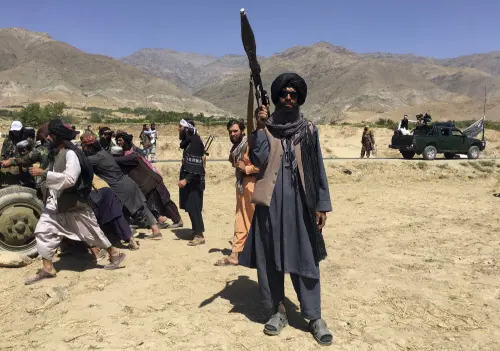
Pakistan’s internal power dynamics appear increasingly strained as the ISI struggles to maintain its once-feared operational effectiveness. The intelligence agency, traditionally the military’s key instrument for regional strategy, is under mounting scrutiny following a succession of intelligence failures that have cost dozens of army lives.
Pakistan’s powerful military and its intelligence wing, the ISI, are reportedly at odds after a series of intelligence lapses led to major attacks by the Afghan Taliban and domestic militant groups.
ISI under fire after repeated intelligence lapses
Once regarded as one of the world’s most formidable spy agencies, Pakistan’s Inter-Services Intelligence (ISI) is now facing severe criticism from within its own establishment. The agency has been accused of failing to detect multiple attacks, including those by the Afghan Taliban, the Tehreek-e-Taliban Pakistan (TTP), and incidents under Operation Sindoor.
According to reports, the Taliban’s recent assaults on Pakistani military posts left at least 58 soldiers dead and several injured. The attacks have reportedly infuriated Army Chief Field Marshal Asim Munir, who is said to have ordered a top-level review of ISI’s performance.
Internal friction and operational stagnation
Sources indicate growing tension within the ISI ranks, with many officers allegedly avoiding transfers for years, resulting in stagnation and declining operational efficiency. Indian officials suggest that this internal lethargy and lack of coordination have contributed to recent intelligence failures.
Adding to the embarrassment, the once-aligned Tehreek-e-Labbaik Pakistan (TLP) has turned against the establishment. The ISI had previously leveraged the TLP to pressure political leaders like Nawaz Sharif and Imran Khan, but the group’s current hostility underscores the agency’s loss of control.
Fallout of Operation Sindoor and Afghanistan front
The Pakistan Army’s failure to anticipate or counter the Taliban’s operations has widened the rift between the military and the ISI. Operation Sindoor in particular exposed deep gaps in intelligence-sharing mechanisms, Indian officials said.
Field Marshal Asim Munir has reportedly expressed frustration over these repeated setbacks, chastising both army and ISI officials for poor coordination and lack of strategic foresight. A special meeting at GHQ in Rawalpindi was convened to reassess Pakistan’s approach towards the Taliban, which has increasingly embarrassed Islamabad through cross-border attacks and political defiance.
Leadership strain and geopolitical embarrassment
Munir’s tight control over the ISI — including involvement in appointments and operational decisions — has created resentment among officers who view the interference as excessive. His criticism intensified after Afghanistan’s Foreign Minister Amir Khan Muttaqi’s remarks in New Delhi affirming that “Kashmir is an integral part of India”, a statement seen as a diplomatic blow to Islamabad.
Amid ongoing US–Pakistan engagements and security challenges at the Afghan border, Munir now faces pressure to restore coordination between the army and ISI, and to rebuild the agency’s eroded credibility.
The Afghan Taliban’s successful raids on Pakistani positions in late September and early October shocked the military establishment, highlighting lapses in surveillance and field intelligence. The TTP’s resurgence in Khyber Pakhtunkhwa and Balochistan has further compounded Pakistan’s internal security crisis.
The growing dissonance between the ISI and the army leadership is being viewed by analysts as a critical test for Asim Munir’s authority. Despite his efforts to centralise decision-making, sources indicate that the resulting micromanagement has hampered intelligence coordination.
Pakistan now faces a dual challenge: reining in militant threats while repairing its fractured security apparatus. Unless the ISI and the army reconcile their differences and reform their operational framework, experts warn that Islamabad’s security vulnerabilities could deepen further, leaving it exposed to both internal rebellion and external embarrassment.