Pakistan army chief reaches Tehran amid US-Iran ceasefire push
Cairo: Mediators on Wednesday moved closer to extending the ceasefire between the United States and Iran and resuming negotiations aimed at salvaging the fragile truce before it expires next week, officials in the region said. A senior Iranian military official also threatened to halt trade in the region if the US does not lift its naval blockade.
The US blockade on Iranian ports and renewed threats from Iran have put the week-old agreement at risk. However, regional officials said progress was being made, telling that the United States and Iran had reached an “in principle agreement” to extend the truce to allow further diplomacy. They spoke on condition of anonymity due to the sensitivity of the discussions.
A senior US official said Washington has not formally agreed to extend the ceasefire and that “engagement” with Iran is ongoing. The official also spoke anonymously as they were not authorised to comment publicly on the negotiations.
Iran issues warning over regional trade
The commander of Iran’s joint military command warned that Iran could completely block exports and imports across the Persian Gulf region, the Sea of Oman, and the Red Sea if the US military does not lift its blockade on Iranian ports.
“Iran will act with strength to defend its national sovereignty and its interests,” said Ali Abdollahi.
Pakistan joins mediation efforts
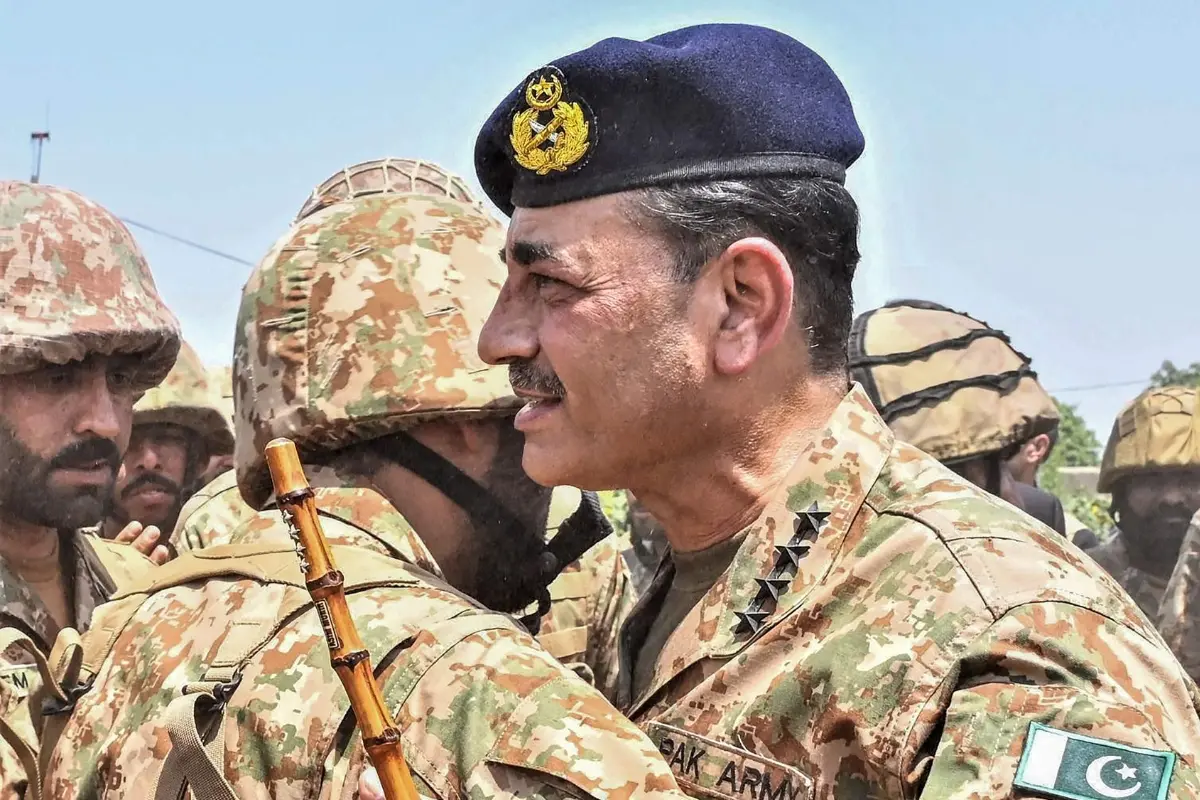
Elsewhere, Pakistan’s military chief and the country’s interior minister arrived in Tehran as part of Islamabad’s ongoing mediation efforts, according to the military.
Before the two-week ceasefire expires on April 22, mediators are working to bridge differences on three key issues that stalled direct talks last weekend: Iran’s nuclear programme, the Strait of Hormuz, and compensation for wartime damages, a regional official said on condition of anonymity.
Iran’s nuclear position and negotiation stance
Iranian Foreign Ministry spokesman Esmail Baghaei said Iran is open to discussions on the type and level of uranium enrichment. However, he added that the country “based on its needs, must be able to continue enrichment,” according to Iranian state media.
Rising casualties
The fighting has killed at least 3,000 people in Iran, more than 2,100 in Lebanon, 23 in Israel, and more than a dozen in Gulf Arab states. Thirteen US service members have also been killed.
Now in its seventh week, the war has disrupted global markets and shaken the international economy, with shipping routes affected and airstrikes damaging both military and civilian infrastructure across the region. Oil prices fell on expectations of a possible end to the conflict on Wednesday, while US stocks rose close to record levels seen in January.
Ceasefire still uncertain
Despite diplomatic efforts, uncertainty remains over the future of the ceasefire as the US continues its blockade, aimed at cutting off Iran’s economic lifelines. Tehran, in turn, has threatened to disrupt regional trade.
“I think they want to make a deal very badly,” US President Donald Trump said in an excerpt from an interview with Fox Business Network’s “Mornings with Maria,” scheduled to air Wednesday. He added, “I view it as very close to over.”
China and Strait of Hormuz remarks
Trump also claimed that China has agreed not to supply weapons to Iran, as reports suggested Beijing had considered arms transfers.
In a social media post, Trump wrote that China is “very happy that I am permanently opening the Strait of Hormuz,” adding, “They have agreed not to send weapons to Iran.” He appeared to link both developments.
The US government has long accused China of supporting Iran’s ballistic missile programme and providing dual-use industrial components that can be used for missile production.
Maritime impact and blockade effects
US Central Command said no ships passed through the blockade in the first 24 hours, while six merchant vessels were instructed by US forces to turn back into Iranian waters.
The blockade aims to pressure Iran, which has continued exporting millions of barrels of oil since the war began on February 28, mostly to Asia. Much of this trade is believed to occur through “dark transits” that avoid sanctions and monitoring, providing Iran with crucial revenue.
Since the conflict began, Iran has restricted maritime movement, with many commercial vessels avoiding the waterway. Tehran’s effective closure of the Strait of Hormuz, through which about a fifth of global oil flows in peacetime, has pushed oil prices higher, increasing costs for fuel, food, and other essentials globally.
Meanwhile, Israel continued its aerial and ground operations in Lebanon. The National News Agency reported airstrikes and artillery shelling across southern Lebanon on Wednesday, including near Bint Jbeil, where Israeli forces have encircled fighters linked to Hezbollah.
The fighting has continued even after Israeli and Lebanese officials held their first direct talks in decades.
Israeli Ambassador Yechiel Leiter said the two countries are “on the same side of the equation” in efforts to “liberate Lebanon” from Hezbollah. Lebanese Ambassador Nada Hamadeh Moawad described Tuesday’s meeting as “constructive” but urged an end to hostilities. Since March, the conflict has displaced more than one million people in Lebanon.
Israel and Lebanon have technically remained at war since 1948, and Lebanon continues to be divided over whether to pursue diplomatic engagement with Israel.
Agency inputs