One of nature’s great wonders hit by deadly flood: What happened at the Grand Canyon
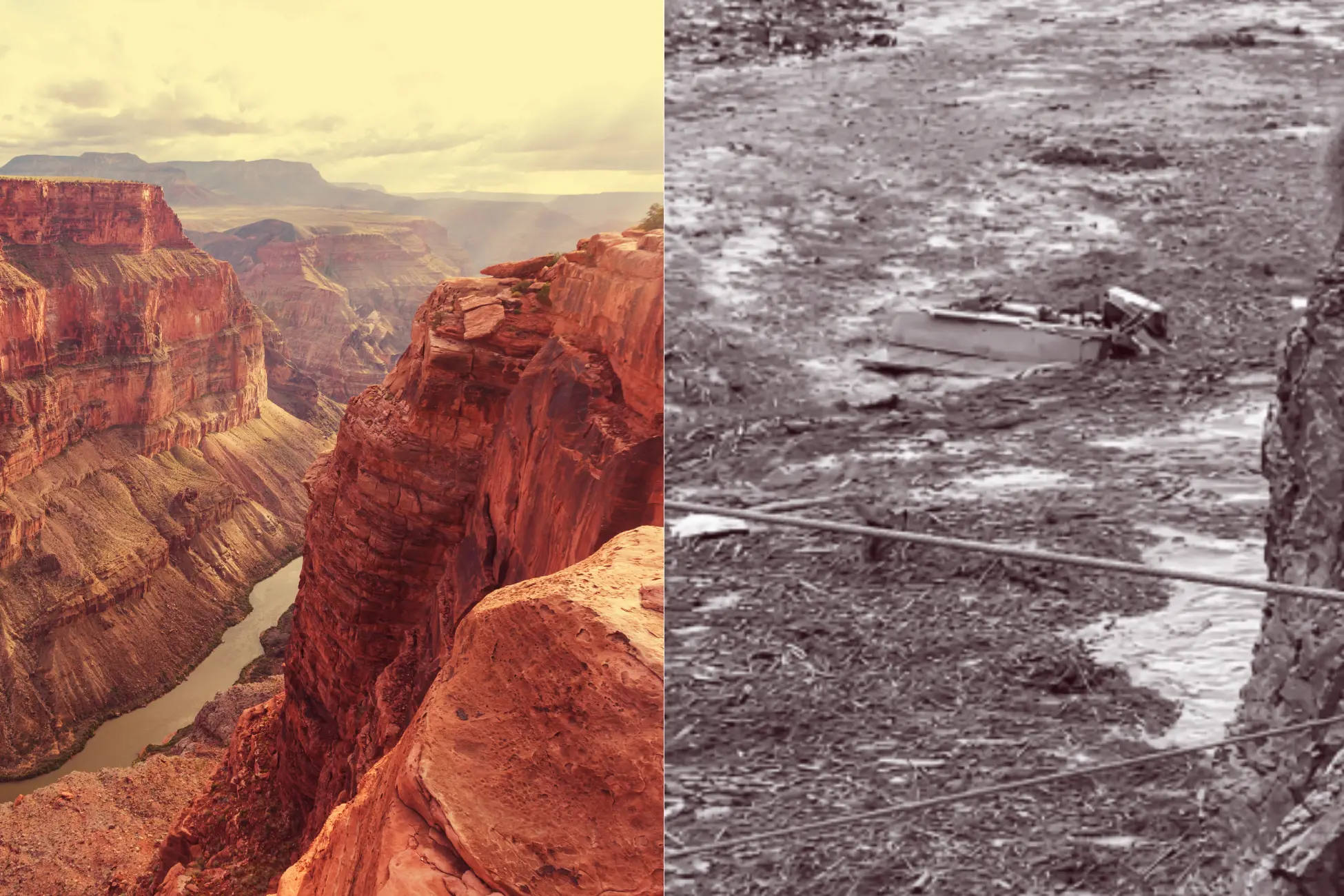
The Grand Canyon, widely celebrated as one of the greatest wonders of the natural world, has become the scene of a sudden and deadly natural disaster. At least one person has died, and around 15 others remain missing or unaccounted for, after a massive flash flood tore through the famous landmark, forcing dozens of terrified tourists to flee for their lives.
The disaster struck on Saturday afternoon, turning scenic hiking trails into raging torrents of mud and debris. By Sunday evening, search teams recovered the body of a 46-year-old man near Crystal Rapids along the Colorado River. Rescue operations continue as authorities search for those still missing, with officials from an Arizona coroner's office present at the scene.
How the Sun-Drenched Paradise Turned Into a Torrent
The Grand Canyon of United states--is the result of the Colorado River eating away at layers of red sandstone and other rock for millions of years, leaving a chasm up to 18 miles wide and more than a mile deep.
The peaceful canyon landscape changed in an instant. On Saturday, a sudden deluge struck the north side of the canyon, where Bright Angel Creek drops some 6,000 feet (1,828 metres) from the North Rim down to the Colorado River. While the canyon is beautiful, its dry, sun-baked soil and sparse vegetation have little capacity to absorb heavy rain.
The disaster was triggered by a sequence of storms on the Kaibab Plateau. Two smaller weather systems had already drenched the area hours earlier. When the main storm hit, about half an inch to an inch (1 to 2.5 centimetres) of rain fell within a brief 20-minute window on the steep, rocky slopes.
“So when the main storm moved in, torrential rain fell on everything that was already soaked, and that caused all the problems that we're seeing,” said Darren McCollum, a National Weather Service meteorologist in Flagstaff.
“Up, Up, Up, Up!”: Hikers Run for Cover in the Cactus
For the holidaymakers inside the canyon, the peaceful weekend turned into a fight for survival. Hikers captured video footage of muddy water rushing past footpaths and under bridges, accompanied by a deafening, rumbling roar.
Parth Desai, a doctor, was hiking through a narrow passage in Bright Angel Canyon with fellow physicians and a park ranger when the heavy rain started falling on Saturday.
“We saw the creek flood, waterfalls coming up out of nowhere, boulders, mud, landslides happening everywhere,” he said.
As they scrambled towards Phantom Ranch, a colleague suddenly shouted, “Up, Up, Up, Up!” as a four-foot (one-metre) wall of debris was hurtling straight towards them. The group ran up a steep slope, seeking safety in a patch of wild cacti. They were eventually rescued by helicopter late on Saturday night after making it to the Phantom Ranch area.
At the Bright Angel Campground, another hiker, Erica Viola, watched the water rise rapidly alongside about 50 other campers as debris, including what looked like a bunkhouse, floated by. Helicopters eventually airlifted over 60 stranded people from the depths of the canyon to safety. The evacuation cut Viola's adventure short by two days.
The Lifeline Snapped: Park Shuts Overnight Stays
Beyond the immediate human danger, the flood has crippled the park's basic infrastructure. Massive torrents of water wiped out several footbridges, leaving hikers trapped and unable to cross Bright Angel Creek. More critically, the flood smashed the Transcanyon Waterline, the sole pipeline providing drinking water and fire protection to the millions who visit the park each year and the residents of Grand Canyon Village.
This twelve-and-a-half mile (20-kilometre) pipeline carries fresh water from Roaring Springs on the North Rim all the way to the South Rim. Because of the severe damage, the park service has imposed immediate water restrictions in its most visited areas and banned all wood and charcoal fires.
Furthermore, all lodges and hotels within the canyon are closing their overnight bookings starting Monday, August 31. Local year-round residents are also being asked to ration their water. While the Grand Canyon has large storage tanks for potable water on the South Rim, they cannot be refilled while the pipeline is out of service.
“These measures are crucial for ensuring the safety and sustainability of water resources,” the National Park Service announced in a statement.
A Multi-Million Pound Rescue Project in Jeopardy
This disaster represents a severe setback for the park. Nearly five million tourists visited this spectacular gorge last year, which has been carved out by the Colorado River over millions of years. However, the ancient pipeline has failed frequently over the years, prompting a massive £157 million ($208 million) modernisation project that began in 2023.
The upgrade, which was meant to secure water for the park's six million annual visitors and 1,600 local residents, was due for completion next year. Now, the future of the water supply is highly uncertain.
“Heaven help us if the whole thing down there at the bottom has to be reconstructed,” said Jack Schmidt, director of the Center for Colorado River Studies at Utah State University. “Where are they going to get the money?”
As Monday begins, the danger is far from over. Weather experts have warned that further thunderstorms and rain could hit northern Arizona through Monday, threatening more flash floods, falling rocks, and landslides in the canyon.