'Return the Kohinoor': NYC Mayor Mamdani says he’d push King Charles to return diamond | WATCH
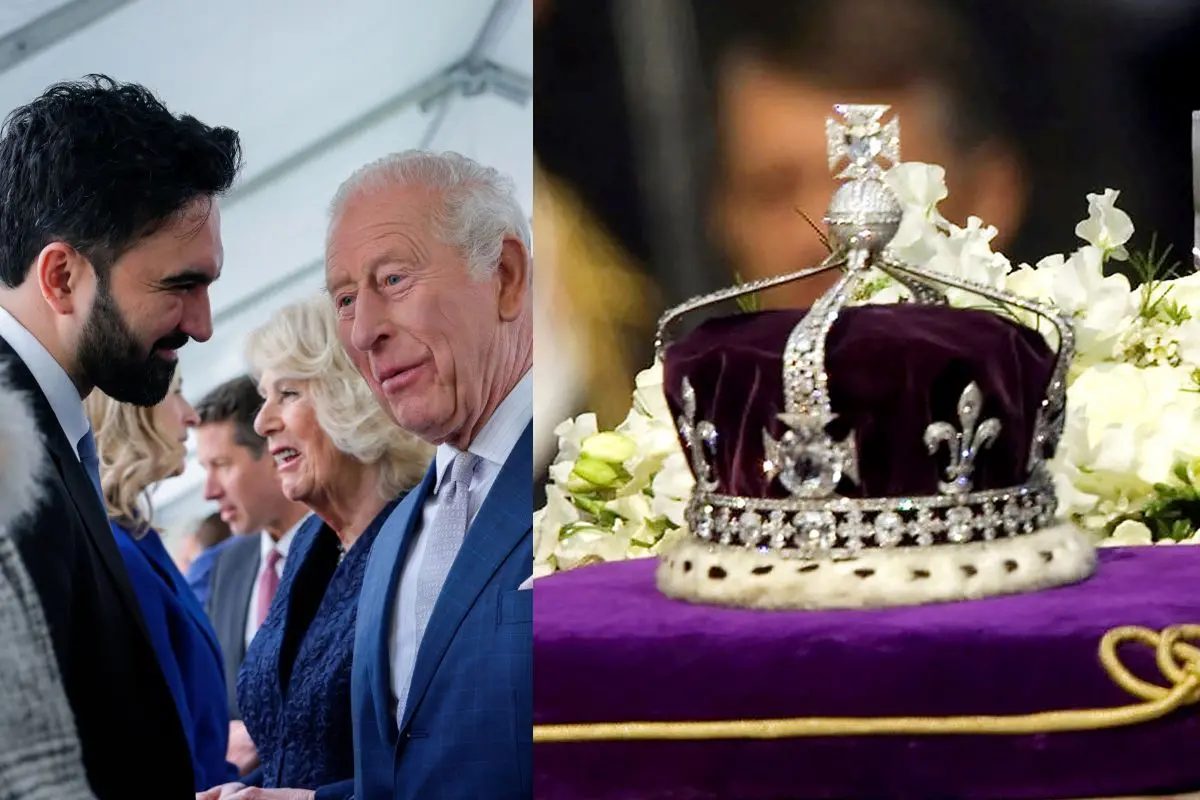
New York City Mayor Zohran Mamdani said on Wednesday that he would urge King Charles III to return the historic Koh-i-Noor diamond to India if the two had the opportunity to speak privately during the monarch’s ongoing visit to the United States.
Speaking hours before a remembrance ceremony marking the September 11 attacks, Mamdani told reporters that while the issue was not part of the official schedule, it would be on his mind. “If I were to speak to the king separately from that, I would probably encourage him to return the Kohinoor Diamond,” he said.
Later in the day, the mayor briefly interacted with the King at the 9/11 memorial event, though neither the mayor’s office nor Buckingham Palace confirmed whether the topic arose in their exchange.
Royal visit continues
The comment marked the first hint of tension in what has otherwise been a largely cordial trip for the monarch, who is on a four-day visit that includes meetings with Donald Trump, an address to Congress and a state dinner at the White House. The King and Queen Camilla also visited the 9/11 memorial at One World Trade Center, where they paid tribute to the nearly 3,000 people killed in the 2001 attacks, including 67 British nationals.
A spokesperson for the royal family declined to respond directly to Mamdani’s remarks.
India’s long-standing demand for repatriation
The Koh-i-Noor, meaning “Mountain of Light”, is one of the most famous and disputed jewels in the world. Originating from India’s Kollur mines, the stone once weighed 186 carats before being recut to its current 105.6-carat form. Over centuries, it passed through the possession of Mughal emperors, Persian rulers and Afghan leaders.
Its most contested transfer came in 1849, when the British East India Company compelled the 10-year-old Maharaja Duleep Singh to cede it under the Treaty of Lahore following the Anglo-Sikh War. It was later presented to Queen Victoria and now sits in the crown worn by Queen Elizabeth the Queen Mother, displayed at the Tower of London as part of the Crown Jewels.
History and worth of Koh-i-Noor
The Koh-i-Noor diamond has travelled through centuries of conflict, conquest and royal power, making it one of the most disputed gemstones in the world. The first documented mention of the stone dates to 1628, when it was set into the Mughal emperor Shah Jahan’s Peacock Throne alongside the famed Timur Ruby. It was taken in 1739 by Persian ruler Nader Shah during his invasion and plundering of Delhi, before passing through several Central Asian courts.
Historians trace its return to the Indian subcontinent to 1813, when Sikh leader Ranjit Singh acquired the gem. After his death in 1839, the British East India Company expanded its reach across northern India and set its sights on the diamond, viewing it as a potent emblem of imperial dominance. By 1849, after years of upheaval, the British had imprisoned Rani Jindan and placed her 10-year-old son, Maharaja Duleep Singh, the last heir to the Punjabi throne, under their control. He was compelled to sign an amended Treaty of Lahore, relinquishing both his sovereignty and the Koh-i-Noor to the British Crown.
The diamond was subsequently presented to Queen Victoria. In 1911, it was mounted into the front cross of Queen Mary’s coronation crown. A replica replaced it in 1937, when the original was transferred to the crown made for the Queen Mother, which she wore at the coronation of King George VI. That crown, fashioned from platinum and adorned with 2,800 diamonds, also includes several historic stones, though none more controversial than the Koh-i-Noor, held in a detachable setting.
Today, the 105.6-carat diamond remains part of the British Crown Jewels, displayed at the Tower of London. Its precise value is unknown, with estimates ranging from US$140 million to US$400 million, but many experts consider it priceless. Since India’s independence in 1947, successive governments have formally sought its return, most recently renewing the request in 2016.
India’s stand and competing claims
India maintains that the gem was taken under coercive conditions and has repeatedly sought its return, calling it a powerful symbol of colonial extraction and injustice. The UK government has long argued that it holds legal ownership under the 19th-century treaty. Other nations, including Iran and Pakistan, have also asserted historical claims.
Mamdani, whose mother Mira Nair was born in India, framed his comment as a broader reflection on historical accountability rather than diplomatic provocation.
The Koh-i-Noor diamond is currently displayed at the Tower of London. The diamond, set within the Crown of Queen Elizabeth the Queen Mother, has "many previous owners, including Mughal Emperors, Shahs of Iran, Emirs of Afghanistan, and Sikh Maharajas," according to the Historic Royal Palaces charity.
(With ANI inputs)