Focus on Sistine Chapel chimney as cardinals begin second day of papal voting
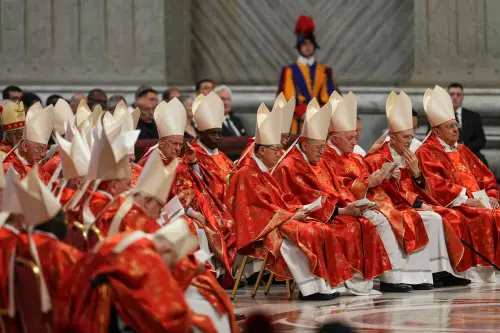
Vatican City: A mood of eager anticipation swept across the Catholic world on Thursday, as cardinals returned to the Sistine Chapel for the second day of voting to elect a new pope.
Late Wednesday, a plume of black smoke rising from the chapel’s chimney signalled to the crowd in St Peter’s Square that the first ballot had ended without the required two-thirds majority to select a successor to the late Pope Francis.
The 133 cardinals eligible to vote – known as the “Princes of the Church” – spent the night in the Vatican’s Santa Marta guesthouse. They began Thursday with a private mass to seek divine guidance before resuming the voting process.
If the morning ballot does not yield a result, a second vote will follow. Should no consensus emerge, two additional ballots will be held in the afternoon. The cardinals will remain cloistered until one among them receives a clear mandate to become the 267th leader of the Catholic Church, which counts 1.4 billion followers worldwide. Bound by strict secrecy, the electors risk excommunication if they breach the confidentiality of the process.
Shielded from the outside world to preserve focus and confidentiality, the cardinals use smoke signals to indicate the results of each ballot. Burned with specific chemicals, the ballots produce black smoke for no decision and white for the election of a new pontiff.
While the last two conclaves in 2005 and 2013 both concluded within two days, some in the 20th century extended longer, and one, held from 1268 to 1271, remains the longest in history, lasting nearly three years.
As evening settled over Rome on Wednesday, tens of thousands of pilgrims, tourists and locals gathered in the square under the warm dusk sky, hoping for a white smoke signal. Groans echoed through the crowd when the smoke remained black – dashing hopes of an early result.
Yet spirits remained high.
"I don't mind that it's black smoke, it shows the Holy Spirit is at work. There will be other votes soon enough, we will get our pope," said 37-year-old James Kleineck from Texas.
Barbara Mason, 50, who travelled from Canada for the occasion, expressed optimism about the delay: "I'm glad they've taken so much time because that means they're thinking carefully about who the pope will be," she said. She added that Cardinal Matteo Zuppi – Pope Francis’s bicycle-riding envoy – would be a worthy successor.
This 2025 conclave marks the largest and most internationally diverse in history, bringing together cardinals from approximately 70 countries, many of whom had never met before. No clear frontrunner has emerged, with contenders representing a wide range of theological perspectives, from progressive to conservative.
The next pontiff will confront a range of challenges, including ongoing geopolitical tensions, internal divisions within the Church, the legacy of the clerical sex abuse crisis, and declining church attendance in many Western nations.
The conclave opened with a solemn, traditional procession, broadcast live on large screens in front of the basilica. After gathering in silent prayer in the Pauline Chapel, the cardinals entered the Sistine Chapel, accompanied by Swiss Guards, surrounded by Michelangelo’s masterpieces.
Earlier that day, during a public mass in St Peter’s Basilica, Cardinal Giovanni Battista Re – dean of the College of Cardinals – offered closing reflections ahead of the conclave.
"We are here to invoke the help of the Holy Spirit, to implore his light and strength so that the pope elected may be he whom the Church and humanity need at this difficult and complex turning point in history," he said. Now over 80, Battista Re is no longer eligible to vote.
The mass was the last public rite until the new pope is introduced from the basilica's balcony.
Around 80 percent of the current electors were appointed by Francis, known for his charisma and advocacy for the marginalised. Some cardinals seek to continue his reform-minded legacy, while others favour a more traditional figure.
Among those reportedly under consideration are Italian Cardinal Pierbattista Pizzaballa, Hungarian Cardinal Péter Erdő, and Sri Lankan Cardinal Malcolm Ranjith. | AFP