No ice, no accident: Researchers rewrite story of Stonehenge’s origins
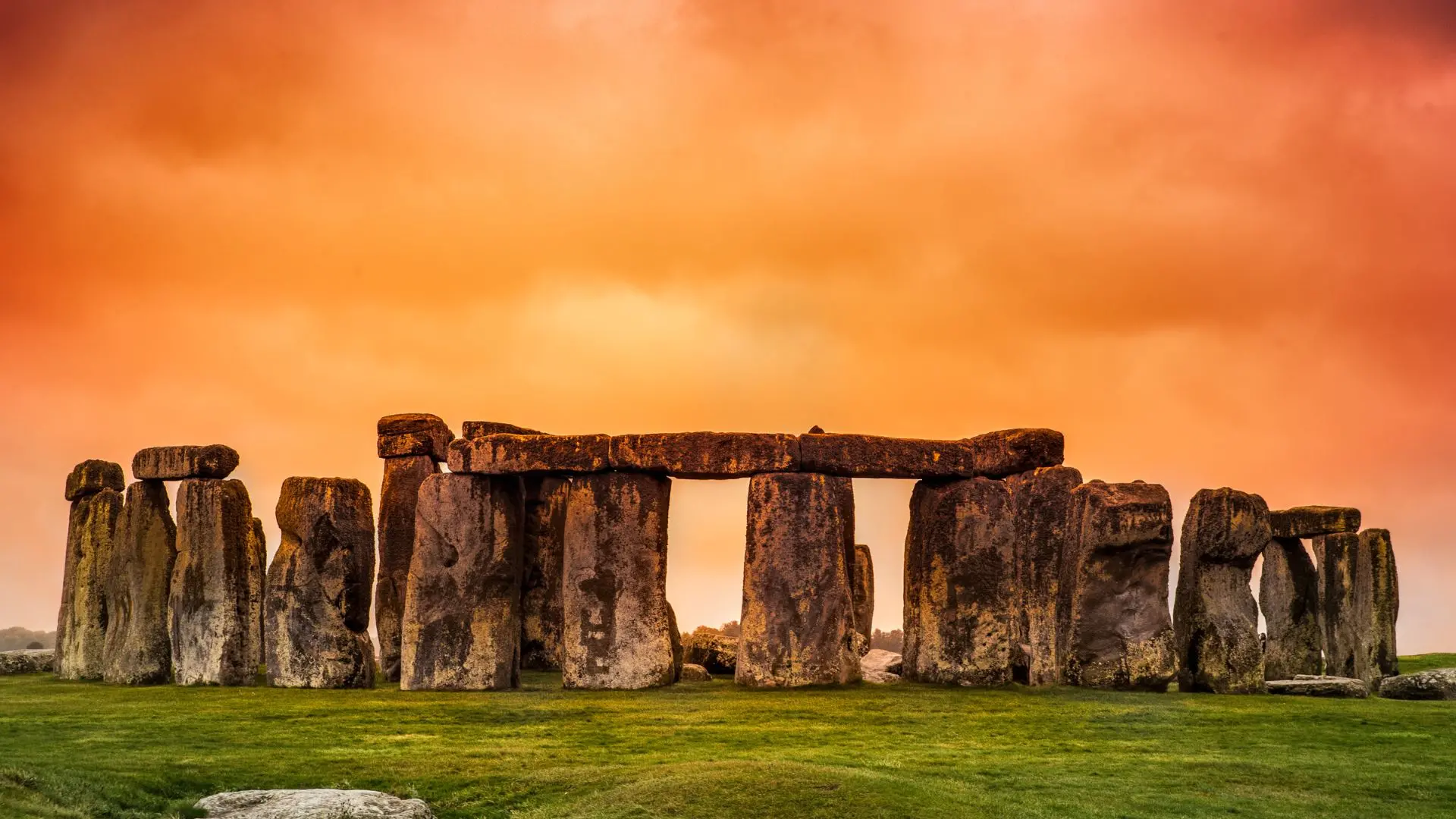
A fresh geological study has added significant weight to the long-running debate over how the colossal stones of Stonehenge reached their final resting place on Salisbury Plain. The research indicates that ancient communities, not glaciers, transported the monument’s enormous stones, challenging one of the last remaining theories that Ice Age forces played a decisive role.
Scientists at Curtin University analysed tiny mineral grains in nearby river sediments and found no evidence that glaciers ever carried the multi-tonne stones south toward the site. Their findings narrow the mystery: the stones did not arrive by accident. They were moved deliberately.
No glacial fingerprint on Salisbury Plain
The team examined zircon and apatite minerals within streams draining Salisbury Plain, looking for traces that would indicate glacial transport from Wales or northern Britain. Such minerals typically survive for millions of years and act as geological “passports” showing where material originated.
The expected glacial signal was nowhere to be found. Instead, the sediments matched rocks native to southern England, pointing to local recycling rather than Ice Age movement.
This discovery strengthens the case against the long-held notion that ancient ice sheets deposited the stones near the site. Geomorphologists have increasingly questioned that theory, noting the absence of classic glacial features such as moraines, erratic dispersal trails or buried till layers. The new mineral evidence intensifies that scepticism.
Human effort, not natural forces
If glaciers did not deliver the stones, early Neolithic communities must have transported them. The research stops short of explaining how, but the implications are stark: the monument required extraordinary planning, engineering and labour.
The largest stones, known as sarsens, most likely came from West Woods, around 25 kilometres north of the site. Each weighs roughly 25 tonnes, meaning even this relatively short journey would have demanded immense physical and organisational effort.
The new geological results support a broader pattern: Stonehenge was not assembled from whatever materials happened to be nearby. Its builders made intentional, precise choices.
Bluestones and the long-distance puzzle
The smaller bluestones deepen the mystery, and now, the awe. Their mineral signatures align with outcrops in the Preseli Hills, roughly 230 kilometres away. Some may have travelled by sea, others over land, but either route rules out accidental transport.
One stone is even more remarkable. The Altar Stone appears to originate from the Orcadian Basin, more than 700 kilometres from Salisbury Plain. No known glacial path explains such a journey.
Human organisation, however, does.
A monument shaped by intention
The study’s authors do not claim to have solved precisely how Stonehenge’s stones were hauled. Sledges, wooden rollers and boats all remain plausible. What their work does is shift the balance of probability more decisively than ever before.
The evidence leaves little space for easy answers. Rather than a monument shaped by coincidence and natural forces, Stonehenge increasingly appears to be the result of sustained, purposeful human effort, a feat of prehistoric engineering carried out on a scale that still astonishes today.
While the monument’s full story remains partly hidden, one conclusion is now harder to dispute: the stones are here because people brought them.