5 arrested for vandalism and arson at Nepal Supreme Court during Gen Z protests
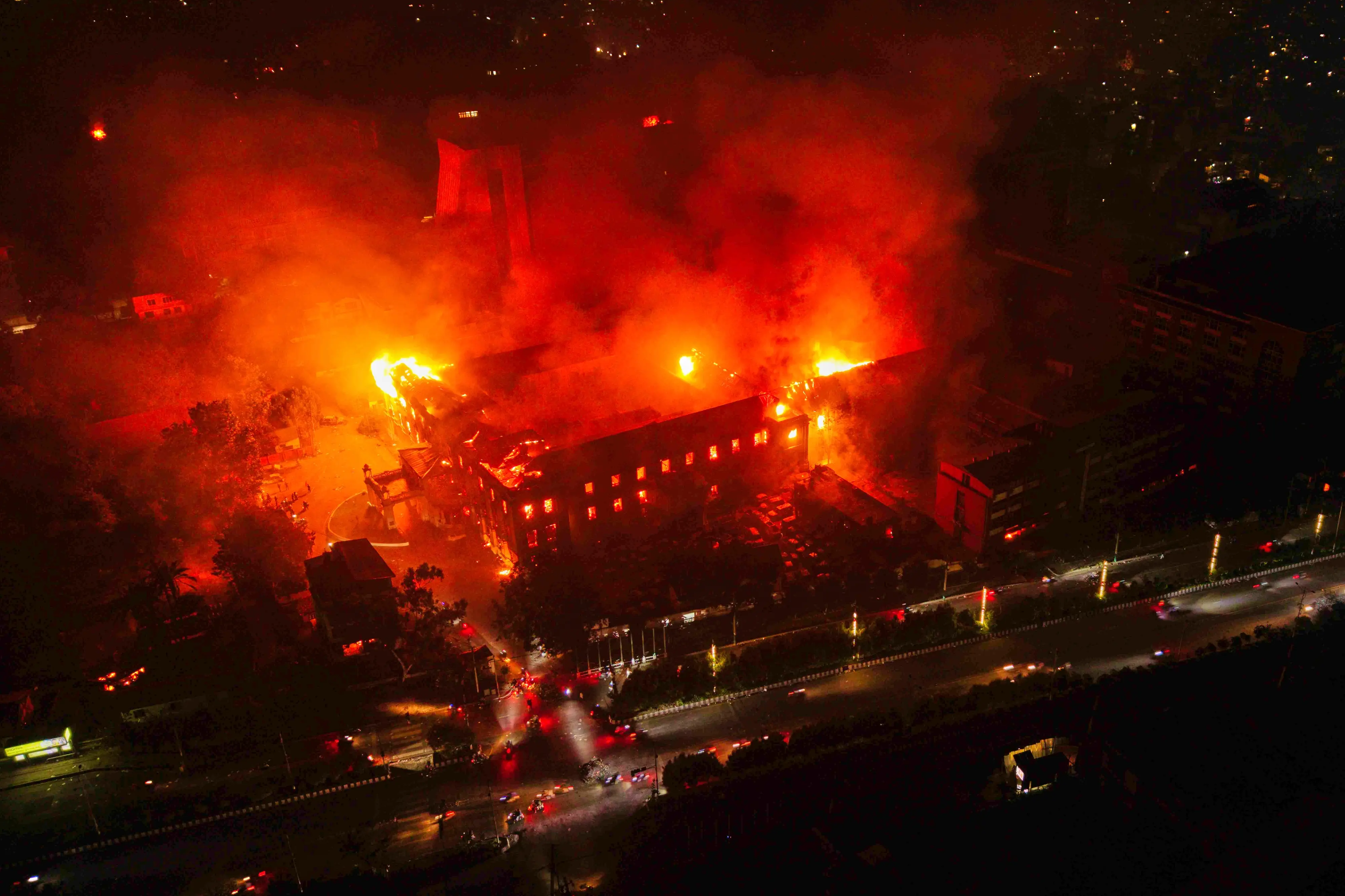
Kathmandu: Nepal police have arrested five people for their involvement in vandalism and arson at the Supreme Court building near the Singhdurbar Secretariat complex in Kathmandu during the Gen Z protests held in September, officials said on Monday.
The arrests were announced by Superintendent of Police Pawan Kumar Bhattarai, spokesperson for the Kathmandu District Police Circle. The suspects include Raju Pariyar and Jyoti Thapa Ghatani. Authorities said additional individuals were involved, and their names will be released once identified.
The Supreme Court had filed a complaint requesting police action against those responsible for setting fire to the main building of the country’s highest judicial body. Damage from the arson had forced the court to postpone operations for several weeks, and hearings were temporarily conducted in tents as the main structures were destroyed.
During the two-day Gen Z protests, which were held against corruption and a social media ban imposed by the KP Sharma Oli-led government, 66 government buildings—including the federal Parliament—were set ablaze. A total of 76 people died during the unrest.
So far, Nepalese authorities have arrested 267 individuals linked to vandalism and arson affecting both public and private properties during the protests.
The Gen Z protests of September 2025 saw widespread unrest across Nepal, with youths demonstrating against government corruption and restrictions on social media platforms. The movement quickly escalated into violent confrontations, leading to destruction of government infrastructure, including critical judicial and administrative offices.
The Supreme Court, Nepal’s apex judicial authority, was severely affected, with its main building damaged in a fire set by protesters. Operations were disrupted for weeks, highlighting the vulnerability of public institutions to civil unrest.
Police investigations over the past months identified multiple perpetrators, leading to the arrests of five individuals, with more suspects expected to be named. Authorities emphasized that the arrests were part of a broader crackdown on violence during the protests, with 267 people already detained for involvement in arson and vandalism at various public and private properties.
Officials stated that these measures are aimed at restoring law and order while ensuring accountability for damage to national institutions. Meanwhile, efforts are underway to rebuild affected buildings and resume normal court functions.
The Gen Z protests remain a significant episode in Nepal’s recent history, reflecting the rising political activism among younger citizens and the challenges faced by authorities in balancing civil liberties with public safety.
(With PTI inputs)