Nepal uncovers one of its largest corruption scandals; finds itself in Chinese net
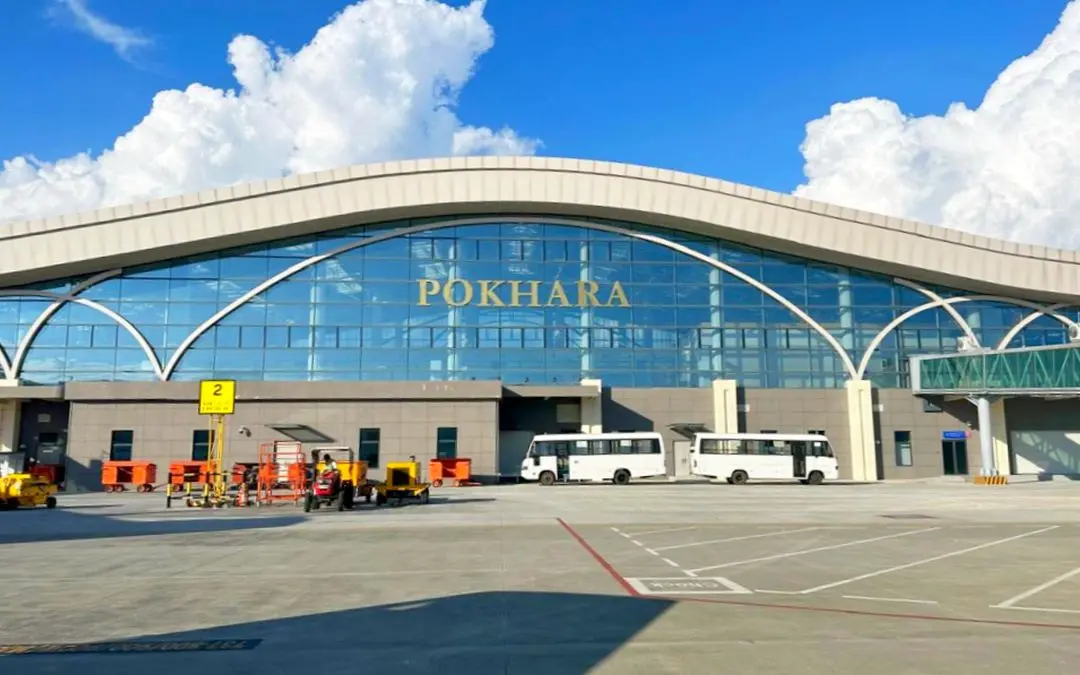
A Nepalese parliamentary investigation has uncovered massive corruption during the construction of the China-financed Pokhara International Airport, with embezzlement totaling nearly Nepali Rupees (NRs) 14 billion, a subpanel of the House of Representatives' Public Accounts Committee (PAC) has concluded.
The findings, presented after a months-long inquiry, confirm serious irregularities and corruption in the project carried out by China CAMC Engineering, the construction arm of China's state-owned conglomerate Sinomach.
The airport, built largely with Chinese materials and technology under a concessional loan, has since struggled to attract international flights.
"In the investigation we have found irregularities which worth to about NRs 14 Billion in the current exchange rate of the US Dollars," a member of the subpanel told ANI, adding, "The Finance Ministry also hasn't given all the requested documents at the time of our investigation. The figures might be high but we are sure that the construction of Pokhara International Airport is one of the largest corruption scandal in Nepali history."
Initially estimated to cost NRs 14 billion, the project’s expenses rose sharply to NRs 22 billion. The panel, led by Rastriya Prajatantra Party (RPP) president Rajendra Lingden, classified the irregularities into 11 categories and distributed the findings to lawmakers for review.
The probe found major breaches, including paying USD 5.5 million for soil transport that never occurred and building the runway at 2,636 feet above sea level -- below the agreed 2,677-2,674 feet range. Similarly, CAAN separately spent millions to level a nearby hill and install an HVAC system, expenses that were contractually the Chinese contractor’s responsibility.
Payments were also made without work being completed. For instance, the Chinese firm was paid USD 10.648 million for drainage construction and USD 4.435 million for soil compaction, both without proper execution.
The subpanel also found that the construction company was granted tax exemptions worth NRs 2.2 billion, despite the contract clearly stating taxes would be paid by the contractor.
The report holds the Civil Aviation Authority of Nepal (CAAN) directly responsible. It recommends the immediate suspension of CAAN Director General Pradeep Adhikari, alongside investigations into former directors Sanjeev Gautam, Rajan Pokharel, and other senior officials involved in the project.
Despite its inauguration earlier this year, Pokhara International Airport has seen little international activity beyond occasional Chinese-chartered flights. Initially hailed as a 'dream come true' for the tourism hub of Pokhara, the airport has been criticized as a 'White Elephant' project.
Days before the airport's inauguration, the Chinese ambassador claimed it was part of the Belt and Road Initiative (BRI), a claim the Nepalese government later rejected. Yet, according to investigators, the project has exemplified "the perils that came with importing China's infrastructure-at-any-cost development model, disproportionately benefiting Chinese firms at the expense of the borrowing nation."
Internal documents show that China CAMC Engineering had extensive control over the project. Officials said the company "consistently dictated terms to maximize profits and protect its interests," while systematically dismantling Nepali oversight. Nepal signed the initial memorandum with CAMC in 2011 before an official bidding process, with Chinese firms given exclusive rights to bid.
CAMC's initial USD 305 million bid -- almost double Nepal’s estimate -- was only reduced to USD 216 million following political outcry. Oversight mechanisms, including consulting budgets, were drastically slashed, reducing consultant hiring allocations from USD 2.8 million to just USD 10,000.
The situation deteriorated further when CAMC acquired IPPR International Engineering, the firm assigned to supervise quality control, leading to a direct conflict of interest. Allegations also surfaced that IPPR had falsified staff credentials.
As passenger numbers failed to materialize, Nepal reportedly requested China to convert the airport loan into a grant. However, no formal agreement was reached during Prime Minister Pushpa Kamal Dahal’s 2023 visit to Beijing.