Nepal-China flash floods: Death toll surpasses 950 with hundreds feared stuck in tunnels
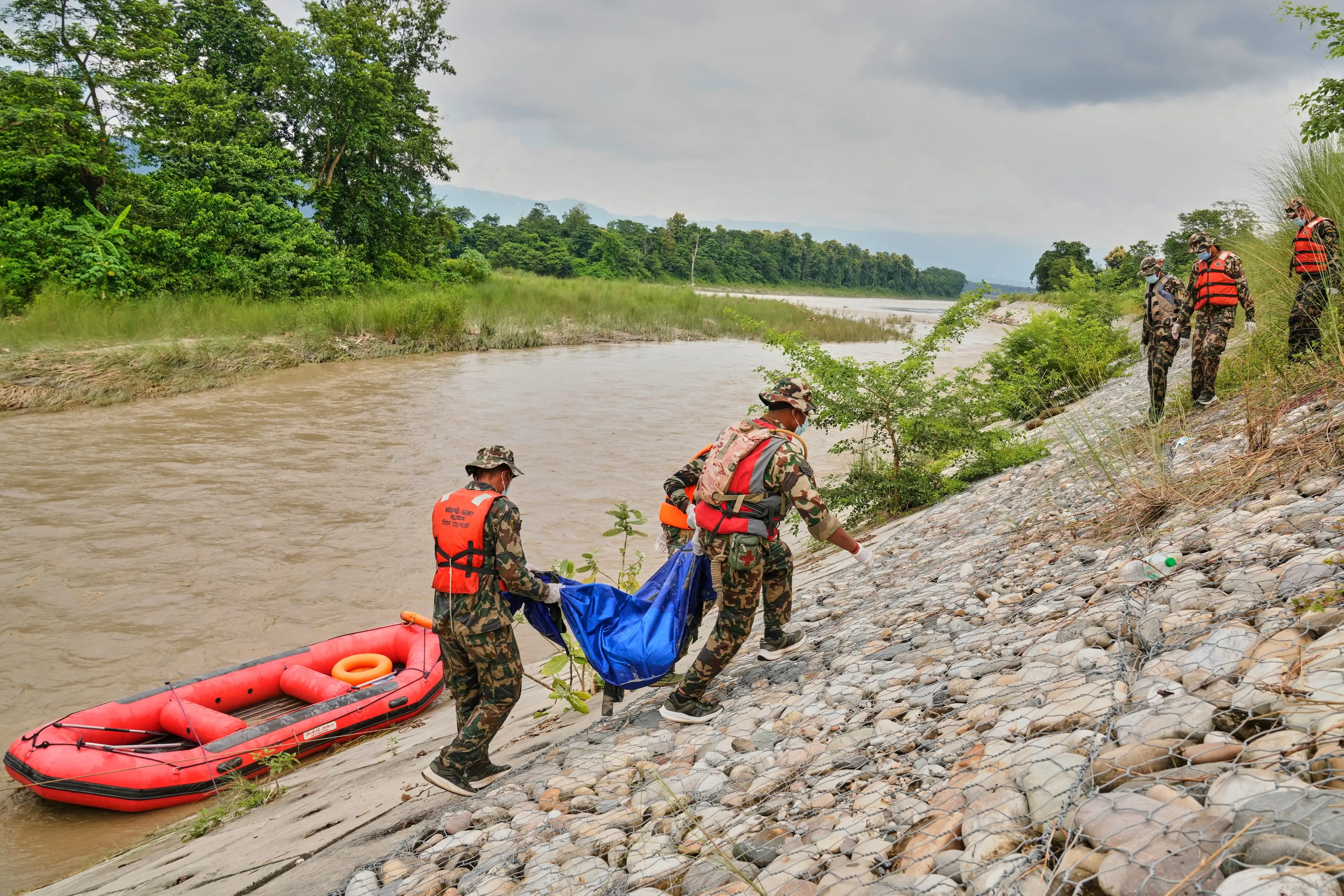
Kathmandu: Rescue teams mounted an urgent race against time on Monday to reach hundreds of workers trapped inside mud-filled hydropower tunnels along the Nepal-China border, following catastrophic flash floods that have claimed over 950 lives.
The combined death toll across both nations surpassed 950, with more than 4,400 people still unaccounted for. Nepal's disaster agency reported 939 fatalities and 3,925 missing, including 592 foreign nationals. Chinese authorities confirmed 16 deaths and 546 missing. Officials noted that 80 American citizens remain missing, while 13 have been rescued.
Emergency operations focused heavily on 12 damaged hydroelectric facilities in Nepal's Rasuwa and Nuwakot districts, where the Independent Power Producers’ Association, Nepal (IPPAN) reported roughly 900 missing workers. About 500 of those workers are believed to be trapped inside large water diversion tunnels. IPPAN President Mohan Kumar Dangi confirmed that at least 576 people were missing from the Upper Trishuli-1 Hydropower Project alone, with nearly 300 trapped in its subterranean tunnels.
Nepal Army crews attempted to descend 15 meters into a tunnel at the Trishuli-3 project to reach survivors, while four bodies were recovered from three separate sites. Geoscientist Jakob Steiner from the University of Graz noted that while rescue teams have managed to pump oxygen into some sections, “It’s a race for time, though, as people need food and water.”
The disaster struck last Wednesday when a massive bedrock collapse beneath a high-altitude Himalayan glacier triggered a magnitude 5.2 seismic event, propelling a torrent of rock, ice and mud through river valleys in Tibet and Nepal. The surge swept away infrastructure, including a Chinese border immigration complex where a group of 49 Indian pilgrims led by traveler Sathya Narayan was caught in the deluge.
On the Chinese side, emergency crews deployed heavy machinery to repave damaged access roads leading to the Gyirong Port border crossing, which remains submerged under up to three meters of water.
The United Nations warned Monday that 65,000 people urgently require clean water and sanitation supplies. UN spokesman Stephane Dujarric noted that over 22,000 children need protection services and more than 10,000 school-age children require psychosocial support following the destruction of local infrastructure.
AP