Nepal-China border flash floods: Over 680 dead; missing tally nears 3000
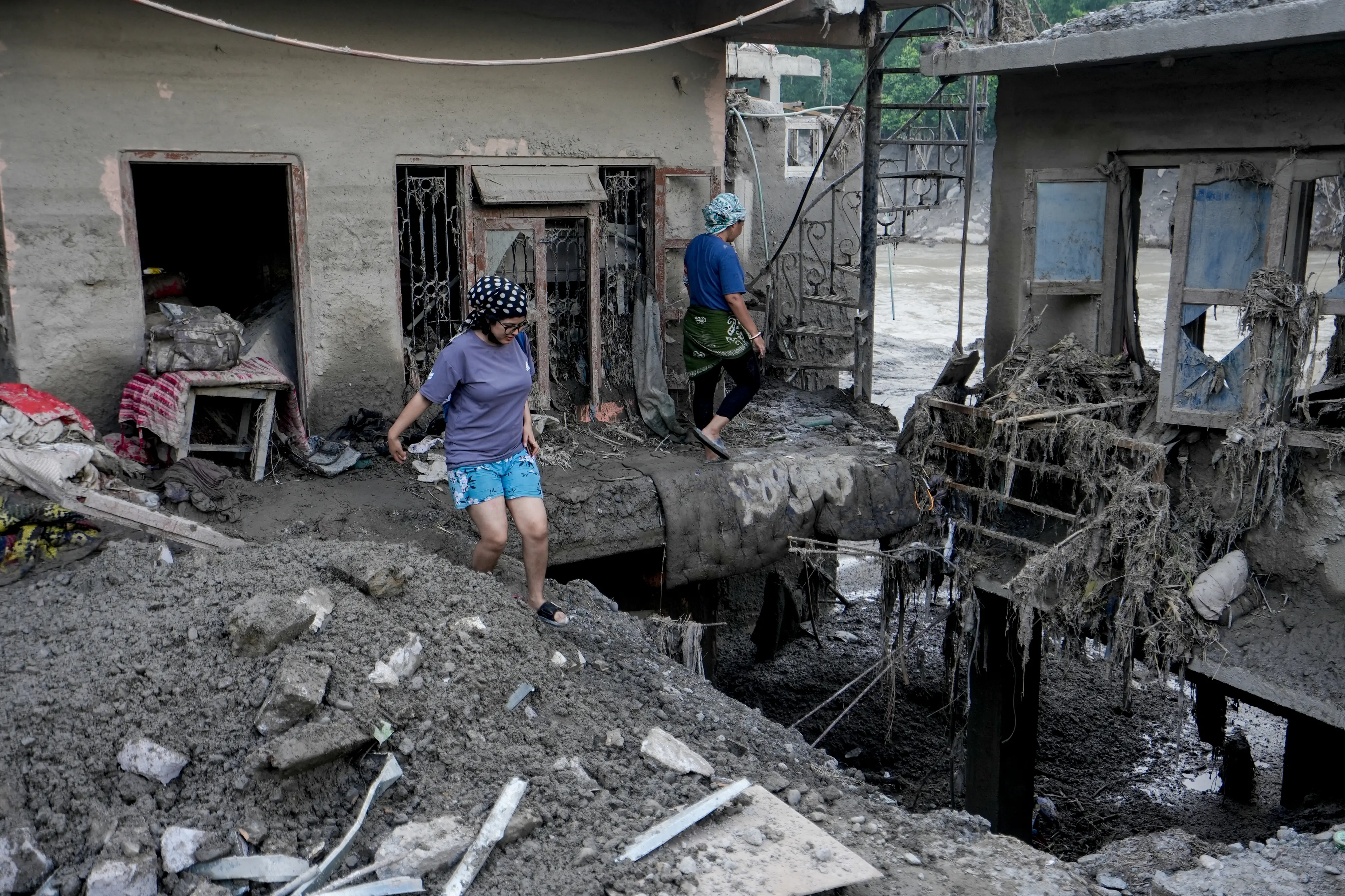
Kathmandu (Nepal): Joint estimates from Nepalese officials and Chinese administrative bodies in Tibet indicate that the missing total has reached nearly 3,000 people, with at least 682 bodies retrieved so far.
The disaster agency in Nepal confirmed 675 fatalities on Saturday. Authorities reported that 2,426 individuals, among them a significant number of foreign nationals, remain untraceable nationwide. On the Chinese side of the border, strict reporting protocols in autonomous Tibet have limited independent media verification; however, official reports from state outlet Xinhua confirmed 554 missing individuals and seven recorded fatalities.
Over 100 workers trapped underground
Emergency crews with the Nepali army are working under harsh terrain conditions, using specialized drilling equipment to break into subterranean infrastructure where more than 100 individuals are believed to be trapped.
These workers represent a portion of the 933 power sector personnel unaccounted for following the surge of icy slurry down local river basins. To support the operation, India dispatched an 11-member specialized rescue team, complemented by a nine-member tunnel team sent from China.
Reconstruction projections reach major figures
Addressing the scale of the destruction, Foreign Minister Shisir Khanal noted that the financial burden to rebuild damaged infrastructure could reach “billions of dollars”.
“We will do loss and damage research and then we plan, but I am reaching out to our international community for support,” Khanal stated.
Anxious relatives gathering at relief hubs
Families of the unaccounted for are congregating in areas like Bidur, where the army base serves as an operational headquarters. Relatives are continuously reviewing public lists posted on-site for updates on survivors.
Among them, Kalka Sharda expressed her distress while searching for family members. “I have come here looking for my son,” she shared, checking the survivor roster. “He was a labourer at the hydropower plant, but I can't find his name, and the authorities are not saying anything,” she said.
India enhances regional glacier surveillance
Following indications that a collapsing glacier initiated the torrent, Indian disaster management teams have heightened surveillance operations along their northern borders.
Madan Kaushik, Uttarakhand's Minister for Disaster Management, emphasised the proactive strategy. "Since we share a border with Nepal, as a neighbour, and also have a similar geographic situation... we have asked our department to monitor all the glaciers and known glacial lakes in the region,” he said.
International financial and technical commitments
According to Red Cross assessments, up to 93,000 residents across Nepal are dealing with the aftermath of the deluge. In response to Nepal's urgent calls for monetary assistance, specialized search equipment, heavy-lift drones, genetic identification packages, and cold storage units, several nations have pledged assistance.
Chinese President Xi Jinping communicated Beijing's backing for the affected areas. Furthermore, Canada pledged CAN$5 million ($3.6 million), the European Union allocated two million euros ($2.3 million), and the United States announced a $3.6 million emergency relief package.
Regarding the commitment, the US State Department confirmed via X. “The United States is standing with the people of Nepal by providing more than $3.6 million worth of life-saving humanitarian assistance, including up to three months of emergency food assistance to up to 10,000 flood-affected households,” it said.
AP