Myanmar’s opium boom explodes to decade high amid raging civil war
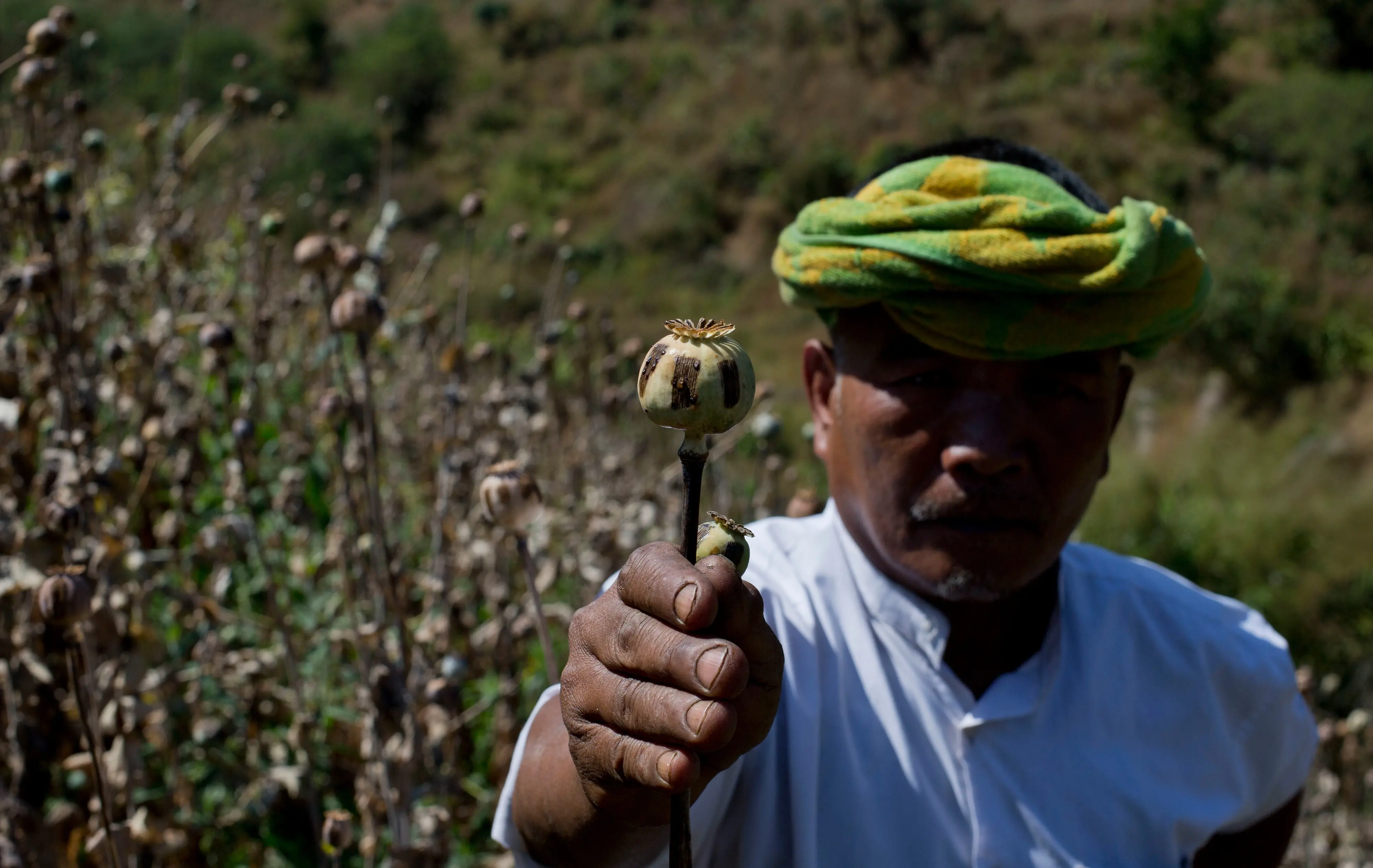
Kuala Lumpur: Opium poppy cultivation in Myanmar reached its highest level in a decade in 2025, according to the United Nations Office on Drugs and Crime (UNODC), underscoring the country’s continued role as a major source of illicit drugs.
The Myanmar Opium Survey 2025 reported that the area under opium cultivation expanded by 17% from 2024, reaching 53,100 hectares (131,212 acres), the largest extent since 2015.
Myanmar’s emergence as a leading opium producer follows sharp declines in Afghanistan’s output after the Taliban imposed a ban on cultivation in 2021. The UNODC survey also reaffirmed Myanmar’s position as the world’s largest methamphetamine producer, with the synthetic drug increasingly distributed across Asia and the Pacific.
The price of opium, which is processed into morphine and heroin, has surged to an average of $329 per kilogram, more than double the 2019 price. This makes Myanmar’s opium economy worth between $641 million and $1.05 billion, equivalent to roughly 0.9% to 1.4% of the country’s 2024 GDP. Despite a 13% drop in yields due to intensified conflict in certain regions, the expansion of cultivated land led to a 1% increase in overall production, totalling approximately 1,010 metric tonnes.
The ongoing civil war, which began after Myanmar’s military ousted the elected government in February 2021, continues to push farmers toward opium cultivation as a means of survival. Delphine Schantz, UNODC Representative for Southeast Asia and the Pacific, said the expansion reflects the resurgence of Myanmar’s opium economy and cautioned that further growth is likely without alternative livelihood options.
The report also highlighted that Myanmar’s heroin may be increasingly reaching European markets, partially filling the gap left by Afghanistan’s declining production, though current volumes remain limited. Northeastern Myanmar, part of the infamous “Golden Triangle” bordering Laos and Thailand, has historically been a centre for opium and heroin production, aided by weak government control and the involvement of various ethnic militias in the trade.
Since 2021, Myanmar’s opium cultivation has steadily risen, driven by the civil war, widespread poverty, and rising opium prices. Farmers are venturing deeper into poppy cultivation to cope with economic hardship, while the illicit drug sector continues to flourish in areas with limited government oversight.
Methamphetamine production has also expanded, benefiting from easier industrial-scale manufacturing compared with labour-intensive opium. The increase in cultivated land has offset lower average yields, resulting in a net rise in opium production.
Analysts note that Myanmar’s heroin is gradually entering European markets, reflecting both international demand and the adaptability of the country’s drug networks. The UNODC stressed the urgent need for sustainable alternative livelihoods to reduce farmers’ dependence on opium cultivation. Without such interventions, the cycle of poverty, conflict, and illicit drug production is likely to persist, particularly in the Golden Triangle, where lawlessness and militia activity support the trade.
Myanmar’s production of opium and methamphetamine continues to play a central role in the regional and global drug economy, with significant implications for public health, security, and cross-border crime.
(With AP inputs)