Iran appoints Mojtaba Khamenei supreme leader after Ayatollah Ali Khamenei’s death
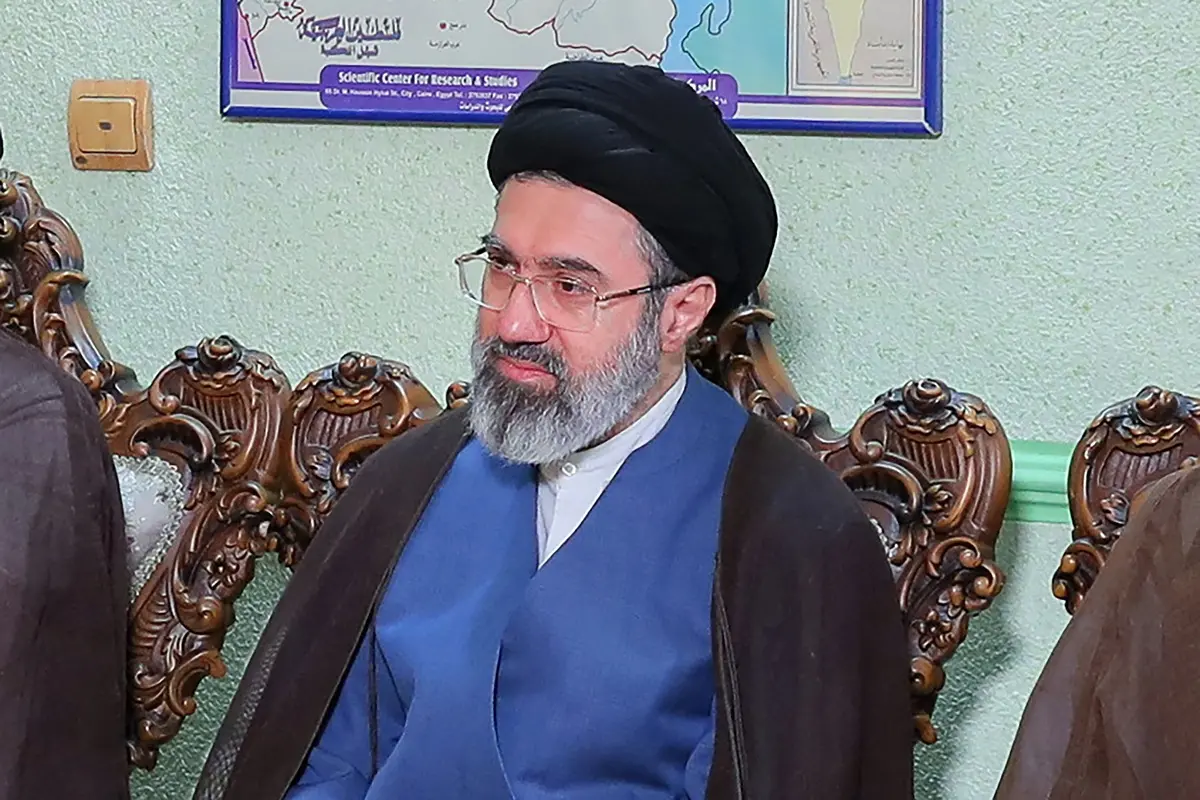
Mojtaba Khamenei has been named Iran’s new supreme leader, state television announced early Monday, marking a dramatic turn in the war that erupted after the killing of his father little more than a week ago.
The 56-year-old son of Ayatollah Ali Khamenei was selected by the Assembly of Experts, a body of clerics responsible for choosing the country’s supreme leader. His appointment comes amid widening regional tensions, rising oil prices and mounting civilian casualties across the Middle East.
Assembly of Experts announces successor
Iranian state TV said Mojtaba Khamenei was chosen following “strong” votes within the Assembly of Experts and urged the nation to unite behind him. The announcement came after signs of disagreement among Iranian officials while the country waited for the assembly’s decision.
State television showed scenes of people celebrating in parts of Tehran after the announcement.
The younger Khamenei had not appeared publicly since the war began. Even before the Israeli strike that killed Ayatollah Ali Khamenei, he had long been seen as a possible successor despite never having held an elected or appointed government position.
Only one previous transfer of power has taken place in the office of supreme leader since Iran’s Islamic Revolution nearly half a century ago.
A secretive figure, Mojtaba Khamenei now occupies the centre of Iran’s theocratic system. As supreme leader, he will have the final say on all matters of state, serve as commander-in-chief of the military and oversee the powerful Revolutionary Guard.
He will also hold authority over Iran’s stockpile of highly enriched uranium, which could be used to build a nuclear weapon if he chooses to decree it.
Global reactions and support from allies
His appointment is expected to draw criticism from Washington.
“Khamenei's son is unacceptable to me,” US President Donald Trump has said. “We want someone that will bring harmony and peace to Iran.”
The White House did not immediately respond to a request for comment. Trump told ABC News on Sunday he wants a say in who comes to power once the war ends, adding that a new leader “is not going to last long” without his approval.
Inside Iran, however, the Revolutionary Guard issued a statement backing Mojtaba Khamenei’s leadership. The Iran-backed Lebanese militant group Hezbollah posted his portrait on Telegram with the caption: “Leader of the blessed Islamic revolution.”
Top Iranian security official Ali Larijani praised the Assembly of Experts for “courageously” meeting even as airstrikes struck Tehran, saying the younger Khamenei had been trained by his father and “can handle this situation”.
Civilian toll rises as oil crosses $100
The regional fallout from the war continued to widen.
Bahrain accused Iran of striking a desalination plant crucial to drinking water supplies, while Israeli overnight strikes left oil depots burning in Tehran.
Crude prices have surged above USD 100 per barrel for the first time in more than three-and-a-half years as the conflict disrupts production and shipping across the region. Some producers, including in Iraq, have reduced output amid security concerns in the Strait of Hormuz.
Anger across the Arab world is also intensifying. The Arab League chief criticised Iran’s “reckless policy” of attacking neighbours, including states hosting US forces.
Since the war began on February 28, Gulf countries have faced hundreds of missiles and drone attacks.
Saudi Arabia reported its first deaths after a military projectile struck a residential area, killing two people of Indian and Bangladeshi nationality. Foreign workers and residents have accounted for most casualties in Gulf nations.
Two US officials said the State Department will order nonessential personnel and families to leave Saudi Arabia as Iran escalates retaliation for US-Israel military operations. Eight other US diplomatic missions in the Middle East and South Asia are already operating under “ordered departure status”.
Israel confirmed its first soldier deaths in the conflict, saying two troops were killed in southern Lebanon during fighting with Hezbollah. The US military also reported that a service member died from injuries sustained in an Iranian attack on troops in Saudi Arabia on March 1, bringing the total US military deaths to seven.
Officials say the war has killed at least 1,230 people in Iran, at least 397 in Lebanon and at least 11 in Israel.
Meanwhile, Bahrain, Kuwait, the United Arab Emirates and Saudi Arabia reported additional Iranian missiles launched towards their territories.
Iranian President Masoud Pezeshkian urged neighbouring states not to join US and Israeli attacks, saying strikes had been launched from US bases and vessels rather than Gulf governments.
Bahrain said an Iranian strike damaged one of its desalination plants, although authorities confirmed electricity and water supplies remained operational. Such plants provide drinking water to millions across the region.
The incident followed Iran’s claim that a US airstrike damaged a desalination facility on Qeshm Island in the Strait of Hormuz. Foreign Minister Abbas Araghchi said the strike cut water supplies to 30 villages.
He warned that in doing so, “the US set this precedent, not Iran”.
Responding to the accusation, CENTCOM spokesperson US Navy Capt. Tim Hawkins said: “US forces do not target civilians -- period”.