Masked mobs loot shops, set buildings ablaze in France; 1,200 arrested as protests spiral
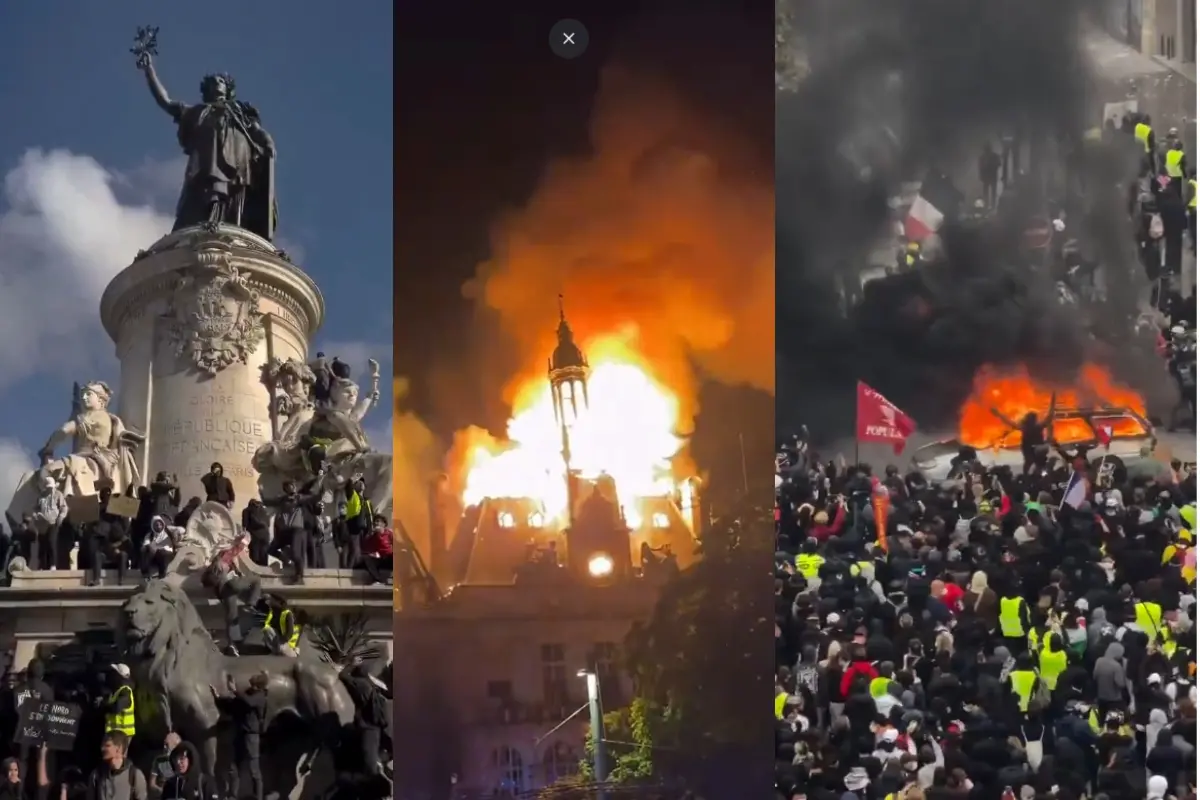
Massive demonstrations swept across France on Saturday as hundreds of thousands of people marched against soaring inflation and the rising cost of living. What began as public rallies quickly turned into intense street clashes in major cities. Masked youths torched parked cars, damaged government offices, and ransacked retail stores.
The French Interior Ministry reported that 550,000 people participated nationwide, though the CGT trade union estimated turnout at 800,000. Police used water cannons and tear gas against crowds throwing rocks and fireworks. In Saint-Etienne, a 17-year-old protester suffered a severe injury when a crowd-control grenade blew off his right hand. In Paris, Mayor Emmanuel Gregoire stated that whole streets "have been devastated". Over 150 police officers were injured, and Prime Minister Sebastien Lecornu confirmed that 1,200 people were arrested late Saturday, following initial reports of 400 arrests.
Why people in France are angry
The unrest is driven by a mix of economic strain and political anger. Inflation in Europe has pushed up prices for daily necessities, worsened in part by ongoing conflict in the Middle East. High school and university students have also been protesting for weeks over poor school conditions and alleged excessive police force.
Saturday's rallies were called under a "yellow and youth" banner by the 'Yellow Vest' movement, a working-class group formed eight years ago to fight fuel tax increases. Protesters also voiced frustration over wealth inequality and the upcoming presidential election six months away. Kamil Alahyan, an 18-year-old student, said he was marching because of "politicians who lie" and "the ultra-rich who've been taking more and more wealth over the past 10 years". Ryad Rani, head of the LSU student union, remarked: "The government is trembling and it's right to tremble because when the French people are angry, they never let up". Crowds shouted slogans such as "Macron, resign" and "Everyone hates the police", carrying banners reading "Revolution or death" and "The people will win". Some even drew parallels to the 1789 French Revolution, shouting "It's the Revolution -- we're taking the Bastille!" during local protests.
How masked groups destroyed property
Beyond the main rallies, organized groups of masked youths caused widespread destruction. Bands of youths roamed city streets, disconnecting security cameras before smashing shop windows to steal goods. Supermarkets, pharmacies, clothing retailers, electronics stores, opticians, and luxury boutiques were looted across Paris, Marseille, Nice, Nantes, Bordeaux, Limoges, Lille, Toulouse, and Strasbourg.
Public buildings were also targeted. Masked demonstrators broke into the 140-year-old town hall in Limoges and set it on fire, causing extensive damage. Town halls in Marseille and Lille were broken into and vandalised, a police compound in Bordeaux was damaged, and a tourist office in Lyon was torched.
How politicians and leaders reacted
French President Emmanuel Macron condemned the violence on X, promising that "those who carried out vandalism, attacked administrative offices or businesses, or carried out looting -- even in our town halls, will be prosecuted and punished". He declared there was "no room for violence in our Republic" and offered full support to law enforcement against "sowers of chaos".
Prime Minister Sebastien Lecornu blamed "ultraleft groups" and opportunistic rioters for orchestrating the destruction. Praising police officers who faced "violence of extreme intensity", Lecornu warned political actors against using unrest as a "warm-up" for upcoming elections, stating: "We will not be intimidated. No one will impose their political agenda through violence". He added that clear instructions were issued to apprehend perpetrators and backed a "pay-the-damagers" bill to make vandals financially cover public repair costs.
Political rivals offered contrasting takes. Far-right candidate Marine Le Pen condemned the "rioters", accused rival Jean-Luc Melenchon's far-left party of having "legitimised the violence", and promised to protect citizens "from the violence of the extreme left". Melenchon, who supported the original demonstrations, urged protesters to avoid looting, calling it "contrary to our methods".
What emergency steps are taking place
To manage the ongoing crisis in the capital, Interior Minister Laurent Nuñez activated emergency response units in Paris alongside city officials. Nuñez stated that "our absolute priority is the safety of the women and men of Paris" and appealed to the public to "remain calm and exercise responsibility". With elections approaching, the French government faces mounting pressure to restore order while addressing widespread anger over living standards.