Major setback for Donald Trump as US court curbs sweeping tariff powers
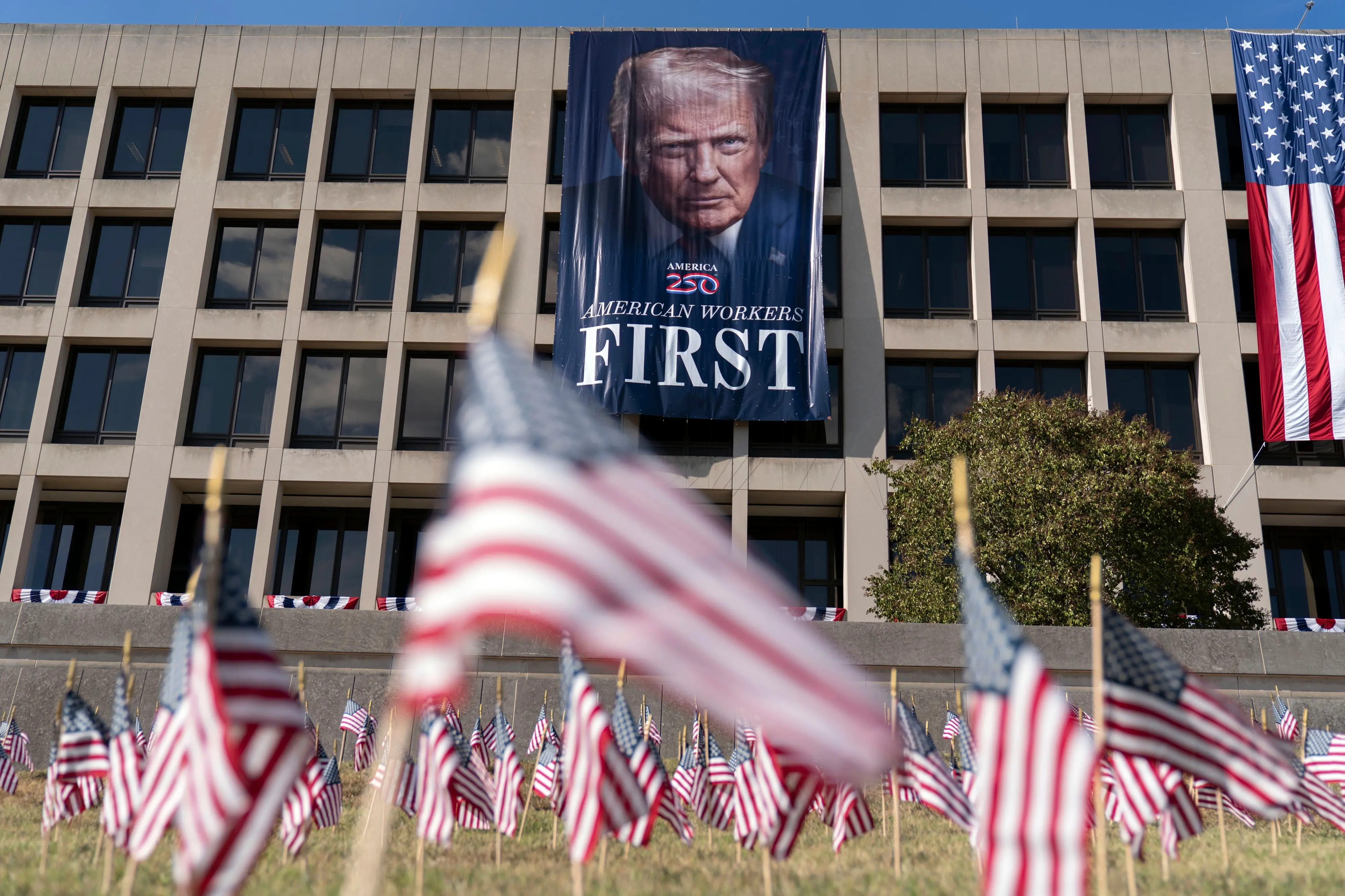
President Donald Trump has claimed near-unlimited authority to bypass Congress and impose sweeping taxes on foreign products, but a federal appeals court has struck back. The U.S. Court of Appeals for the Federal Circuit ruled on Friday that Trump overstepped when he declared national emergencies to justify tariffs on almost all U.S. trading partners.
The decision largely upheld a May ruling by a specialised federal trade court in New York. However, the appeals court removed a part of that ruling that immediately struck down the tariffs, giving the administration time to appeal to the U.S. Supreme Court.
Tariffs and ‘Liberation Day’ measures
The court’s focus was on tariffs Trump imposed in April on nearly every trading partner, following earlier levies on China, Mexico, and Canada. On April 2 — which Trump called Liberation Day — he introduced reciprocal tariffs of up to 50% on countries with which the U.S. has a trade deficit, and 10% baseline tariffs on most others.
Trump later suspended the reciprocal tariffs for 90 days to allow countries to negotiate deals. Some, including the United Kingdom, Japan, and the European Union, agreed to terms to avoid heavier penalties. Countries that resisted, such as Laos and Algeria, faced harsher levies of 40% and 30% respectively, while baseline tariffs remained.
Claimed national emergency powers
Trump justified the taxes under the 1977 International Emergency Economic Powers Act, declaring U.S. trade deficits “a national emergency.” Earlier, he cited the same law in February to target Canada, Mexico, and China over illegal immigration and drug flows.
The Constitution grants Congress the power to set taxes, including tariffs, though presidents have gradually assumed more authority. The appeals court noted in its 7-4 ruling that “it seems unlikely that Congress intended to ... grant the President unlimited authority to impose tariffs.”
Financial and strategic implications
The government warned that striking down the tariffs could force refunds of $159 billion collected so far, threatening U.S. Treasury revenue. Experts said it could undermine the administration’s negotiating strategy, emboldening foreign governments to resist or renegotiate prior commitments.
Trump vowed to appeal to the Supreme Court, calling the decision catastrophic for the United States. Alternative statutes, such as the Trade Act of 1974 and Section 232 of the Trade Expansion Act of 1962, allow tariffs but with restrictions on rate, duration, or investigation requirements.
Court challenge limits, does not affect other tariffs
The ruling does not cover other Trump tariffs on steel, aluminium, and autos imposed for national security reasons, nor tariffs on China from his first term that President Biden maintained.