Kharg Island explained: Why Iran’s key oil hub matters in the US-Iran conflict
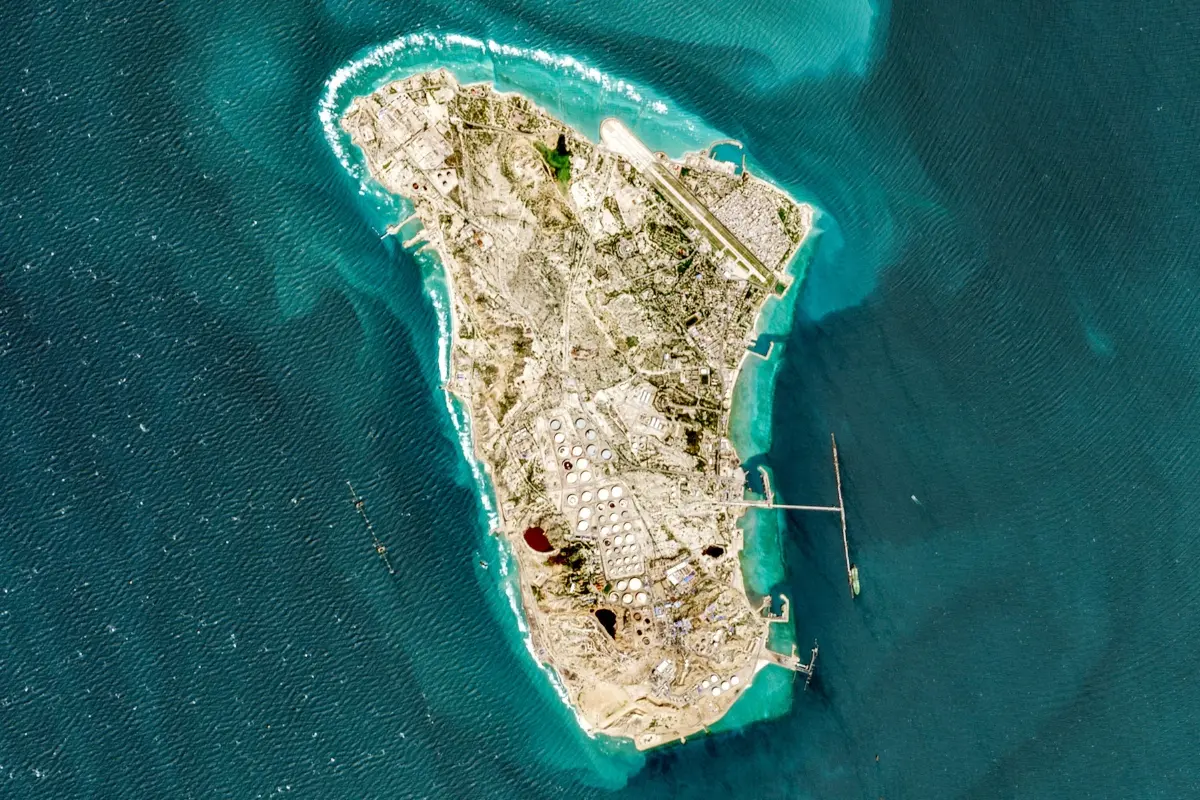
An attack on Iran’s key oil infrastructure has drawn global attention to Kharg Island, the country’s main crude export hub in the Persian Gulf. On March 13, 2026, the administration of Donald Trump announced that United States forces carried out airstrikes on military targets on Kharg Island, describing the operation as part of the widening conflict between the US and Iran.
Trump said American forces had destroyed military installations on the island but deliberately avoided striking the vital oil export infrastructure, warning that it could be targeted if Iran interferes with shipping through the Strait of Hormuz
Where is Kharg Island and why is it important?
Kharg Island is a small coral island located in the Persian Gulf off Iran’s southwestern coast. Covering roughly 7.7 square miles, the island sits about 300 miles from the Strait of Hormuz, one of the world’s most vital maritime chokepoints for energy trade. Despite its small size, Kharg Island plays an outsized role in the global oil market as Iran’s primary crude export terminal.
The deep waters surrounding the island allow large oil tankers to load crude easily, something much of Iran’s coastline cannot accommodate. Because of this geographic advantage, the island handles a substantial share of Iran’s oil exports to international markets.
How much oil passes through Kharg Island?
Kharg Island typically processes between 1.5 million and 2 million barrels of crude oil per day. In the weeks leading up to the current conflict, output reportedly climbed to nearly 4 million barrels daily. Once loaded onto tankers, the crude passes through the Strait of Hormuz before heading to global destinations, often including major buyers such as China.
According to data from the US Energy Information Administration, around 20 million barrels of oil passed through the Strait of Hormuz each day in 2024, making the route one of the most critical energy corridors in the world. Much of Iran’s oil reaching the strait originates from facilities connected to Kharg Island.
Why would an attack on Kharg Island matter globally?
Iran’s economy relies heavily on oil revenues, which form a major portion of government income. Any disruption to exports from Kharg Island would therefore have a direct impact on Tehran’s finances. However, the consequences would extend far beyond Iran.
A shutdown or severe damage to the island’s infrastructure could reduce oil supplies entering global markets, pushing crude prices higher. Oil prices have already climbed above $100 per barrel during the ongoing conflict, reflecting market concerns about supply disruptions in the Gulf region.
What is the island’s role in Iran’s oil network?
Kharg Island functions as the central hub of Iran’s oil export infrastructure. Crude oil from offshore fields such as Aboozar, Forouzan and Dorood is transported through subsea pipelines to processing facilities on the island. From there, the oil is stored and loaded onto tankers bound for international markets.
Because the system is so concentrated, damage to the island’s terminals or pipelines could significantly disrupt the country’s export capacity. Analysts often describe Kharg Island as the “crown jewel” of Iran’s energy sector due to this strategic importance.
A site with a long historical legacy
Long before the modern oil era, Kharg Island held strategic maritime value. Its location in the Persian Gulf made it an important trading and military outpost. Over centuries, the island changed hands between regional and European powers, including the Portuguese and the Dutch.
In the 20th century, Iran’s ruler Reza Shah Pahlavi used the island as a remote exile location for political prisoners. The island’s transformation into a major oil export hub began in 1958, marking the start of its modern economic significance.
Beyond its energy facilities, Kharg Island also holds archaeological and cultural heritage dating back thousands of years, including remains from the Elamite, Achaemenid and Sassanid periods. Historic landmarks such as the Dutch fort ruins and ancient inscriptions highlight the island’s role as both a strategic maritime outpost and a cultural site.
Why Kharg Island is at the centre of geopolitical tensions
Because Kharg Island sits at the heart of Iran’s oil export system, any military action targeting the island carries major economic and geopolitical implications. Iranian officials have warned that attacks on the country’s energy infrastructure could trigger retaliatory strikes against oil and energy facilities linked to US interests in the region.
As tensions escalate in the Persian Gulf, the future of Kharg Island has become closely tied to both Iran’s economic stability and the wider global energy market.