Japan earthquake kills 13, rescuers search for trapped survivors
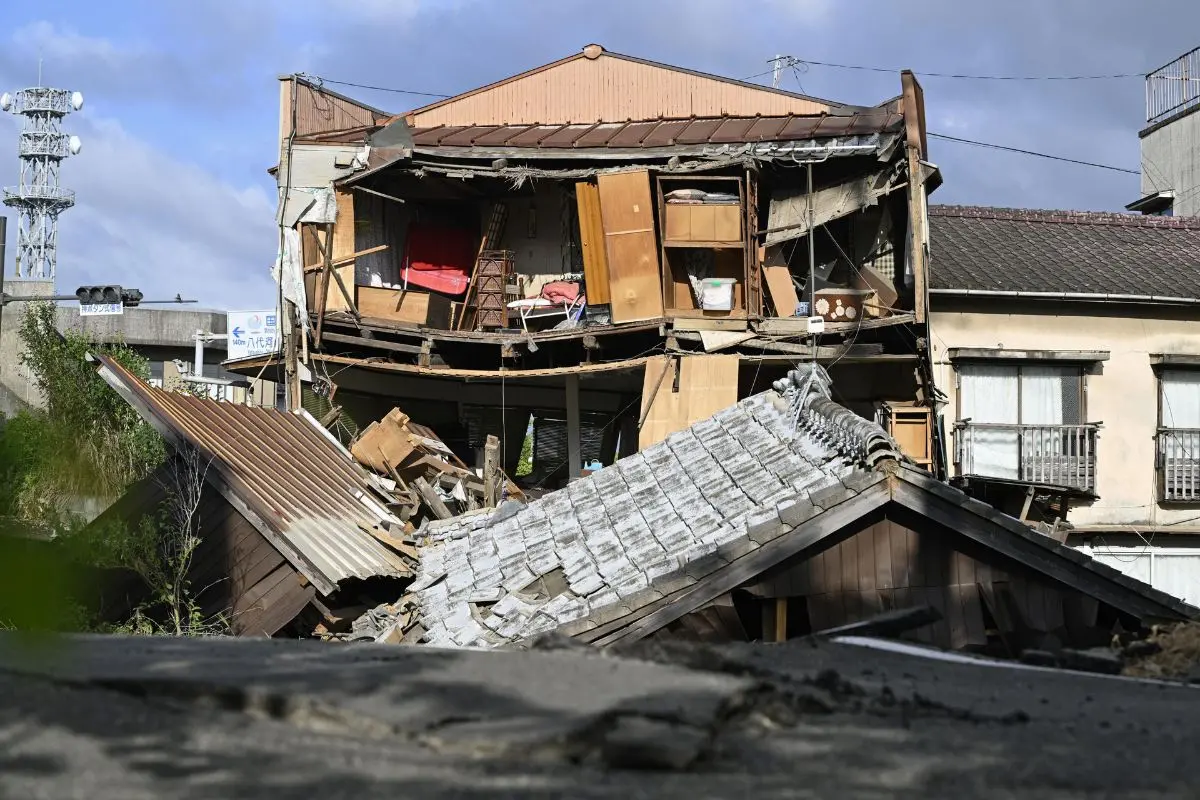
A powerful earthquake that struck Japan's south-western Kumamoto prefecture has killed at least 13 people, with rescue teams racing to reach survivors believed to be trapped beneath collapsed buildings.
The 7.1-magnitude earthquake hit Kyushu island on Tuesday afternoon, causing widespread destruction, triggering fires and leaving tens of thousands of households without electricity.
Japanese officials confirmed on Wednesday that 13 people had died following the quake, while authorities continued to verify whether all the fatalities were directly linked to the tremor.
"Extensive damage has been confirmed, including casualties, collapsed buildings, fires and damage to roads," an official said during a press briefing.
One of the worst-hit sites was a shopping mall in the town of Kashima, where a suspected gas explosion caused severe structural damage after the building had been evacuated. According to the mall's operator, Aeon, the explosion occurred after customers and staff had left the premises.
ALSO READ | 'Pray for safety and recovery': Jaishankar reacts after powerful Japan earthquake
Eight people were rescued from the mall, five of whom sustained injuries. Rescue workers are continuing operations amid fears that several staff members remain trapped inside. Police said the exact number of people still inside is unclear, adding that unstable conditions have so far prevented rescuers from entering the building safely.
At a Nippon Paper Industries factory in Yatsushiro, where the quake partially collapsed a smokestack, local authorities said nine workers remain unaccounted for.
Earlier reports indicated that two women died at the shopping mall, while three others were killed elsewhere on Kyushu. At least seven people have also suffered serious injuries.
The earthquake left extensive damage across Kumamoto Prefecture, with around 36,880 homes and other facilities still without power on Wednesday morning.
The tremor struck at 4.27 pm local time on Tuesday at a shallow depth of around 10 kilometres. The United States Geological Survey measured its magnitude at 6.8, while Japanese authorities recorded it as 7.1.
The quake sparked multiple fires, damaged roads and bridges, and caused part of a pedestrian bridge to collapse into a river. A freight train also overturned, while rail and air transport across the region faced major disruption. High-speed Shinkansen services were suspended, and Kumamoto Airport temporarily halted operations before reopening later in the evening.
Residents described scenes of panic as the earthquake struck.
"The office swayed violently from side to side. I was afraid it would collapse. Everyone panicked," said Chiharu Hara, a 35-year-old recruitment consultant in Kumamoto.
Videos circulating online showed traffic lights and heavy vehicles swaying violently, roads buckling under the force of the quake and sections of the historic Kumamoto Castle's walls collapsing.
The Japanese Self-Defence Forces have deployed around 3,600 personnel and 20 aircraft to assist with search, rescue and damage assessment operations.
Japan, located along the Pacific "Ring of Fire", is among the world's most earthquake-prone nations. The country experiences hundreds of earthquakes each year, although most are relatively minor.