Explosives embedded inside pager batteries: Lebanon investigation makes stunning revelations
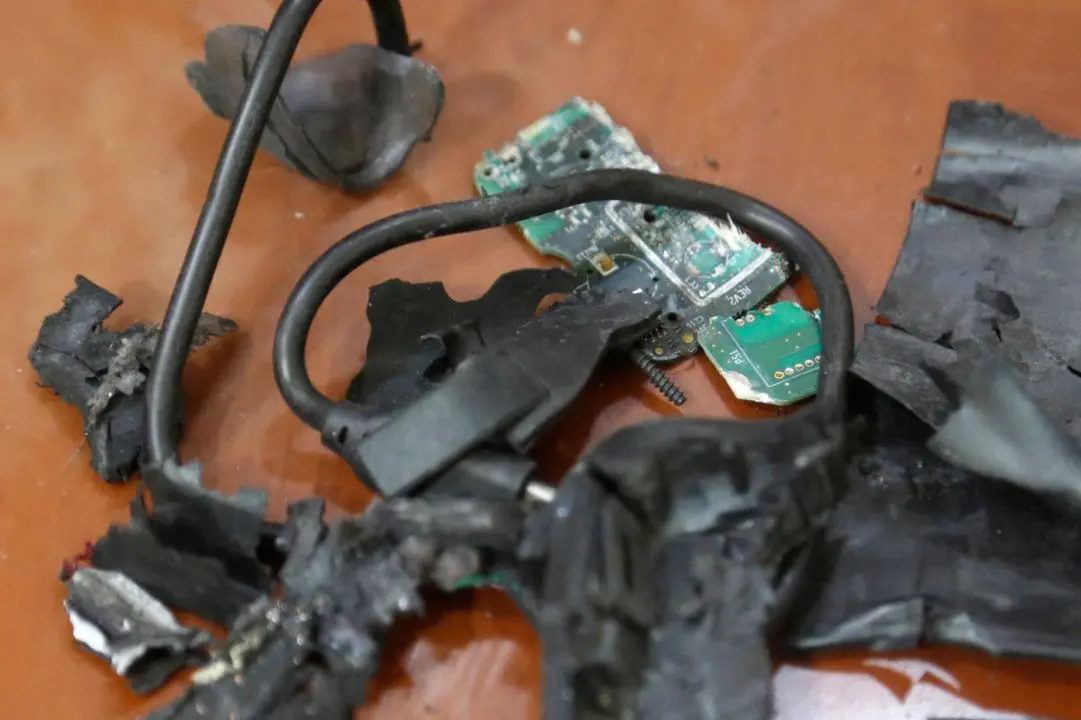
Israel carried out a sophisticated attack on Hezbollah by embedding explosives inside the batteries of pagers smuggled into Lebanon, senior Lebanese security officials were quoted in a CNN report.
The highly advanced technology used in the operation made the explosives virtually undetectable, contributing to a devastating series of explosions that killed at least 37 people and injured nearly 3,000, many of them civilians.
The attack, which occurred on September 17, targeted Hezbollah members who were using the compromised pagers. Thousands of devices, including walkie-talkies, were rigged to explode, blindsiding the group, which had previously opted for analog communication methods to avoid Israeli surveillance. The explosions occurred over two consecutive days, wreaking havoc across southern Lebanon.
Untraceable Explosives Hidden in Pagers
Lebanese security officials, speaking on the condition of anonymity, revealed that the explosives were cleverly hidden inside the lithium batteries of the pagers.
A series of controlled detonations carried out by security forces confirmed the power and scale of the damage the explosions could have caused.
The officials noted that the technology was so advanced that it was nearly impossible to detect with standard security checks, including X-ray scans.
One senior security official, who examined one of the tampered pagers, described the explosive material as 'laced' inside the battery and said he had never encountered anything like it.
Experts believe only a detonator and explosive charge were added to the devices, which already contained the necessary components to act as improvised explosive devices (IEDs).
Israel's Role and Hezbollah's Reaction
Although Israel has not officially commented on the attack, sources indicate it was a joint operation by Israel’s intelligence agency, Mossad, and the military.
Israeli Defense Minister Yoav Gallant indirectly acknowledged the operation, praising the “excellent achievements” of Mossad and Shin Bet following the attack. Both Lebanese authorities and Hezbollah have blamed Israel for the coordinated strikes.
Hezbollah leader Hassan Nasrallah, in a public address, confirmed that the group had formed investigative committees to determine how the devices were compromised.
Nasrallah suggested that senior Hezbollah officials were not targeted, as they were using older pager models, with the newer, compromised pagers recently acquired by lower-ranking members.
"We have reached an almost certain conclusion, but we need more time to confirm it," Nasrallah said, promising a "reckoning" for those responsible for the attack.
International Condemnation
The attack has drawn international condemnation, with UN human rights chief Volker Türk describing it as a dangerous escalation in modern warfare. "These attacks represent a new development where communication tools become weapons, targeting civilians without regard for their surroundings," Türk told the UN Security Council.
Lebanon's mission to the UN sent a letter to the Security Council, accusing Israel of detonating the devices remotely via electronic messages. According to the letter, thousands of devices were detonated simultaneously, resulting in widespread destruction in markets, homes, and public spaces.
Iran’s delegate to the UN also condemned the attack, claiming Israel had intended to kill thousands of civilians. The Iranian ambassador to Lebanon was among those injured in the blasts.
A New Era of Warfare
Experts have warned that the attack marks a turning point in warfare, where even everyday communication devices can be weaponized.
Sean Moorhouse, a former British Army officer and explosive ordnance expert, told CNN that the operation reflected a highly sophisticated level of planning and execution, likely involving a state actor.
As calls for de-escalation grow, UN officials have stressed the need for immediate ceasefire talks to prevent further escalation in the Middle East.
Agencies