How Iran targeted US-UK base at Diego Garcia 4,000km away
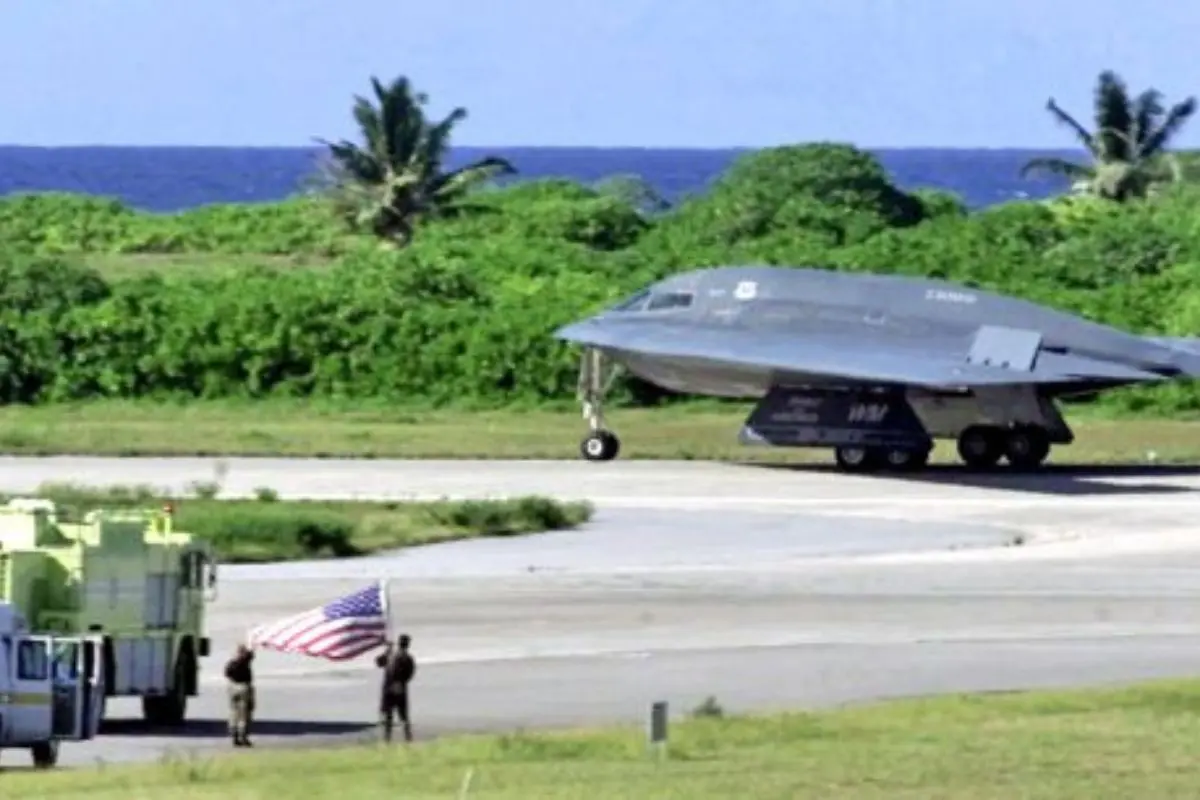
In a move that has jolted military planners far beyond the Middle East, Iran attempted to strike the US-UK military facility at Diego Garcia, a remote outpost in the Indian Ocean long considered safely removed from frontline conflict.
The attempt did not land a hit, but its implications are already rippling across global security circles. According to US officials, two intermediate-range ballistic missiles were launched towards the base, located nearly 4,000 kilometres from Iran’s coastline.
One of the missiles reportedly failed during flight, while the other was tracked and engaged by a US Navy destroyer using an SM-3 interceptor system. Whether that interception fully neutralised the threat remains unclear. What is clear, however, is the signal Tehran intended to send.
For years, Iran has publicly framed the range of its missile programme at around 2,000 kilometres, sufficient to cover much of the Middle East.
This attempted strike, if linked to systems like the Khorramshahr-4, suggests capabilities extending far beyond that threshold. Analysts have long speculated about such reach, but an operational attempt of this distance marks a significant shift from theory to demonstration.
The geography alone makes the episode striking. Diego Garcia sits deep in the Indian Ocean, part of the Chagos Archipelago, and functions as a critical logistics and strike hub for US and allied forces.
It has supported operations in Afghanistan and Iraq, and continues to play a key role in surveillance and rapid deployment missions across multiple theatres. Its isolation has traditionally been its strength, a buffer against precisely the kind of direct threat Iran has now attempted.
By targeting this base, Iran appears to be redrawing the perceived boundaries of the conflict. The message is not just about capability, but intent: that even distant, strategically vital assets are no longer beyond reach.
For Western allies, this raises uncomfortable questions about the vulnerability of installations previously viewed as secure due to geography alone.
The missile believed to be involved, the Khorramshahr-4, is designed for heavy payload delivery and may include manoeuvrable re-entry features that complicate interception.
Its lineage traces back to earlier North Korean and Soviet-era designs, but with modifications that prioritise range and payload over precision.
If deployed at its maximum potential, such a system could theoretically place parts of Europe within reach, a prospect that shifts the strategic calculus for NATO countries that have so far treated the conflict as regionally contained.
The attempted strike also underscores the growing centrality of missile defence. The SM-3 interceptor, used in this instance, relies on kinetic impact rather than explosive force to destroy incoming threats.
While it has a strong track record, the uncertainty surrounding this engagement highlights the increasing complexity of intercepting newer missile systems, especially those designed to evade defences.
This development comes amid a broader escalation. Iran has stepped up attacks on energy infrastructure across the Gulf and issued warnings to nations hosting US forces.
At the same time, Washington has reinforced its military presence in the region, deploying additional naval assets and personnel even as political signals hint at a possible de-escalation.
The attempted strike on Diego Garcia, then, is not an isolated episode. It is part of a widening pattern, one that stretches the conflict’s geography, tests defence systems, and signals a readiness to push confrontation into previously untouched zones. Even without impact, the message has landed.