'Just want to go home...' Indians, among 7000 rescued from Myanmar scam camps, plead for evacuation
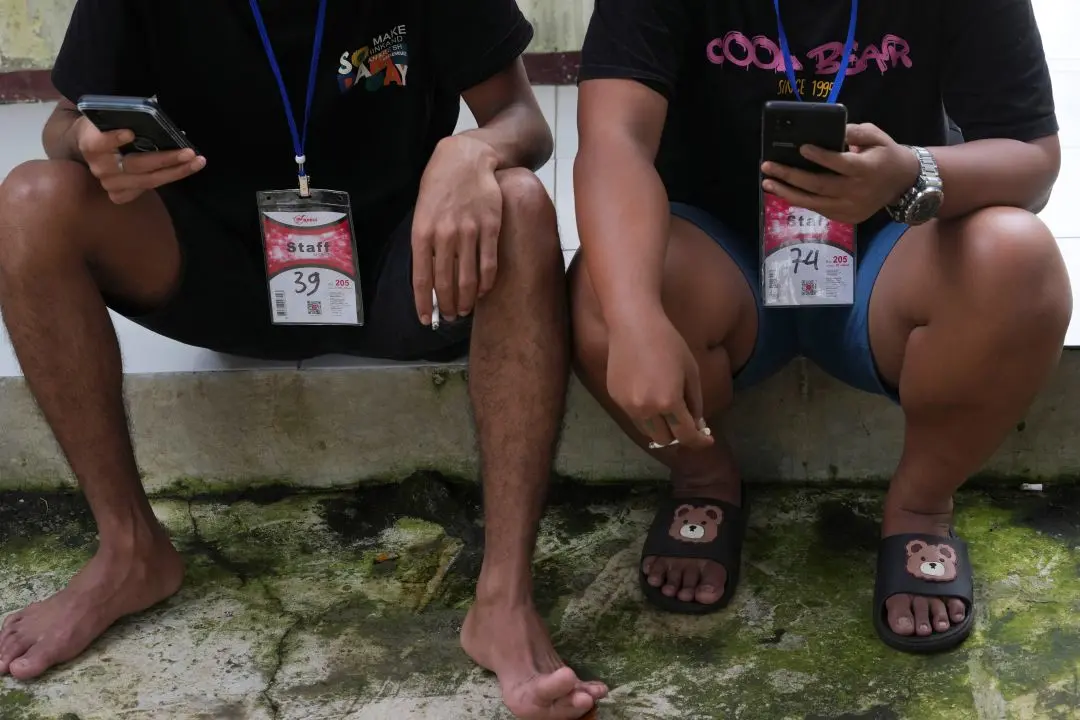
More than 7,000 people rescued from forced cyber scam labour camps in Myanmar are now trapped in overcrowded detention centres, facing dire conditions with no clear timeline for repatriation.
What was initially hailed as a major international operation by Thai, Chinese, and Myanmar authorities to free victims of forced online fraud rings has now turned into a humanitarian crisis. Survivors, many of whom were lured to the region with promises of high-paying jobs, remain detained in unsanitary facilities, suffering from limited food, inadequate medical care, and overcrowding.
"If we die here with health issues, who is responsible for that?" asked one Indian detainee, speaking anonymously to The Associated Press. He described a facility where 800 people share 10 dirty toilets, with many detainees suffering from fevers and respiratory illnesses.
From rescue to another prison
The victims, many of whom are highly educated and fluent in English, were initially trapped in walled-off compounds and forced to scam Americans and others out of their life savings for up to 16 hours a day. Those who refused to comply faced beatings, starvation, and electric shocks.
"Your passport is confiscated, you cannot go outside, and everything is like hell, a living hell," recalled a Pakistani victim.
Following mounting pressure from China, which demanded a crackdown after a high-profile case involving a trafficked Chinese actor, Myanmar's Kayin Border Guard Force (BGF) and Democratic Kayin Buddhist Army (DKBA) -- the armed groups that control the region -- began escorting some detainees out of scam compounds.
But instead of being sent home, many now find themselves indefinitely held in military-run camps and repurposed scam facilities.
"It felt like a blessing that we came out of that trap, but the actual thing is that every person just wants to go back home," said a 24-year-old Indian detainee.
International response
While China has begun repatriating its citizens, other nations have been slow to act.
An unconfirmed list from Myanmar authorities suggests that detainees hail from 29 different countries, including the Philippines, Kenya, and the Czech Republic. However, bureaucratic hurdles have left many stranded.
Thai officials have stated that they can only process 300 people per day, down from 500, and that repatriation must be arranged by individual embassies.
"The ministry attaches very high importance to this and is aware that there are sick people, and that they need to be repatriated," said Thai Foreign Ministry spokesperson Nikorndej Balankura.
Yet, for many detainees, help is nowhere in sight. 130 Ethiopians remain stuck due to a lack of $600 plane tickets, while dozens of Indonesians were bused out last week for a flight home.
The Indian Embassy in Bangkok has not responded to requests for comment. Meanwhile, the Czech Foreign Ministry said it was working with its embassies in Bangkok and Yangon, but had received no direct request for assistance.
People, believed to have been trafficked and forced to work in scam centers, sit with their faces masked while in detention
NGOs and aid workers struggle to help
Human rights groups say the situation demands a global response, but international aid is scarce.
"You can literally, with your naked eye, stand at the border and see people inside, on their balconies, in these compounds, and yet we cannot reach them," said Amy Miller, Southeast Asia director for Acts of Mercy International, pointing toward the Thai-Myanmar Friendship Bridge.
Her organization has been providing food, shelter, and phones for the few escapees who make it across the river, but the sheer number of victims is overwhelming.
"When we are looking at numbers in the thousands, the ability to get them over to Thailand and process them and house them and feed them would be impossible for most governments," Miller said.
A recent halt in US foreign aid has further complicated efforts. The United Nations’ International Organization for Migration (IOM) previously funded victim care in Cambodia, but the Trump Administration's funding freeze in January forced the program to shut down.
"It's really heartbreaking to see that there’s such an immense amount of people that are in need of assistance," said Saskia Kok, Head of the Protection Unit in Thailand for the IOM.
Criminal Networks remain untouched
Despite the mass rescues, human trafficking operations continue to thrive.
Beijing's pressure campaign led Thailand to cut electricity, gas, and internet to five border towns in Myanmar, but reports indicate that criminal networks quickly adapted, using diesel-powered generators and Starlink internet connections.
"The resources are the one thing that they are not lacking," said Benedikt Hoffman, regional representative for the United Nations Office on Drugs and Crime.
The armed groups overseeing the crackdown have also been linked to the very same scam compounds.
General Saw Chit Thu, head of the Kayin Border Guard Force, has been sanctioned by both the European Union and the United Kingdom for profiting from human trafficking and scam operations.
"There is clearly a lot of pressure on the Border Guard Force to take action, but it likely also reflects an adjustment to the business model—reducing numbers while continuing operations more discreetly," Hoffman noted.
'Is Anyone Coming for Us?'
While governments debate repatriation logistics, detainees remain in harrowing conditions, with food shortages, unsanitary facilities, and growing despair.
"My friends are in really bad condition, we can’t survive here," said a 23-year-old Pakistani detainee, his voice filled with desperation. "The bosses are rich as hell. They can buy anything they need to keep this going. But us? We are just stuck. Is anyone coming for us?"
AP