‘Please rescue us… bombs are falling’: Sailors stuck in Iranian ports send chilling SOS
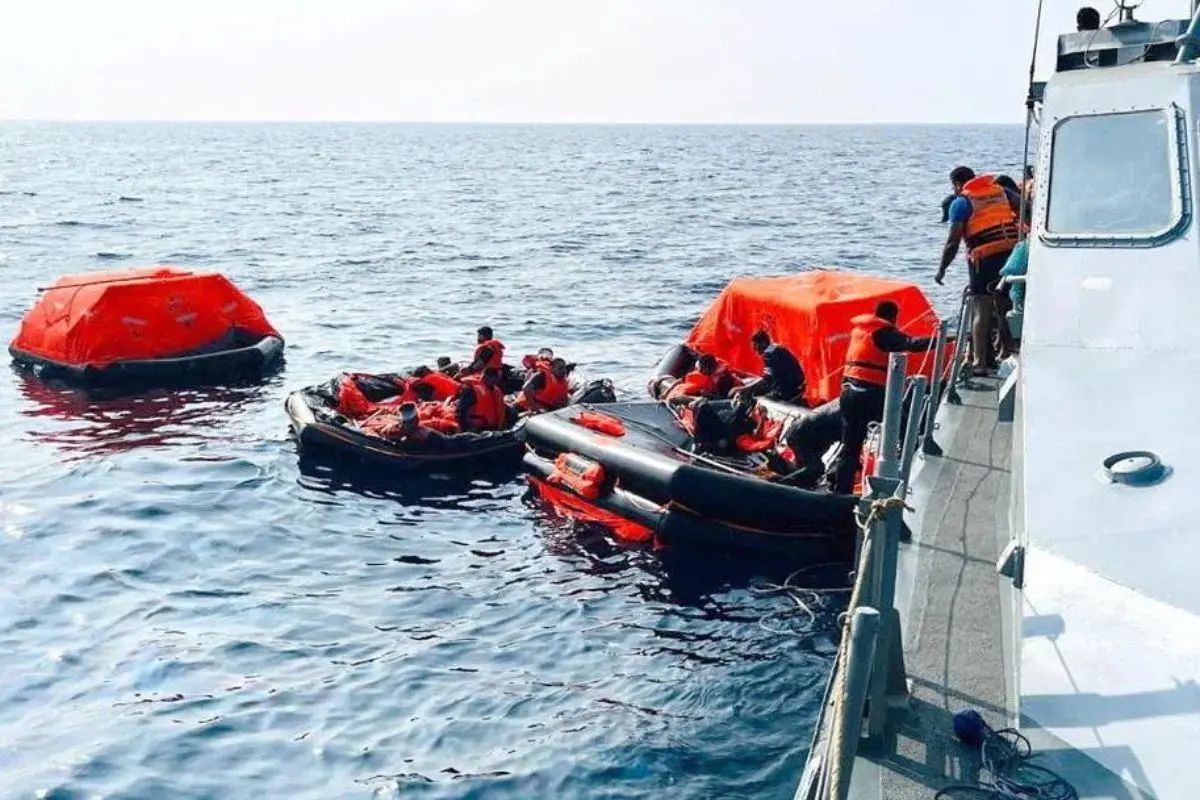
For thousands of sailors trapped on cargo ships and oil tankers across the Persian Gulf, the war unfolding between Iran, the United States, and Israel is no longer distant geopolitics; it is a terrifying reality playing out above their heads.
Drones, cruise missiles, and fighter jets now regularly streak across the skies over vessels stranded near the Strait of Hormuz, turning one of the world’s busiest maritime corridors into a dangerous war zone.
Many ships have been unable to move after Iran warned it could open fire on vessels attempting to cross the strategic strait following US and Israeli strikes on Iranian targets. The waterway, through which nearly a fifth of the world’s oil supply passes, has effectively become a frontline of the conflict.
The sudden escalation has left thousands of sailors trapped either at sea or anchored at ports across the region, forced to watch military confrontations unfold in the skies above them.
“I have seen Iranian drones and cruise missiles flying at low altitude,” said Amir, a Pakistani sailor aboard an oil tanker stranded near the United Arab Emirates. “We also hear fighter jets overhead, but we can’t even tell which country they belong to.”
What frightens him most, he says, is the possibility that a missile or drone intercepted mid-air could fall onto his vessel.
For sailors like Hein, a crew member from Myanmar, the danger has become part of daily life. “Just this morning, two fighter jets fired at each other while we were still working,” he said. “There is no hiding place on the ship. We just ran inside and waited.”
To protect their safety, the identities of several sailors and their families have been changed.
Images shared with journalists by seafarers show plumes of black smoke rising from Iran’s coastline, with what appears to be oil infrastructure burning in the distance. In another photograph taken from a vessel, thick smoke can be seen drifting across the horizon over southern Iran. The scale of the crisis is staggering.
Capt Anam Chowdhury, president of the Bangladesh Merchant Marine Officers’ Association, estimates that around 20,000 sailors from different countries are currently stranded across the Gulf region. Some vessels remain anchored at ports, while others drift at sea waiting for safe passage.
However, neither situation offers any guarantee of safety. “People think being inside a port is safer,” Chowdhury explained. “But there have been ships bombarded while anchored.”
His organisation has tracked at least seven ships that have already been hit by projectiles during the conflict, causing damage and panic among crews.
On 1 March, a sailor was killed aboard the tanker Skylark, which is registered in the Republic of Palau. The vessel reportedly caught fire in the engine room after being struck, forcing the crew to evacuate. The attack left many sailors traumatised, Chowdhury said. Other mariners echo the same fears.
Capt. M. Mansoor Saeed, who commands oil tankers in the region, said ships could become targets regardless of where they are located. “If they want to target my ship, they will target it,” he said.
Still, he believes ships sailing farther from the coastline sometimes have a slightly better chance of avoiding danger. “In bad weather, we always run to the open sea because there is more room to manoeuvre,” he explained. “Ports and narrow waters can be even more dangerous.”
While sailors struggle to survive at sea, their families thousands of kilometres away are enduring a different kind of nightmare.
Iran has intermittently blocked internet and phone networks during the conflict, making communication with crews extremely difficult. For families waiting anxiously at home, days often pass without any news.
Ali Abbas, whose son works aboard a ship anchored at an Iranian port near the Strait of Hormuz, said the last time he spoke to his son was several days ago.
During that conversation, his son described a missile attack that struck near the vessel. The crew survived, but one Indian sailor was reportedly injured.
“I have hidden this from my wife and daughter-in-law,” Abbas said, struggling to hold back tears. On Tuesday night another heavy attack reportedly struck the same port area. Since then, Abbas has not been able to contact his son.
“For God’s sake, please help me,” he said, his voice breaking. “I just hope my son is alive.” For sailors trapped on ships and families waiting helplessly on shore, the Gulf war has turned the sea into a place of constant fear, where every explosion in the distance and every failed phone call raises the same haunting question: who will make it home alive.