Women's leadership in politics and decision-making crucial for peace and security: India at UN
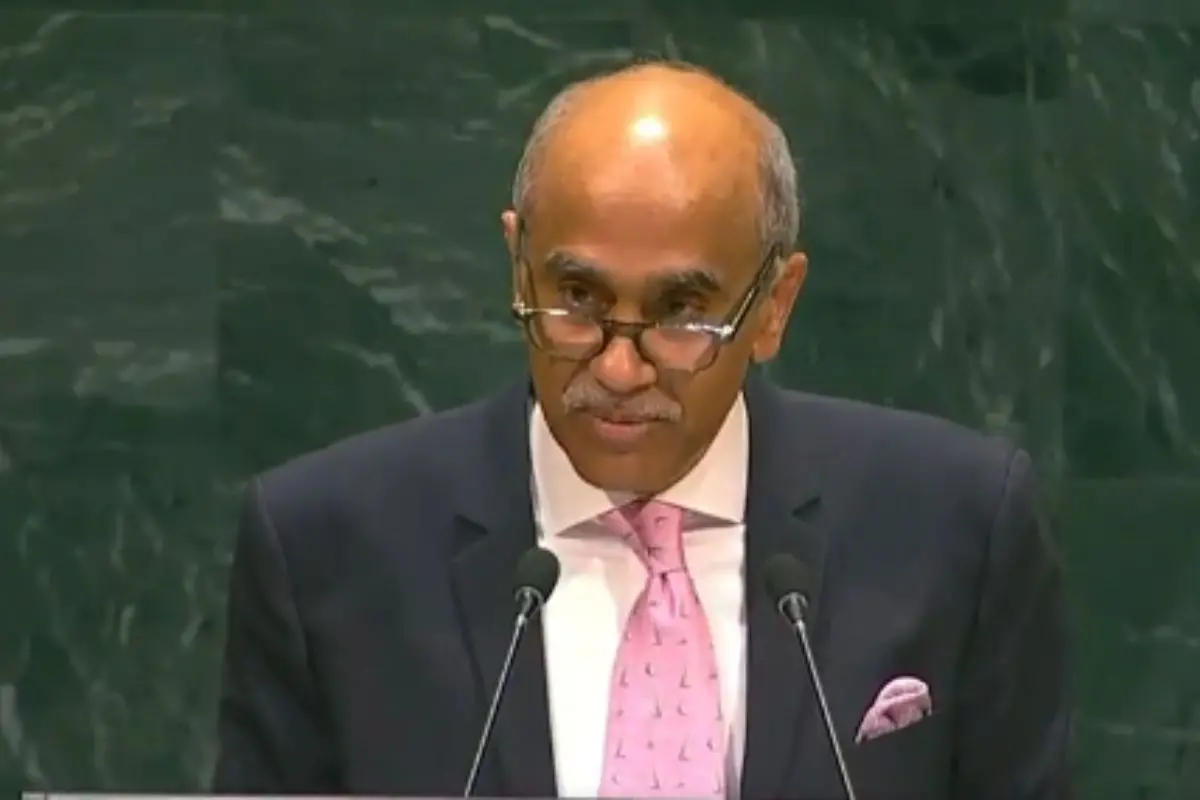
New York: India reiterated its commitment to expanding women’s representation in political leadership and decision-making roles, emphasising how legislated gender quotas accelerate parity across spheres ranging from local governance to the armed forces and technology.
Speaking at the UN Security Council Open Debate on Women, Peace and Security (WPS), Parvathaneni Harish, India’s Permanent Representative to the United Nations, highlighted key national initiatives—including the Nari Shakti Vandan Adhiniyam 2023—as model frameworks for empowering women in governance.
“Legislated gender quotas make a clear difference. We attest to its potency. Conscious decision adopted by India in 1993 to reserve one-third seats for women in local government bodies has brought over a million women into leadership roles. In India, the Women’s Reservation Act of 2023 extends this provision to the national and state legislatures,” the ambassador said.
Beyond political representation, efforts are also underway to increase the presence of women in decision-making roles within the private sector.
The debate comes against a backdrop of rising global security challenges. More than 750 million women and girls live within 50 kilometers of active conflict zones. Verified cases of conflict-related sexual violence have doubled over the past year, increasingly deployed as a deliberate political weapon in modern warfare.
Addressing the UN’s role in conflict resolution and peacebuilding, Harish emphasised the necessity of structural representation within international organisations.
“We believe that the United Nations should set the example in implementing the provisions of Resolution 1325. India supports UN’s efforts to achieve full gender parity across its workforce by 2030. We are happy to note that the three peace processes that the UN facilitated in 2025 had women as the lead mediators,” the ambassador said.
India’s operational commitments extend directly to military and international peacekeeping operations. Systemic reforms across the Indian Army, Navy, and Air Force have opened combat streams and senior command opportunities to women officers.
“India has carried out systemic restructuring in Indian armed forces, granting permanent commission to women officers and inducting women into combat streams. This commitment has opened doors for women, from fighter pilots to military diplomats, and has increased the number of Indian women serving as UN peacekeepers,” he said.
The debate marked ongoing efforts tied to UN Security Council Resolution 1325, originally adopted at its 4213th meeting on October 29, 2000. The resolution mandates the protection and security of women and girls in conflict zones, urging all global actors to incorporate a gender perspective into repatriation, post-conflict reconstruction, and local peace initiatives. (ANI)