Ice melting? Trump invites Colombia’s Petro to White House after earlier threat of military action
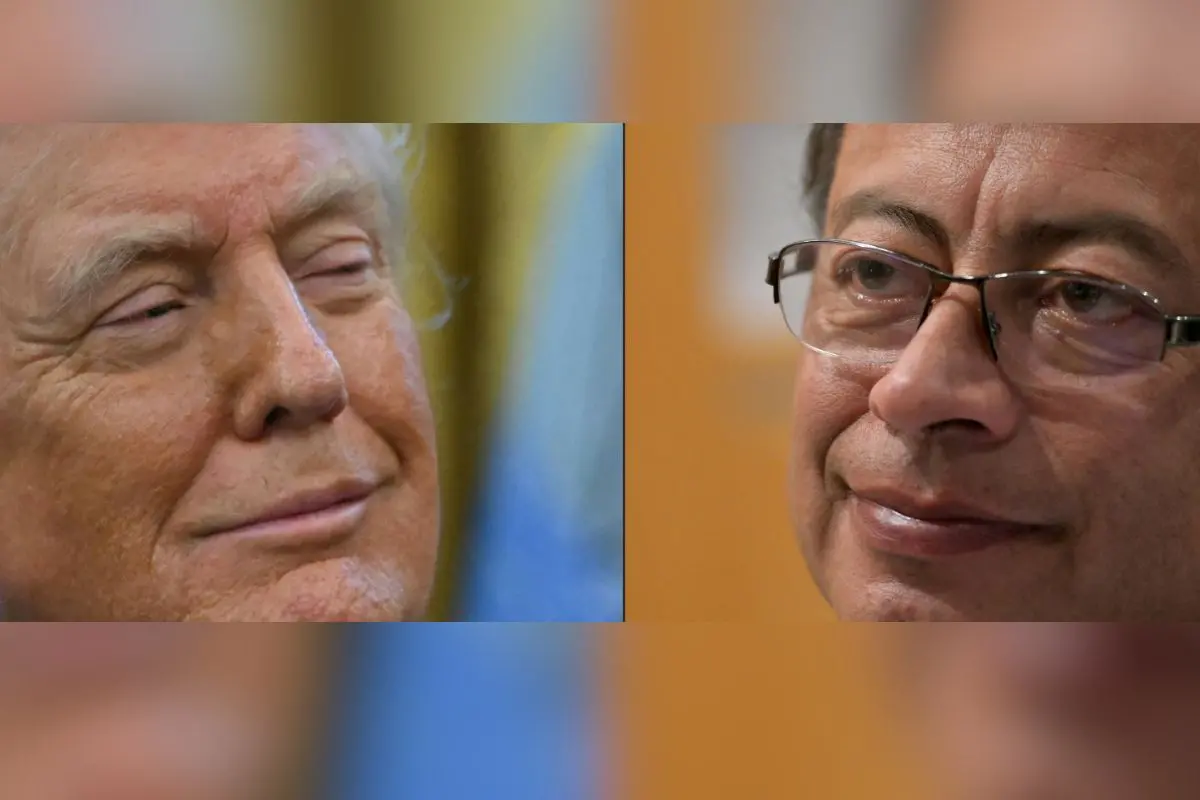
In a notable diplomatic shift, US President Donald Trump has announced plans to host Colombian President Gustavo Petro at the White House, just days after suggesting that a military operation against Colombia “sounds good” to him.
The announcement followed a phone call between the two leaders on Wednesday — their first conversation since Trump’s controversial remarks on Sunday and a broader period of strained relations between Washington and Bogota. During the call, Trump and Petro discussed bilateral ties and disagreements, including issues related to drug trafficking and regional security.
Trump took to social media to describe the exchange as respectful, writing, as reported by Reuters: “It was a great honour to speak with the President of Colombia, Gustavo Petro, who called to explain the situation of drugs and other disagreements that we have had. I appreciated his call and tone, and look forward to meeting him in the near future.”
While Trump confirmed that arrangements are being made for a meeting at the White House, no date has yet been set.
Petro, Colombia’s first Left-wing president, told supporters that he had requested a renewal of dialogue between the two countries during the call. A source from Petro’s office described the conversation as “cordial” and “respectful”.
Relations between the United States and Colombia have been tense since Trump returned to the White House in 2025. Trump has accused Petro’s government, without presenting evidence, of enabling cocaine flows into the US and imposed sanctions on the Colombian leader last October.
Trump’s earlier comments — including referring to Petro as “a sick man” and suggesting US military action as a possibility — drew sharp attention from regional observers and stirred debate in both countries.
Despite the recent friction, the decision to invite Petro to Washington signals an unexpected turn in bilateral engagement, with both sides expressing cautious optimism about restoring communication and cooperation.
The move comes just days after the dramatic US operation in which Venezuelan President Nicolas Maduro was captured and flown to the United States to face drug-related charges — an intervention that has rattled South America and sharpened anxiety about what may follow. Trump has hinted that Venezuela may not be the final chapter, openly warning that other governments in the region, including Colombia and Cuba, could face increasing pressure or even similar action. The Venezuelan raid has therefore cast a long shadow over Trump’s call with Petro, fuelling speculation that Washington’s next steps in Latin America will be shaped by a mix of hardline security priorities and escalating political tensions.