Can Iran be trusted? Nuclear watchdog says words alone aren't enough
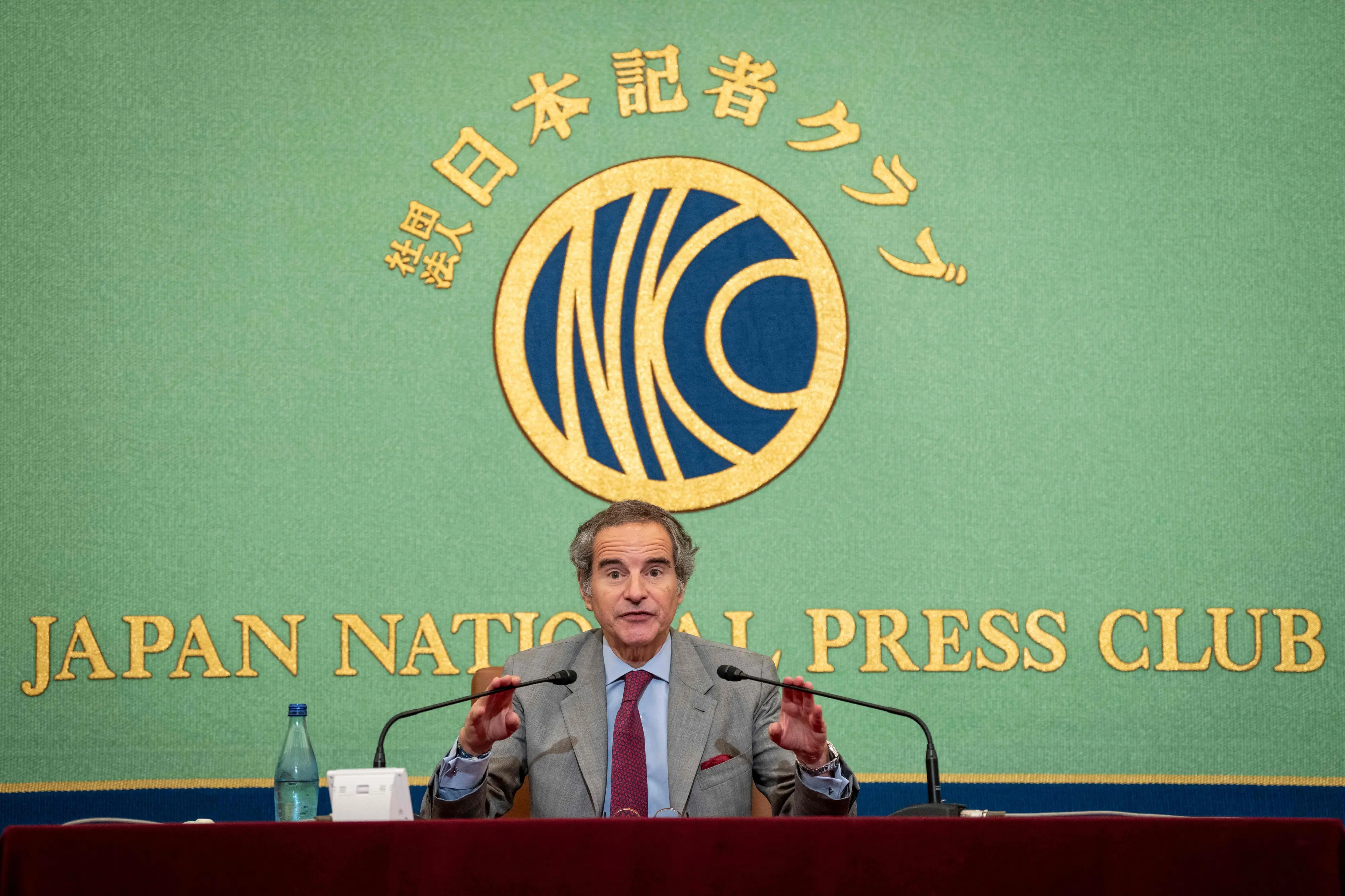
Tokyo: The head of the International Atomic Energy Agency (IAEA), Rafael Grossi, has stressed the need for a robust international verification mechanism in Iran following the recent conflict in the Middle East, saying declarations alone are not enough to guarantee that Tehran's nuclear programme remains peaceful.
Speaking to reporters in Tokyo on Friday, Grossi said the objective of the recent agreement between the United States and Iran was to ensure that Iran does not develop nuclear weapons. While acknowledging that the Iranian government has repeatedly stated it has no intention of building an atomic bomb, he emphasised that those assurances must be backed by independent inspections.
"I think the objective of this agreement is to ensure that there is no development of nuclear weapons in Iran. The government of Iran has declared quite clearly that this is not their intention," Grossi said.
"But of course intentions are not enough. We have to have a very strong verification system in place as soon as is practicable," he added.
Grossi's remarks come as Washington and Tehran continue negotiations on a broader post-conflict agreement, with Iran's nuclear programme remaining one of the most sensitive issues in the talks.
The IAEA chief also revealed that discussions with Iran on the future of its uranium stockpile have only just begun. He described the contacts as preliminary but expressed hope that negotiations would accelerate in the coming weeks.
"Initial conversations have taken place. We expect this work to pick up soon," Grossi said.
Iran has consistently denied seeking nuclear weapons and maintains that its nuclear activities are intended solely for civilian purposes, including energy production and scientific research. However, its uranium enrichment programme has long been a source of concern for Western countries and the IAEA.
Adding to the complexity, Iran suspended cooperation with the UN nuclear watchdog under legislation passed by its parliament following last year's 12-day conflict with Israel. The move significantly reduced the IAEA's ability to inspect nuclear facilities and monitor Iran's nuclear activities.
The latest diplomatic efforts are expected to focus on restoring inspections, monitoring enriched uranium stockpiles and rebuilding international confidence through a comprehensive verification regime.
(With AFP inputs)