‘I don't think he's dead... He was very seriously wounded’: Trump on Iran's Mojtaba Khamenei
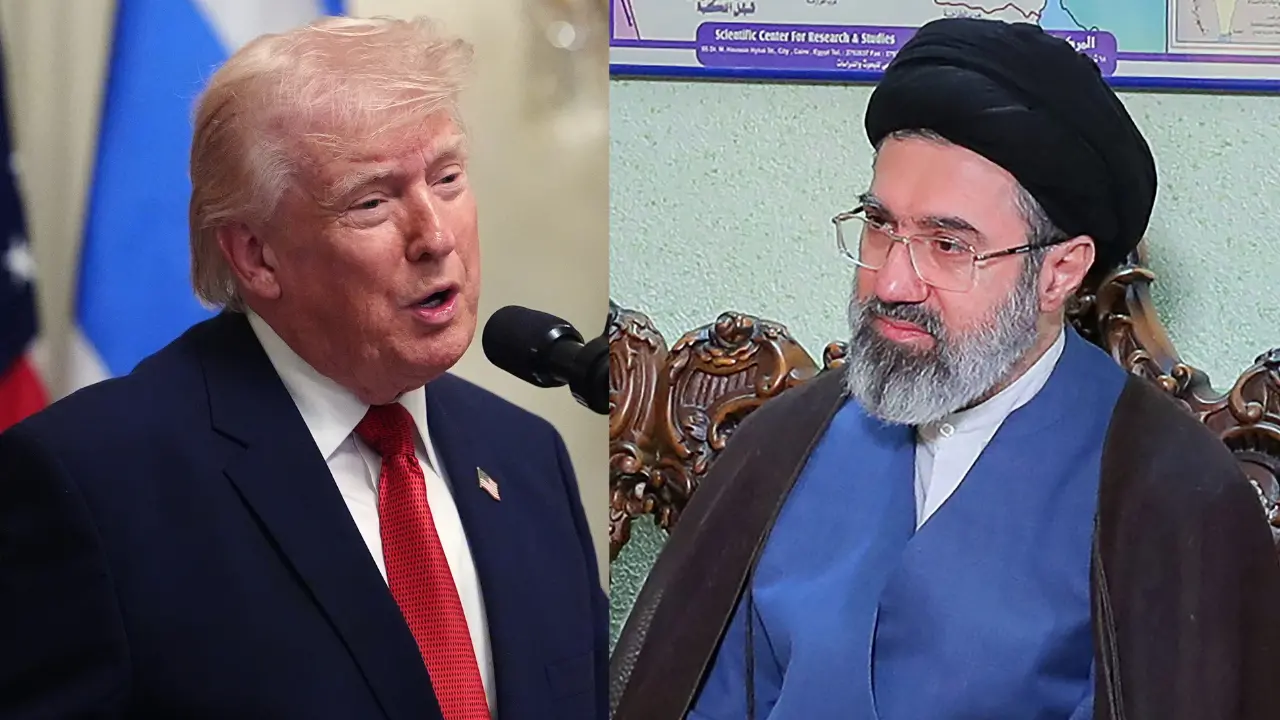
Washington: US President Donald Trump said Wednesday that he believes Iran's Supreme Leader Mojtaba Khamenei is still alive, amid continued speculation over his whereabouts following the death of his father in a US-Israeli assault.
"I don't think he's dead. He was very seriously wounded. The left side of his body, the arm, the leg, the whole thing. He was very seriously wounded. But I don't think he's dead," Trump said in an interview with conservative radio host Glenn Beck.
Also read | US sanctions 4 Indian companies, 3 nationals over $119 million Iran oil trade
Khamenei is officially still regarded as Iran's supreme leader as the country remains under US and Israeli attack. However, his prolonged absence from public view and the growing influence of veteran Revolutionary Guards figures have fueled speculation that he may have died or is no longer fully in control of the government.
His father was killed in a bombing at the beginning of the US-Israeli assault.
Trump, who has repeatedly claimed victory over Iran, said military and economic pressure on Tehran was producing results. His comments came as the United States continues to face challenges in reopening the Strait of Hormuz and securing Iran's nuclear materials.
"Those things are going toward a very big victory," he said. "We're going to have a big victory here very soon."
Trump also maintained that the Strait of Hormuz, where Iranian forces have disrupted and largely blocked commercial shipping, is fully open.
Also read | US unveils 'Operation Economic Outcast', sanctions Iran networks
"You could really say, you know, because the Strait is open. We take a lot of ships through the Strait now. We're taking them in. The mines are gone," he said.
Trump reiterated that preventing Iran from obtaining a nuclear weapon remained the central objective of US policy.
"We cannot let Iran have a nuclear weapon. That's what it's all about. That's 99.9 per cent. We cannot let them because they are crazy and they will use it," he said, before adding that he had already "stopped it twice."