Hiroshima at 80: Are we closer than ever to nuclear disaster?
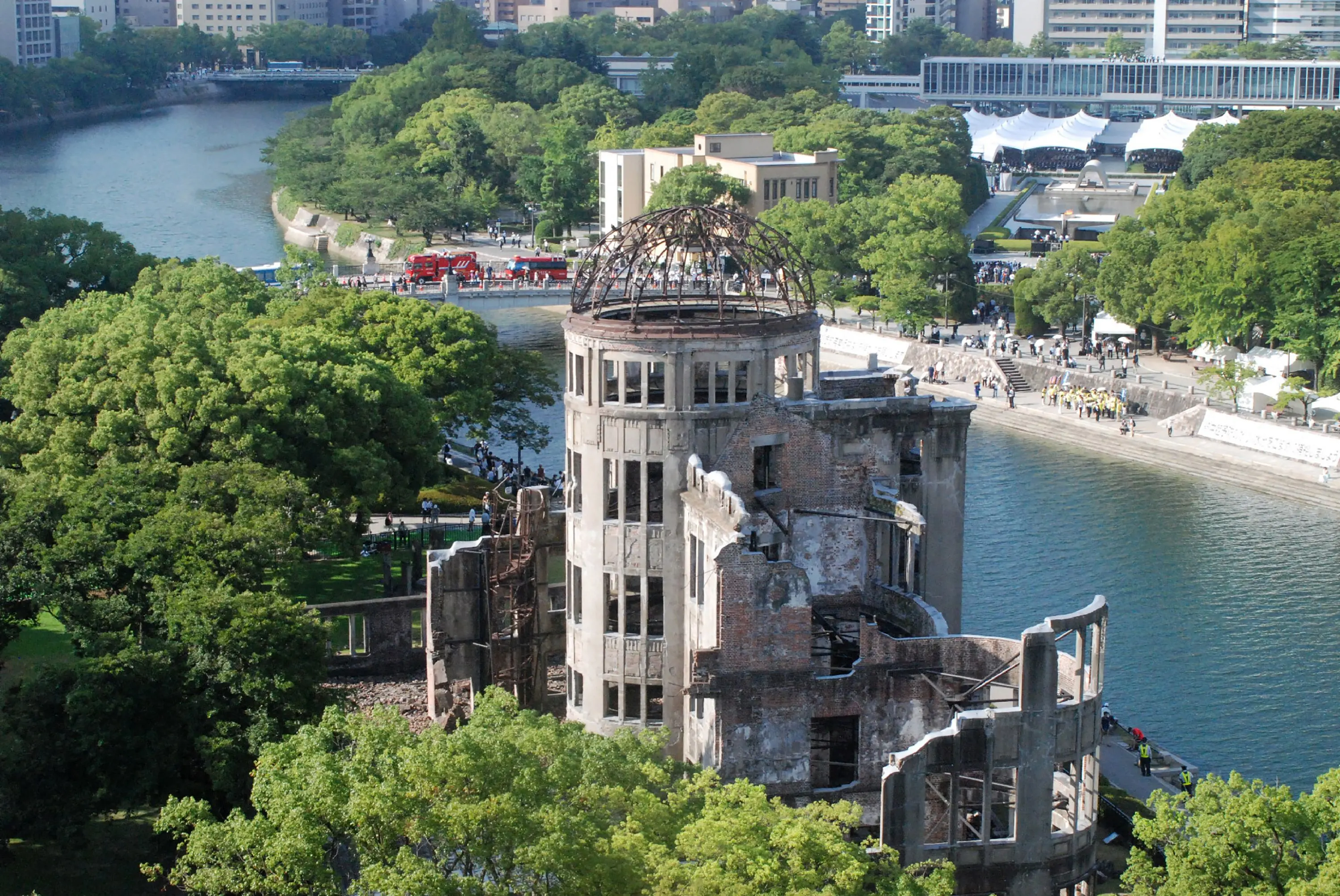
Hiroshima: Japan on Wednesday commemorated the 80th anniversary of the atomic bombing of Hiroshima, amid heightened global anxiety over nuclear weapons and rising tensions between the United States and Russia.
The sombre occasion comes as the symbolic “Doomsday Clock” remains dangerously close to midnight, reflecting the growing threat of nuclear war.
At exactly 8:15 am—the moment the US aircraft Enola Gay dropped the atomic bomb “Little Boy” on August 6, 1945—attendees observed a silent prayer. The attack ultimately killed around 140,000 people, through the initial blast, firestorm, and lingering radiation effects.
Hundreds gathered at Hiroshima Peace Memorial Park in sweltering summer heat, including survivors (hibakusha), students, and officials dressed in black. Flowers were laid at the cenotaph, near the remains of the Atomic Bomb Dome—now a UNESCO World Heritage Site.
In his address, Hiroshima Mayor Kazumi Matsui warned of an “accelerating trend toward military buildup” globally, citing Russia’s war in Ukraine and unrest in the Middle East. He criticised governments for ignoring the painful lessons of the past.
Japanese Prime Minister Shigeru Ishiba reaffirmed Japan’s pacifist stance, stating the country would continue leading efforts “toward a world without nuclear weapons”.
Three days after Hiroshima, the United States dropped another atomic bomb on Nagasaki, killing approximately 74,000 people. Japan surrendered shortly after, bringing World War II to an end. Despite the devastation, the US has never formally apologised for the attacks.
Survivors share their pain
Many elderly survivors attended the ceremony to honour lost family members. Yoshie Yokoyama, 96, came in a wheelchair, recalling the loss of her parents and grandparents to the bombing and its after-effects. “People are still suffering,” she told reporters.
As of March, Japan's health ministry recorded 99,130 surviving hibakusha, with an average age of 86.
Global presence, notable absences
Representatives from about 120 countries and regions attended this year’s ceremony, including, for the first time, delegations from Taiwan and Palestine. The US was represented by its ambassador, while Russia and China notably did not participate.
Pope Leo XIV called Hiroshima and Nagasaki “living reminders of the profound horrors wrought by nuclear weapons”. UN Secretary-General António Guterres warned that these weapons are now once again being treated as instruments of coercion.
Toshiyuki Mimaki, co-chair of Nihon Hidankyo—the Nobel Peace Prize-winning survivor organisation—urged foreign envoys to visit the Hiroshima Peace Memorial Museum to grasp the scale of human suffering caused by nuclear warfare.
Doomsday Clock ticks closer to midnight
The commemorations come as nuclear fears escalate globally. In January 2025, the Bulletin of the Atomic Scientists moved its Doomsday Clock to 89 seconds to midnight, the closest since its inception, following Russia’s invasion of Ukraine and ongoing nuclear threats.
According to the Stockholm International Peace Research Institute (SIPRI), Russia and the United States together possess around 90% of the world’s more than 12,000 nuclear warheads. SIPRI warned in June that a new arms race is emerging, while arms control agreements continue to erode.
Earlier this month, former US President Donald Trump claimed to have ordered the deployment of two nuclear submarines in response to online provocations from former Russian President Dmitry Medvedev.
Calls for peace amid persistent threats
Kunihiko Sakuma, 80, who survived the Hiroshima bombing as a baby, voiced hope for a nuclear-free future, noting that younger generations are becoming increasingly active in disarmament advocacy.
Despite the passage of eight decades, the haunting memory of Hiroshima continues to resonate—as both a historical tragedy and a stark warning to the modern world.
(With AFP inputs)