Who is the man Pakistan showed after India said LeT commander Hashim Musa was killed?
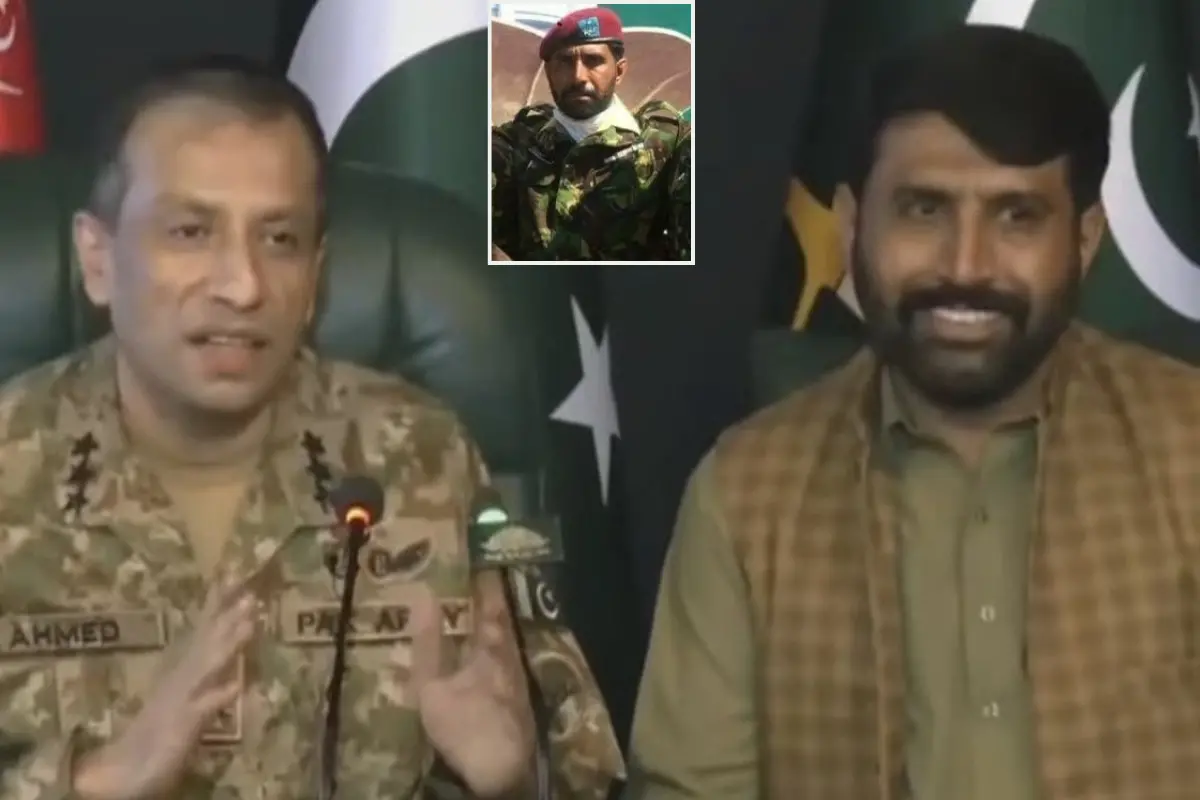
A dispute has emerged between India and Pakistan over the identity of a man killed in a Budgam encounter, after Indian security forces identified him as LeT commander Mohammad Asif alias Hashim Musa, while Pakistan presented a retired SSG soldier named Muhammad Asif at a press conference.
A day after Indian security forces said Lashkar-e-Taiba (LeT) commander Mohammad Asif alias Hashim Musa was killed in an encounter in Jammu and Kashmir's Budgam district, Pakistan presented a retired army soldier named Muhammad Asif before the media.
The contrasting claims have triggered a dispute over whether the man presented by Pakistan is the same individual identified by Indian authorities as Hashim Musa. Pakistan's military spokesperson rejected the Indian account, while Indian officials and reports continue to identify the slain militant as Mohammad Asif alias Hashim Musa.
What India said about Hashim Musa
The Indian Army said Mohammad Asif alias Hashim Musa was killed during an intelligence-led operation in the Yousmarg area of Budgam. His body was recovered during a subsequent search along with war-like stores, according to the Army's Chinar Corps.
Indian security agencies identified Musa as a Pakistan-based LeT operative and linked him to a four-member militant group that had been active in Jammu and Kashmir since 2022. Other members of the group had been killed in earlier operations, according to Indian security officials.
Reports also identified Musa as a former Pakistan Army SSG commando and said he had previously served in the security detail of former Pakistani president Pervez Musharraf.
Why Pakistan presented Muhammad Asif
At a press conference on October 1, Pakistan's Inter-Services Public Relations chief, Lt Gen Ahmed Sharif Chaudhry, presented a retired Pakistan Army havildar named Muhammad Asif.
The man said he had joined the Pakistan Army in 2000, entered the Special Services Group in 2005 and retired in 2023. Pakistan used his appearance to challenge India's claim that a former Pakistani soldier identified as Mohammad Asif alias Hashim Musa had been killed in Kashmir.
Pakistan's military spokesperson described India's account as a false-flag operation, a claim that has not been independently established.
Why the identities are being disputed
The central issue is whether the retired soldier presented in Pakistan is the same Mohammad Asif identified by Indian authorities as Hashim Musa.
Some Indian commentators and open-source researchers have pointed to differences between photographs of the two men. However, those visual comparisons have not independently established the identity of either person. Pakistan, meanwhile, says the man it presented is alive and that India's account is false.
The two sides therefore currently offer directly conflicting accounts, and the available public information does not independently resolve the identity dispute.
Who was Hashim Musa according to Indian agencies?
Indian authorities identified Mohammad Asif, alias Hashim Musa or Asif Fauji, as a senior LeT operative. He was accused of involvement in several attacks in Jammu and Kashmir and was also linked by Indian agencies to the April 2025 Pahalgam terror attack.
The Pahalgam attack killed 26 people. Indian agencies had previously named Musa among the Pakistan-based LeT operatives allegedly involved in the wider conspiracy. These allegations remain claims by Indian authorities unless established through judicial findings.
What happens next?
The immediate dispute centres on establishing the identities of the two individuals and verifying the evidence presented by both sides.
India has said the body recovered from the Budgam operation was that of Mohammad Asif alias Hashim Musa. Pakistan has presented a living retired soldier named Muhammad Asif and rejected India's identification.
Independent verification, including forensic identification and corroboration of service and biographical records, would be needed to conclusively establish whether the two claims concern the same person.
The episode adds another layer to the continuing India-Pakistan dispute over alleged cross-border militancy and the 2025 Pahalgam attack.
For India, the Budgam operation has been presented as part of counter-terror operations against Pakistan-based LeT networks in Jammu and Kashmir. For Pakistan, the appearance of a retired soldier named Muhammad Asif has been used to challenge India's account and allege that the operation and subsequent identification were false.
The competing narratives also demonstrate why independently verifiable evidence is important when identities and military operations are disputed. At present, the public record contains conflicting claims from the two governments and their security establishments rather than a mutually accepted account.