France to deploy 3,000 substitute teachers as student protests over poor school conditions intensify
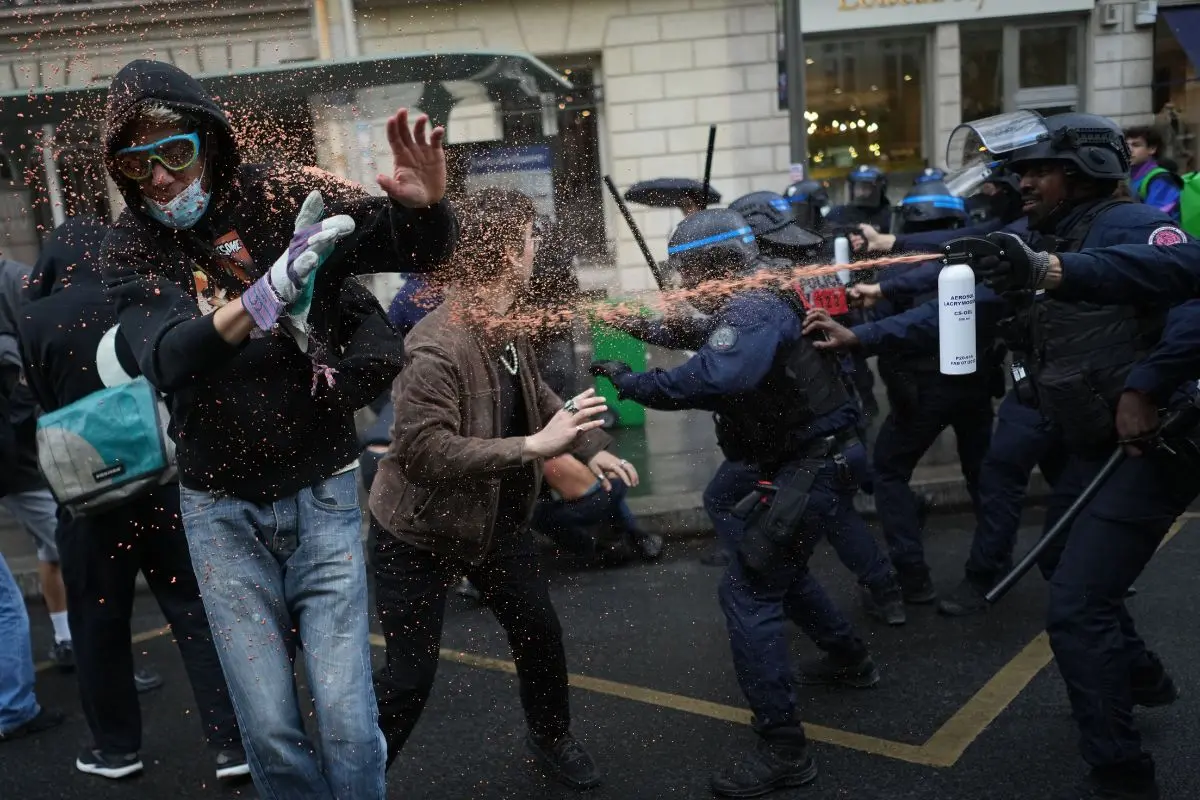
Paris: France will deploy 3,000 substitute teachers to struggling high schools in the coming days as nationwide student protests over poor learning conditions, staff shortages and inadequate school infrastructure show little sign of easing.
Education Minister Edouard Geffray announced on Thursday that the teachers would be assigned to high-priority schools between Friday and Tuesday. He said the government would also authorise the recruitment of a few hundred additional teachers.
Prime Minister Sébastien Lecornu said in a post on X that 114 schools identified as being in particular need of support would receive assistance first.
The announcement comes after more than a week of student demonstrations, with protesters blockading schools over absent teachers, overcrowded timetables, deteriorating classrooms and buildings struggling to cope with rising temperatures.
Tear gas used as protests spread across France
Students barricaded Hélène Boucher High School in north-eastern Paris with rubbish bins on Thursday before police moved in with tear gas. The school has become a focal point for clashes in the French capital and was among hundreds of schools disrupted by demonstrations that day.
Riot police gathered in nearby streets as students assembled outside the school. Many protesters wore surgical masks or hoodies, apparently to avoid being identified.
At least a dozen demonstrations in support of the student movement were planned across France on Thursday, including a rally at Place de la Bastille in Paris. Police used tear gas and water cannon as protests escalated, while some demonstrators threw projectiles at officers.
According to the Interior Ministry, police have made more than 6,600 arrests since late September, when students, most of them under 18, began protesting to demand increased funding for education. The Education Ministry said 375 schools were fully or partially closed on Thursday.
Although school closures had declined compared with Tuesday, pressure continued to mount on the government of outgoing President Emmanuel Macron.
The protests have highlighted longstanding concerns about underfunded schools, including deteriorating facilities and insufficient staffing. However, authorities have also reported incidents involving individuals who are not necessarily aligned with the students' demands, alongside participation by trade unions and political groups.
Students raise concerns over police violence and school infrastructure
At Hélène Boucher High School, 18-year-old university student Emma Khelil returned to support demonstrators at her former school. She expressed concern about police violence and the risks faced by young protesters.
“We’re here to defend our rights, not to lose an eye or a hand,” Khelil told The Associated Press.
She also described problems with insulation and water leaks in the school building, adding that she had occasionally seen rats on the premises. Other students reported similar experiences.
Khelil was unconvinced that the government's response would bring the protests to an end, saying the movement could grow stronger if conditions remained unchanged, particularly with the presidential election approaching in April.
Meanwhile, at Place de la République, smoke from burning rubbish hung in the air as hundreds of high school and university students prepared to march towards Place de la Bastille.
Protesters carried signs bearing their schools' names and placards criticising the government's spending priorities, including messages such as “More money for repression than for our education” and “Who protects us from the police?”
“We’re here, we’re demonstrating, and we won’t stop. Until October, November, December if necessary. Nothing will stop us,” said Sofia Ferdials, an 18-year-old student at Paris 8 University.
Dounia Gergeon, a 39-year-old school librarian, joined the demonstration because she shared students' concerns and feared a wider crisis affecting young people uncertain about their futures. At the middle and high school where she works, time had been set aside for students to discuss their demands.
“They do not feel supported,” she said. “They feel cornered and forced to work under these conditions.”
In a televised address, Lecornu condemned the violence surrounding the demonstrations, citing attacks on students and school staff, injuries to police officers and gendarmes, and schools being set on fire or vandalised. He also criticised political leaders whom he accused of exploiting public anger for electoral gain.
“We cannot play with the safety of France’s youth,” he said.
Student protests spread to Belgium and Italy
France is not the only European country witnessing student-led demonstrations over education and wider social concerns.
In Belgium, the mayor of Liege, Willy Demeyer, imposed a ban on public gatherings until midnight on 16 October, citing a “real, serious and imminent risk” of further clashes and vandalism.
Police used water cannon and tear gas on Wednesday to disperse several hundred demonstrators. Authorities also sent emergency text messages advising shopkeepers to close amid rioting.
Nearly 90 people were arrested, and several police officers were injured. Reinforcements were sent from Brussels and Antwerp, with further deployments expected. Smaller demonstrations also took place in Mons and Charleroi.
The Belgian protests, organised through online chat groups, include demands for more teachers and smaller classes, alongside opposition to education reforms. The demonstrations are also believed to have drawn inspiration from the movement in France.
In Italy, student protests have taken place in several cities, although on a smaller scale and around a broader range of domestic grievances. Activists have explicitly referenced the French demonstrations with the slogan “let’s do as they do in France”.
Students have organised school occupations, assemblies and marches. In Turin, several high schools were occupied over building conditions, education funding and increased military spending. In Rome, students occupied one high school and walked out of another, while demonstrators in Naples added opposition to a planned migrant detention centre to their demands.