Foreign nationals told to leave Lebanon as Israel braces for Iran attack
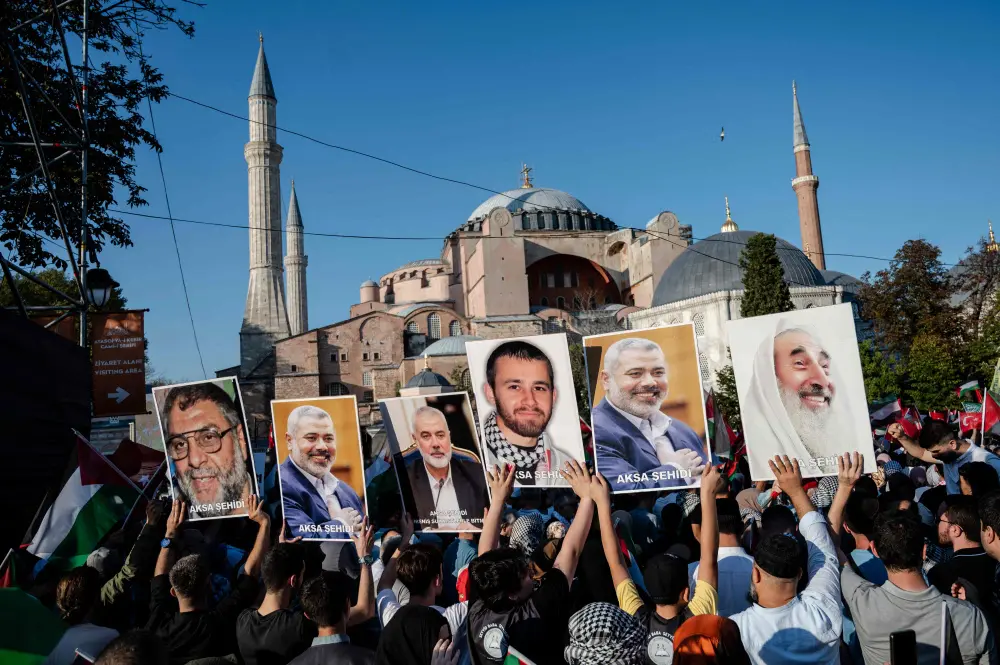
Beirut, Lebanon: The possibility of a war-like situation is taking shape in the Middle East in connection with the assassination of Hamas leader Ismail Haniyeh in Iran.
The arrival of US General Michael Kurilla of Central Command on August 3 in the Middle East, ahead of a heightened alert in Israel for potential Iranian retaliation, further tells the severity of the situation at hand. Several media reports indicate that both countries are mobilising troops and are expecting an attack at any moment.
Furthermore, urgent calls for foreign nationals to leave Lebanon grew on Sunday with France warning of "a highly volatile" situation as Iran and its allies ready their response to high-profile killings blamed on Israel.
Lebanon's Iran-backed Hezbollah movement, which has traded near-daily fire with Israeli forces since the Gaza war broke out in October, announced its fighters had fired a barrage of rockets at Israel's north overnight. The Israeli military said 30 projectiles were launched from Lebanon, with most of them intercepted.
Israeli strikes early Sunday killed 18 people in Gaza, including four who were sheltering in a tent camp for displaced Palestinians inside a hospital complex, while a stabbing attack carried out by a Palestinian killed two people in a Tel Aviv suburb.
The assailant, a Palestinian from the occupied West Bank, was "neutralised" by police and taken to hospital, where he was pronounced dead.
Israeli forces meanwhile kept bombarding the Gaza Strip, witnesses and officials in the besieged Hamas-ruled territory said, with no end in sight to the nearly 10-month war triggered by the Palestinian militant group's October 7 attack on southern Israel.
France, Canada and Jordan were among the latest governments to issue calls for their citizens to leave Lebanon.
"In a highly volatile security context", French nationals were "urgently asked" to avoid travelling to Lebanon, and those already in the country "to make their arrangements now to leave... as soon as possible", the foreign ministry in Paris said.
The United States and Britain have issued similar warnings. Several Western airlines have suspended flights to the region.
On Sunday Qatar Airways said that "in light of recent developments in Lebanon", the Doha-Beirut route "will operate exclusively during daylight hours" at least until Monday.
The killing Wednesday of Hamas leader Ismail Haniyeh in Tehran, hours after the Israeli assassination of Hezbollah's military chief in Beirut, has triggered vows of vengeance from Iran and the so-called "axis of resistance" of Tehran-backed armed groups.
Israel, accused by Hamas, Iran and others of carrying out the attack that killed Haniyeh, has not directly commented on it.
Israel has vowed to destroy Hamas in retaliation for its unprecedented October 7 attack which resulted in the deaths of 1,197 people, mostly civilians, according to an AFP tally based on Israeli official figures.
Militants also seized 251 hostages, 111 of whom are still held captive in Gaza, including 39 the military says are dead.
Israel's campaign against Hamas has killed at least 39,550 people in Gaza, according to the territory's health ministry, which does not give details of civilian and militant deaths.
Haniyeh, Hamas's political chief, was the group's lead negotiator in efforts to end the war.
His killing raised questions about the continued viability of efforts by Qatari, Egyptian and US mediators to broker a truce and exchange of hostages and prisoners. United States said it would move warships and fighter jets to the region to protect US personnel and defend Israel.
On Sunday, Jordanian Foreign Minister Ayman Safadi will visit Tehran to meet his Iranian counterpart, his ministry said.
Haniyeh's killing "has brought the Middle East to its moment of greatest peril in years", the International Crisis Group (ICG) think tank said in a report issued on Saturday.
"The risk of a spiralling conflagration is high," with the potential for a miscalculation that would trigger a war "without constraints... likely greater now than it was in April", it added.
On April 13, Iran launched its first-ever direct attack on Israeli soil, firing a barrage of drones and missiles -- most of which were intercepted -- after a strike killed Revolutionary Guards at Tehran's consulate in Damascus.
The ICG said that securing "a long overdue ceasefire" in Gaza was "the best way of meaningfully reducing tensions in the region". (AP,AFP)