'Forbidden to form government with them': Netanyahu targets Arab parties after election setback
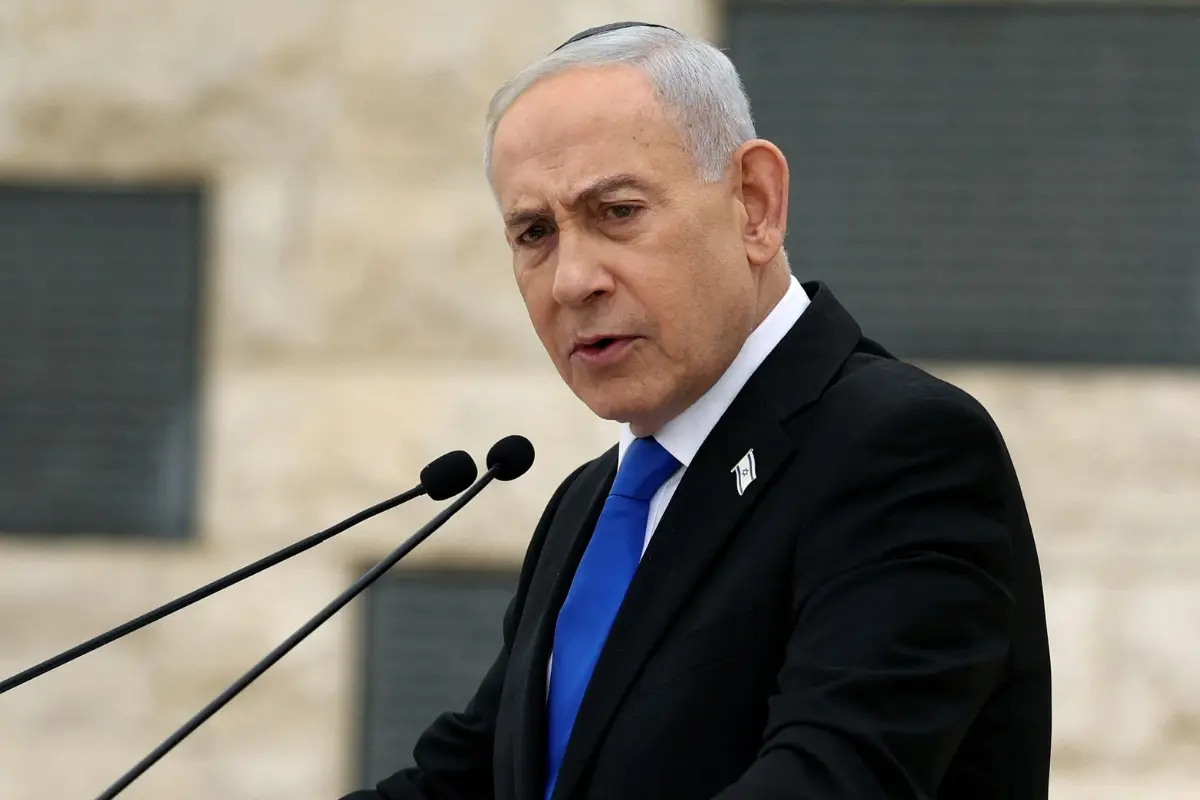
Jerusalem: Israeli Prime Minister Benjamin Netanyahu on Friday intensified his criticism of Arab political parties, declaring that it was "forbidden" to form a government with them, as Israel headed towards difficult coalition negotiations following an inconclusive general election.
Netanyahu shared a video on X featuring excerpts from speeches and statements by several Arab political leaders and lawmakers, including Ahmad Tibi, Iman Khatib-Yasin, Mansour Abbas, Sami Abu Shehadeh, Ofer Cassif, Yousef Jabareen and Ayman Odeh.
The video highlighted remarks supporting the Palestinian cause, positions that Netanyahu and other right-wing Israeli politicians have frequently portrayed as being at odds with the country's national interests.
"It is forbidden to form a government with them," Netanyahu said, reiterating his opposition to any coalition dependent on Arab parties.
His remarks came after the Central Elections Committee published the final seat allocations for Israel's 26th Knesset, confirming that the bloc supporting Netanyahu had secured only 53 seats, eight short of the 61 required for a parliamentary majority.
Despite Likud emerging as the largest party with 27 seats, Netanyahu faces a difficult path towards forming another government, particularly as some ultra-Orthodox political groups appear reluctant to be counted as part of his bloc.
According to Israel's N12 news channel, Haredi newspapers Hamodia and Hamashbiz reported that ultra-Orthodox parties wanted to be counted separately rather than automatically included in Netanyahu's political camp.
A source in United Torah Judaism (UTJ) also reportedly indicated that the party did not consider itself part of either political bloc.
UTJ secured seven seats in the election, while the other major ultra-Orthodox party, Shas, won six.
However, Netanyahu's right-wing allies, including Finance Minister Bezalel Smotrich's Religious Zionism party and National Security Minister Itamar Ben Gvir's Otzma Yehudit, are considered unlikely to abandon him.
Meanwhile, opposition leader Yair Lapid claimed that the election had delivered a political victory for those seeking to replace Netanyahu, even though the opposition bloc also failed to secure an outright majority.
In a lengthy post on X on Friday, Lapid pointed to the high voter turnout and the decline in support for Netanyahu's coalition as evidence that Israelis had voted for political change.
"The people showed up," Lapid said, citing voter turnout of 77.7 per cent, which he described as the "highest" since 1999.
"Netanyahu got 53 seats. A crash. Even from that small number, 13 seats belong to parties that declare they aren't Zionist. That leaves him 40. That's what he's got. No matter what he does, he has nowhere to pull a government from," he said.
Declaring victory for the opposition camp, Lapid added, "So we won. It's not a knockout victory. It's a points victory. That counts too. A win is a win."
However, he acknowledged that translating the election outcome into a functioning government would be considerably more difficult.
"Now comes the truly hard part: trying to form a government. We owe it to those who stood in line on Tuesday, to those who flew in especially, to those who stood outside the polling station for eight hours and convinced people," he said.
Lapid's remarks reflected the uncertainty surrounding the next government, with neither Netanyahu's allies nor the parties opposing him holding enough seats to govern independently.
According to the final results published by Israel's Central Elections Committee on Friday, Netanyahu's Likud secured 27 seats, followed by Gadi Eisenkot's Yashar with 21 and B'Yachad with 12.
The Joint List won 11 seats, while the Democrats and Ra'am secured eight each.
Yisrael Beytenu, United Torah Judaism and Otzma Yehudit won seven seats each, while Shas and Religious Zionism secured six apiece.
The results leave the pro-Netanyahu bloc with 53 seats, the anti-Netanyahu bloc with 48 and Arab parties holding a combined 19 seats.
The strong performance of Arab parties could prove decisive in determining whether Netanyahu remains in power or an alternative government emerges.
However, the prospect of cooperation between Arab parties and the predominantly Jewish opposition parties remains politically contentious, with several opposition leaders having ruled out such arrangements.
The election also recorded exceptionally high voter participation, with the Central Elections Committee confirming a turnout of 77.9 per cent. A total of 5,716,665 votes were cast.
Three parties failed to cross the 3.25 per cent electoral threshold. The Reservists secured 2.7 per cent of the vote, People of Israel received 1.7 per cent and Charedi Public managed 0.2 per cent.
The final official results are scheduled to be submitted to President Isaac Herzog on November 4, following examinations of possible errors and election-related inquiries.
Herzog is then expected to consult political parties before selecting a candidate to attempt to form the next government.
The newly elected Knesset is scheduled to be sworn in on November 10.
Meanwhile, Netanyahu and Finance Minister Bezalel Smotrich, who leads the Religious Zionism-Zehut party, reportedly met to coordinate their political strategy following the election, according to Hebrew media reports cited by The Times of Israel.
Although Netanyahu's Likud remains the largest party in parliament, the loss of his coalition's majority has left Israel facing potentially prolonged negotiations, with Arab parties emerging as an influential force in the struggle to form the next government.