Flags at half-mast, futures unclear: Cubans fear US bid to weaken island after Maduro’s capture
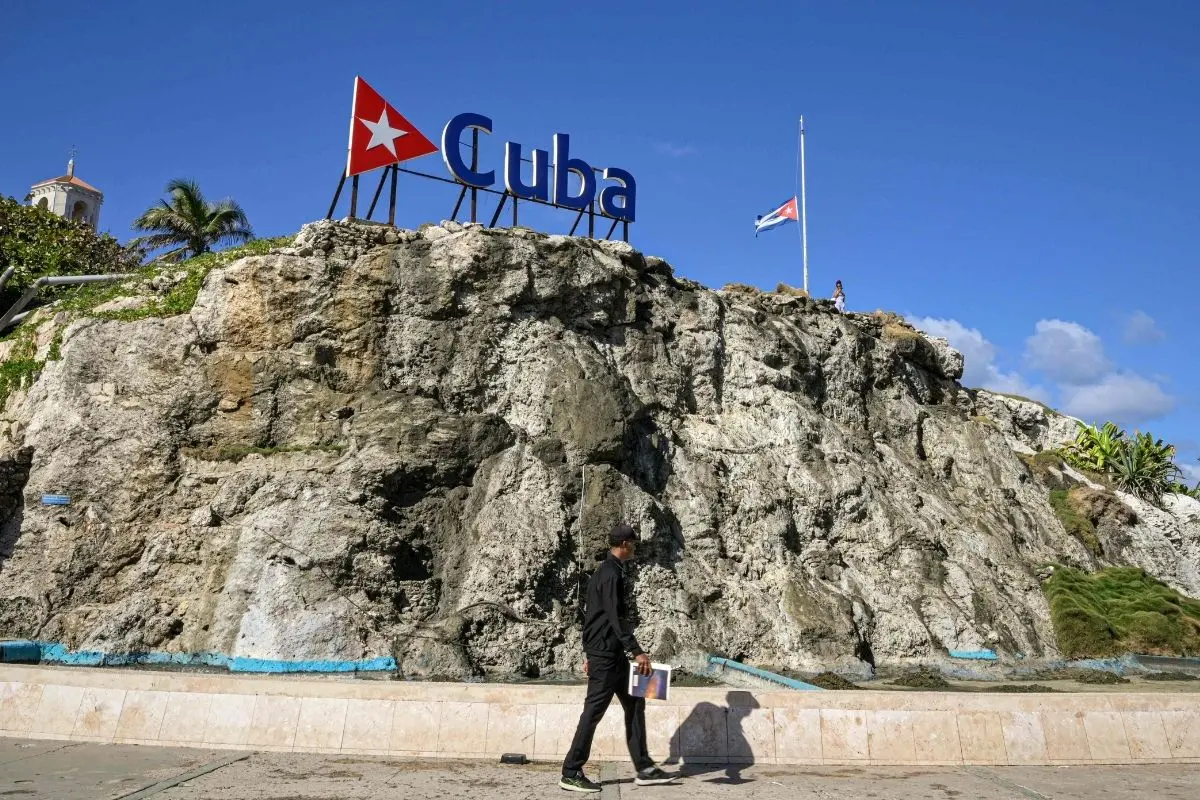
Cuban authorities lowered flags before dawn on Monday to mourn 32 security officers they say were killed in a US weekend strike in Venezuela, as anxiety deepened across the island over what the capture of President Nicolás Maduro could mean for Cuba’s fragile future.
Venezuela is Cuba’s closest ally and a vital economic lifeline. The two governments are so closely linked that Cuban soldiers and security agents often served as bodyguards to Maduro, while subsidised Venezuelan oil has kept Cuba’s struggling economy afloat for years.
Deaths reported, details withheld
Cuban officials said over the weekend that 32 security officers were killed in the surprise attack but provided no further details.
The developments have heightened uncertainty among ordinary Cubans, who already endure frequent blackouts and shortages of basic food items.
US signals wider objective
The Trump administration has openly warned that removing Maduro would advance another long-standing goal: weakening the Cuban government. Cutting Cuba off from Venezuelan support could have severe consequences for Havana’s leadership, which on Saturday urged the international community to oppose what it described as “state terrorism”.
On Saturday, former US president Donald Trump said Cuba’s already ailing economy would suffer further after Maduro’s ouster.
“It’s going down,” Trump said of Cuba. “It’s going down for the count.”
Public grief and defiance
Many analysts say Cuba, with a population of about 10 million, wielded extraordinary influence over oil-rich Venezuela, which has roughly three times as many people. Now, the prospect of losing that influence has left many Cubans fearful of an even harsher reality.
“I can’t talk. I have no words,” said 75-year-old Berta Luz Sierra Molina, sobbing as she covered her face.
Others expressed defiance. Although too old for military service, 63-year-old Regina Méndez said that “we have to stand strong”.
“Give me a rifle, and I’ll go fight,” Méndez said.
Oil lifeline under threat
Maduro’s government shipped an average of 35,000 barrels of oil a day to Cuba over the past three months, roughly a quarter of the island’s total demand, according to Jorge Piñón, a Cuban energy expert at the University of Texas at Austin Energy Institute.
“The question to which we don’t have an answer, which is critical: Is the U.S. going to allow Venezuela to continue supplying Cuba with oil?” Piñón said.
He noted that Mexico previously supplied Cuba with 22,000 barrels a day, a figure that dropped to 7,000 after US Secretary of State Marco Rubio visited Mexico City in early September.
“I don’t see Mexico jumping in right now,” Piñón said. “The U.S. government would go bonkers.”
Blackouts and bleak projections
Ricardo Torres, a Cuban economist at American University in Washington, said Cuba is already struggling despite continued Venezuelan oil shipments.
“Blackouts have been significant, and that is with Venezuela still sending some oil,” he said.
“Imagine a future now in the short term losing that,” Torres added. “It’s a catastrophe.”
Piñón said Cuba lacks the funds to buy oil on the international market.
“The only ally that they have left out there with oil is Russia,” he said, noting that Moscow sends Cuba about 2 million barrels a year.
“Russia has the capability to fill the gap. Do they have the political commitment, or the political desire to do so? I don’t know,” he said.
Doubts over Russian and Chinese support
Torres also questioned whether Russia would step in, warning of broader geopolitical risks.
“Meddling with Cuba could jeopardize your negotiation with the U.S. around Ukraine. Why would you do it? Ukraine is far more important,” he said.
He argued that Cuba should open up its economy to the private sector and shrink its public sector, steps that could encourage Chinese support.
“Do they have an alternative? I don’t think they do,” Torres said.