Even after 2 weeks, mother dolphin keeps carrying dead calf; experts explain why
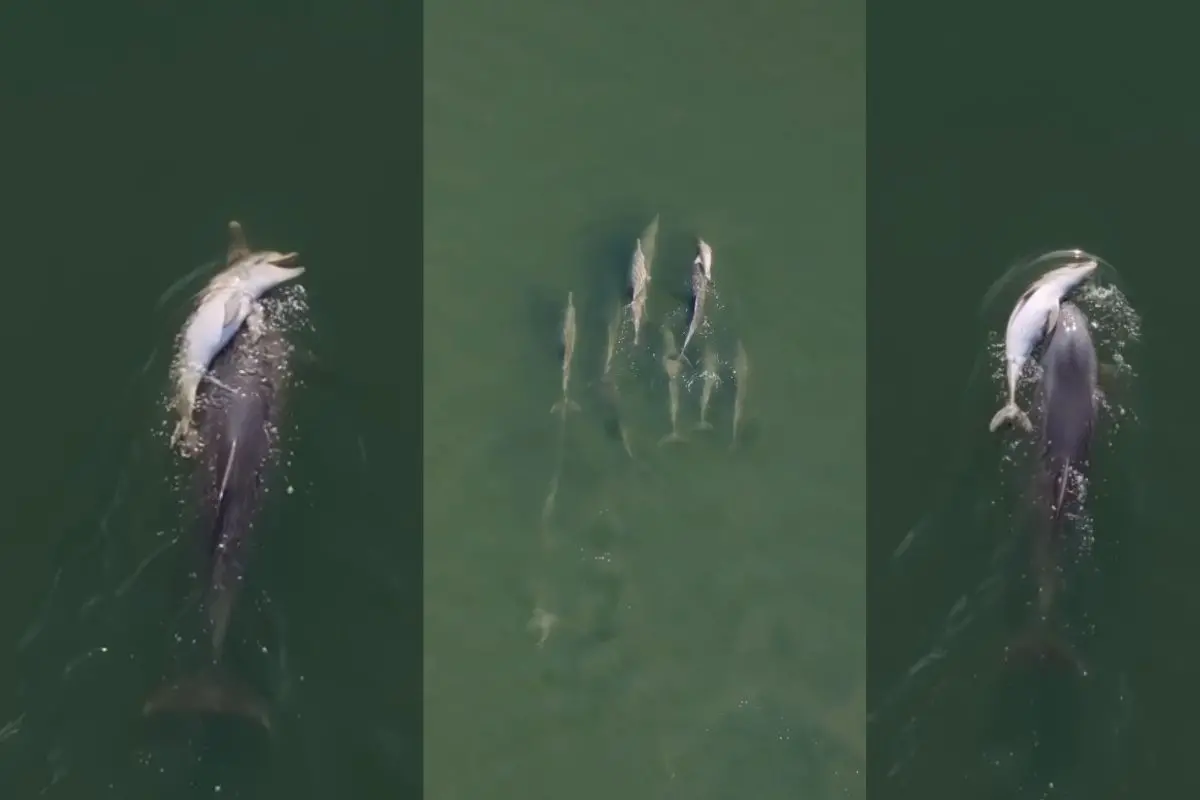
A video of a mother dolphin refusing to let go of her dead calf has gone viral on social media, drawing widespread attention to a behaviour that experts say may reflect mourning or repeated attempts to rescue an unresponsive newborn. The female dolphin was spotted carrying the calf through an estuary in Western Australia after the two-week-old died.
The dolphin, known to researchers as Fraggle, was spotted in the Leschenault Estuary near Bunbury late last week by Geographe Marine Research. Her calf died at around two weeks old after researchers had earlier noticed it was breathing unusually fast. The group had hoped the newborn would survive despite being born during the Southern Hemisphere winter.
Researchers said this was Fraggle's fourth consecutive calf loss.
Behaviour seen in dolphins and whales
Fraggle was observed carrying, lifting and pushing the calf's body towards the water's surface while remaining with other dolphins from the estuary and nearby coastal waters. Experts say such behaviour highlights the strong social bonds within dolphin groups.
Scientists describe this as postmortem attentive behaviour, a term used when dolphins or whales continue caring for a dead companion. Studies suggest dolphins account for most recorded cases of this behaviour among cetaceans, the group that includes dolphins and whales.
Researchers say the actions may represent a mother's effort to revive an unresponsive calf or an expression of grief after its death. Other dolphins staying close to Fraggle during the incident also point to the social nature of these marine mammals.
Scientists have documented similar behaviour in whales, dolphins and several primate species. They say mothers sometimes continue carrying their dead young for days, even though doing so makes feeding and survival more difficult. Eventually, however, the mother must let go of the body to resume normal feeding and protect her own health.