Drone boat pulls off historic rescue after US Apache crashes near Hormuz
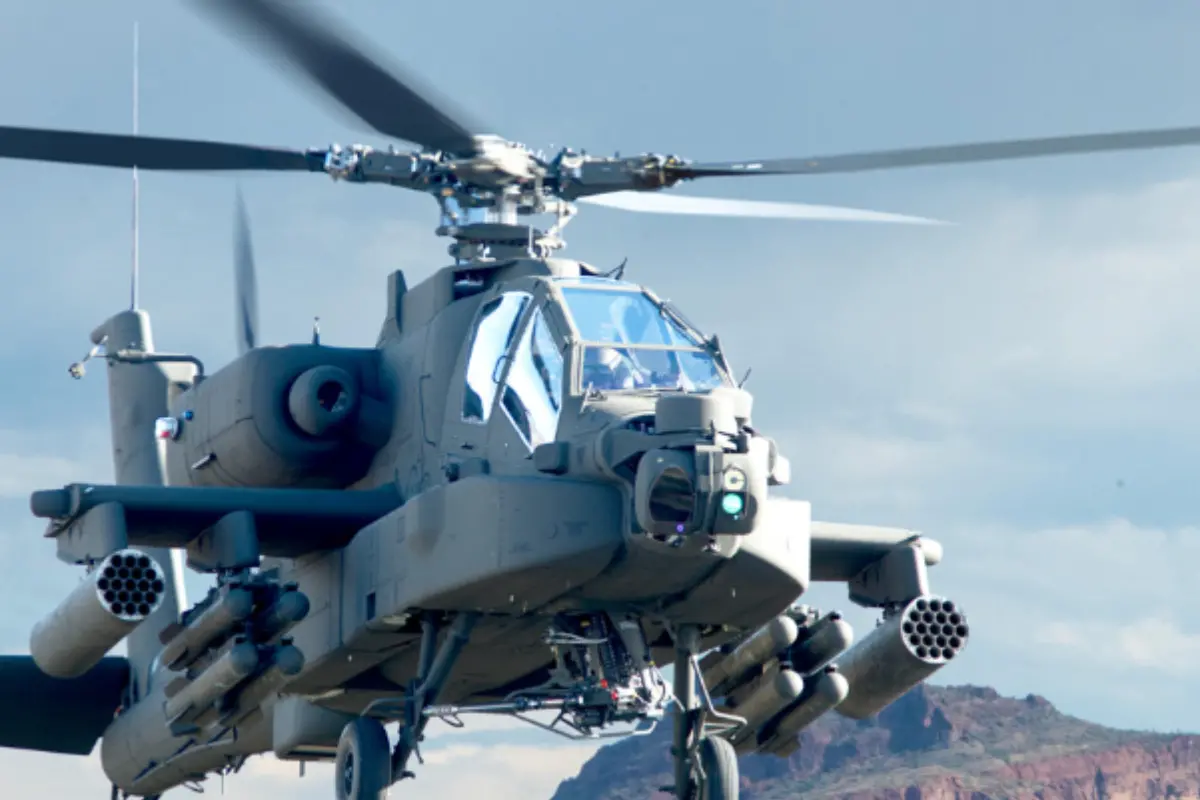
Dubai: In a first-of-its-kind operation, an unmanned US Navy vessel rescued two American Army aviators after their AH-64 Apache helicopter crashed into waters near the Strait of Hormuz early Tuesday, a US military official said.
The helicopter went down off the coast of Oman while conducting a patrol mission around 3:30 a.m. local time, according to US Central Command. The cause of the crash remains under investigation.
Capt. Tim Hawkins, spokesperson for US Central Command, said the rescue was carried out by a 24-foot unmanned vessel known as the Corsair.
"It was the first known drone rescue at sea by the U.S. military," Hawkins said, adding that the drone boat located the two aviators and transported them to shore after they had spent approximately two hours in the water.
Military officials confirmed that both pilots survived the incident without injuries.
US President Donald Trump also acknowledged the crash while speaking to reporters in New York.
"The pilots are fine. Yeah," Trump said. "Nobody injured."
The Corsair drone boat is manufactured by Saronic Technologies and operates under the Navy's Task Force 59, an artificial intelligence and uncrewed systems unit established in 2021 to strengthen maritime security in the Middle East.
Crash Comes Amid Ongoing Iran-Israel Tensions
The incident occurred as tensions remain high across the region following renewed hostilities between Iran and Israel. Iranian state television reported that Israeli strikes on Tuesday killed at least two members of Iran's air defence units.
The conflict, which escalated after the US and Israel launched military strikes against Iran on February 28, has rattled global energy markets and increased economic uncertainty worldwide.
Trump expressed optimism that diplomatic efforts with Tehran could soon yield results.
"We have a good chance" of signing a deal in "two or three days," Trump said.
"We're very close to having a very, very good, strong, powerful deal," the president said. "If we go and bomb — which we could do very easily if we want, and we spend another two or three weeks bombing — they'll have nothing left whatsoever. But you won't have the strait open for months."
He added, "If we do the bombing, you know, a lot of people are going to be killed. Who wants to do that? I don't."
However, negotiations remain difficult. The United States wants Iran to surrender its stockpile of highly enriched uranium, while Tehran is demanding sanctions relief and the release of frozen assets before any final agreement is reached.
Iranian Parliament Speaker Mohammad Bagher Qalibaf criticised Washington's approach on Monday, saying Trump's statements regarding a possible agreement "contradicted the agreed-upon sections," demonstrating that the US is "neither seeking a ceasefire nor dialogue."
Meanwhile, regional tensions continue to spill over into neighbouring Lebanon, where Israel and Hezbollah remain engaged in hostilities despite diplomatic efforts aimed at reducing the risk of a wider conflict.