Did Trump signal a war with Iran back in 1987? His $95,000 ad goes viral
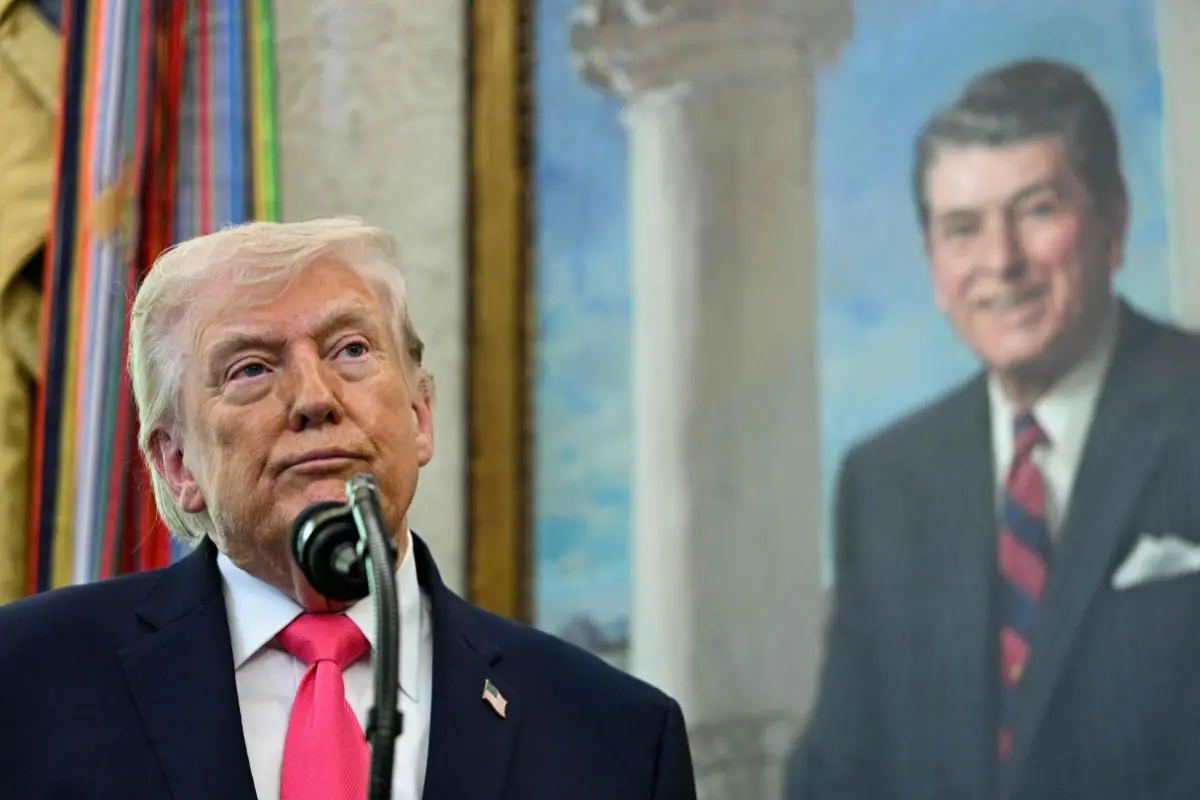
A decades-old full-page newspaper advertisement by Donald Trump has come back into focus, shedding light on his long-standing geopolitical philosophy.
A costly foray into foreign policy
Back in 1987, at the age of 41, the real estate mogul spent precisely $94,801 to place advertorials in three of America’s most influential publications: The New York Times, The Washington Post, and The Boston Globe. This substantial investment coincided with his initial, brief exploration of a presidential run.
The advertisements featured a provocative headline claiming that the nation's foreign defence issues could be resolved simply with "a little backbone." Within the text, Trump delivered a stinging critique of how American leadership managed the Gulf crisis during the protracted conflict between Iran and Iraq.
In September 1987, Trump paid $95,000 for full-page ads in The New York Times, The Washington Post, and The Boston Globe. The ad was an open letter criticizing U.S. foreign policy, arguing that America should stop subsidizing the defense of wealthy allies like Japan and Saudi… pic.twitter.com/47XNRsQqaE
— State (@StalwartSt) March 6, 2026
The "laughing stock" narrative
Trump’s core argument focused on the perceived humiliation of the United States on the global stage. He asserted that international observers were "laughing" at American officials while the US Navy provided security for oil tankers navigating the Strait of Hormuz.
His critique was built on three specific points of frustration:
Lack of ownership: The US was defending vessels it did not own.
Lack of necessity: The ships carried oil that the American domestic market did not require.
Lack of reciprocity: The cargo was intended for allies who, in Trump's view, refused to provide meaningful assistance.
He demanded that Washington cease providing free security to wealthy nations that possessed the financial means to protect themselves.
Economic exploitation and the Persian Gulf
The 1987 manifesto did not limit its grievances to the Middle East. Trump expanded his critique to include Japan and other global powers, accusing them of exploiting American protection for decades. He argued that this imbalance was a primary driver of the US national deficit, high taxes, and a struggling economy.
Regarding the Persian Gulf, Trump noted its "marginal significance" to the United States' own energy security. Instead, he highlighted its vital importance to Japan and other allied nations.
He pointedly questioned why these countries were not compensating the United States for the massive financial costs and the potential loss of American lives incurred while safeguarding their specific interests.
From Kharg Island to 2026
The aggressive nature of these early views was further clarified in a 1988 interview with The Guardian. During that conversation, Trump suggested a direct military response to any provocation. He stated that if a single bullet were fired at American personnel or vessels, he would take decisive action against Kharg Island, suggesting he would "go in and take it."
Although his 1988 White House aspirations eventually dissipated, the fundamental principles he established then remain central to his current platform.