Dhaka tense under lockdown as ICT sets Nov 17 verdict for Sheikh Hasina
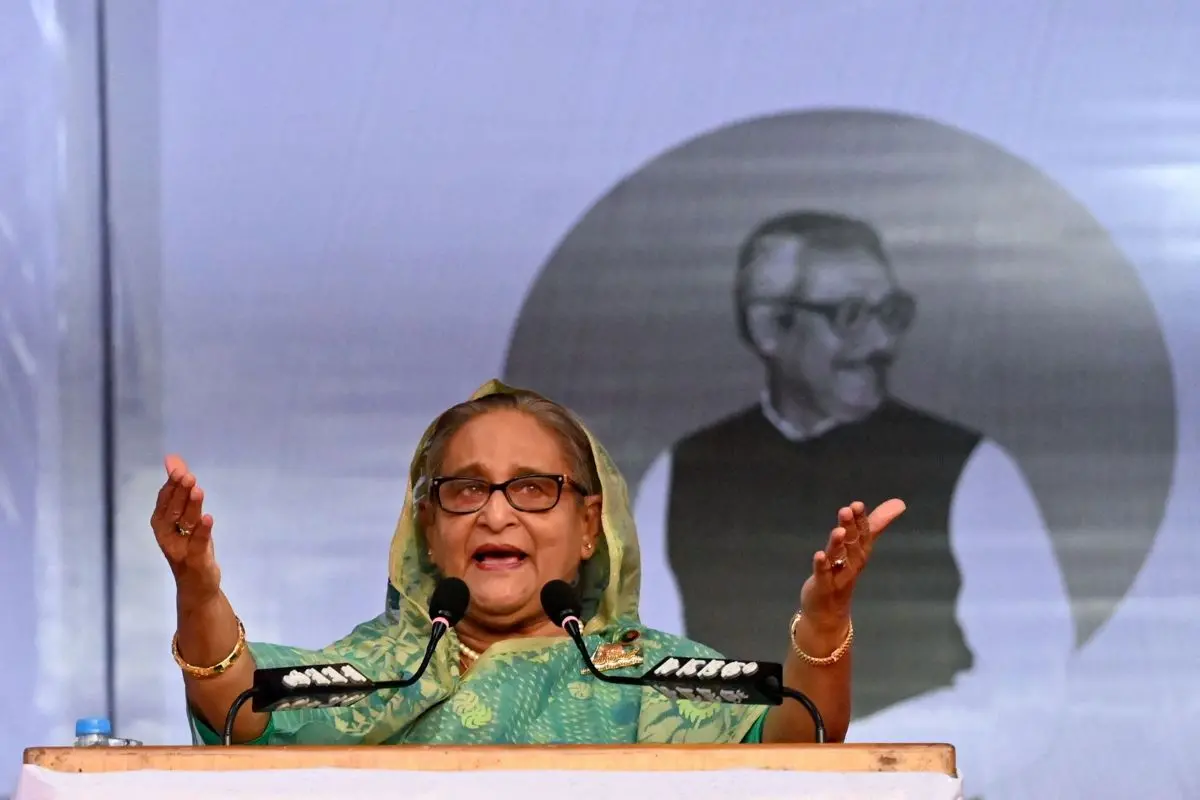
Bangladesh braced for escalating political tension on Thursday as the International Crimes Tribunal (ICT-BD) announced it would deliver its verdict on November 17 in the high-profile case against former Prime Minister Sheikh Hasina, who faces charges of crimes against humanity, including murder, linked to the July 2024 student uprising that toppled her government.
The tribunal’s announcement came amid a nationwide dawn-to-dusk lockdown declared by the now-disbanded Awami League, severely disrupting movement and daily life across the country.
Dhaka, in particular, witnessed unusually empty roads, shuttered establishments, and heightened deployments of the army, police, and Border Guard Bangladesh (BGB) as authorities scrambled to maintain order.
Security forces were stationed at airports, key installations, and major intersections after the interim government—led by Nobel laureate Muhammad Yunus as Chief Adviser—banned Awami League activities.
Party leaders, operating from undisclosed locations, announced the shutdown programme through social media channels.
The capital remained tense following reports of arson attacks targeting buses and crude bomb (cocktail) explosions over the past two days in Dhaka, Tangail, Gopalganj, and Munshiganj.
Although no casualties were reported, long-distance passenger numbers plunged, and Dhaka’s major Gabtoli terminal saw reduced services with delayed departures.
Flash rallies by Awami League supporters erupted in several districts, prompting large-scale operations by law enforcement agencies to arrest party leaders and activists. Security checkpoints and vehicle searches added to widespread public unease.
The ICT-BD’s case against Hasina, her former home minister Asaduzzaman Khan Kamal, and ex–police chief Abdullah Al Mamun centers on allegations that they ordered or enabled violent crackdowns on student protesters during the July uprising, which ultimately brought down the Awami League government on August 5, 2024.
A United Nations report earlier estimated that around 1,400 people may have died during the unrest.
The tribunal prosecutors have sought the death penalty for Hasina on multiple counts, including murder, attempted murder, torture, extermination, and ordering the use of deadly weapons against unarmed demonstrators.
Testimonies in the case were completed after the interim government amended the tribunal’s legal framework to allow proceedings against the former premier.
Hasina, who fled to India following the collapse of her two-decade rule, has repeatedly rejected the charges, calling the tribunal a “kangaroo court” driven by political vendetta.
In previous remarks, she accused the Yunus administration of being backed by “fundamentalist and extremist groups” and pursuing “anti-India policies.”
She also asserted that elections without the participation of the Awami League “cannot be considered valid,” insisting her party still enjoys mass support.
The irony of the current proceedings has not gone unnoticed. Hasina herself established the International Crimes Tribunal during her tenure to try perpetrators of the 1971 Liberation War atrocities, including several Jamaat-e-Islami leaders.
The same tribunal—now under reformed statutes—is preparing to deliver a historic verdict against her.
As Bangladesh confronts an increasingly volatile political climate, all eyes are now on November 17, when the tribunal will announce its decision in a case that could define the nation’s immediate political future.