Countdown to history: China to launch youngest astronauts with mice in key space test
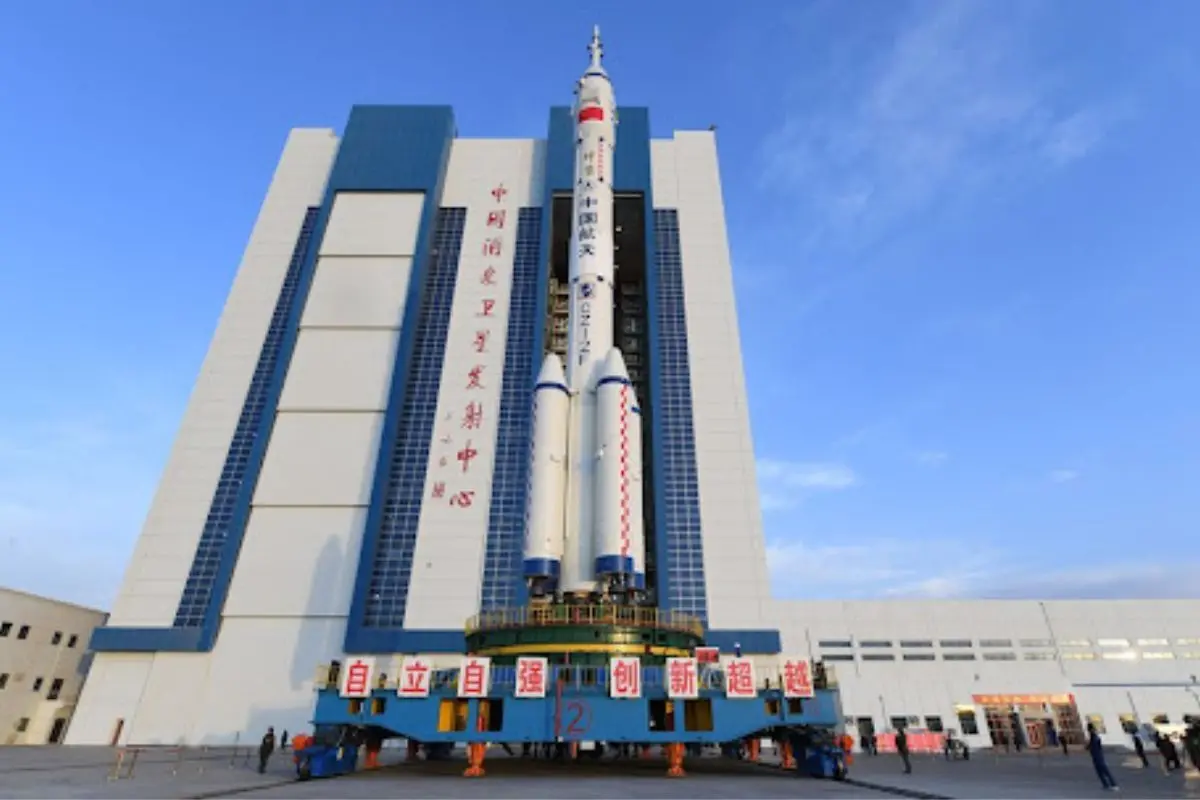
Beijing: In a move signalling the next phase of its space ambitions, Jiuquan Satellite Launch Centre in China is set to launch a crew to the Tiangong Space Station that includes two first-time flyers and four mice to conduct microgravity experiments. The mission also supports the country’s long-term goal of landing astronauts on the moon by 2030.
State media quoted Zhang Jingbo, spokesperson for the China Manned Space Agency, declaring that the “fixed goal” of a lunar landing remains firm and that every technological element—rockets, suits, and vehicles—is “progressing smoothly”.
The three-astronaut team comprises veteran flyer Zhang Lu, along with newcomers Wu Fei and Zhang Hongzhang. Their scheduled liftoff from Jiuquan is slated for 11:44 p.m. local time this Friday.
Accompanying the human crew are four mice—two male, two female—set to participate in biological studies assessing the effects of weightlessness, confinement, and space-environment stressors. Researchers hope the results will inform future long-duration human missions.
Observers say this dual focus on dauntless human crews and animal testing underscores China’s desire to steadily deepen its orbital presence while building the science base for its lunar ambitions. The Tiangong station, already operational, will provide the next proving ground.
The youngest-ever nature of the crew marks a generational shift for China’s astronaut corps, emphasising a move from demonstration missions to operational science and longer stays in orbit. It also reflects the broader international space-race dynamic: nations are not only sending humans into space, but seeking the data and sustainable infrastructure for an era of space habitation.
As the countdown begins, all eyes will be on the mission’s success — not only for its immediate objectives but for how it positions China in human space exploration for the coming decade.