US tariffs: What actions are China, Canada and Mexico taking in the trade war?
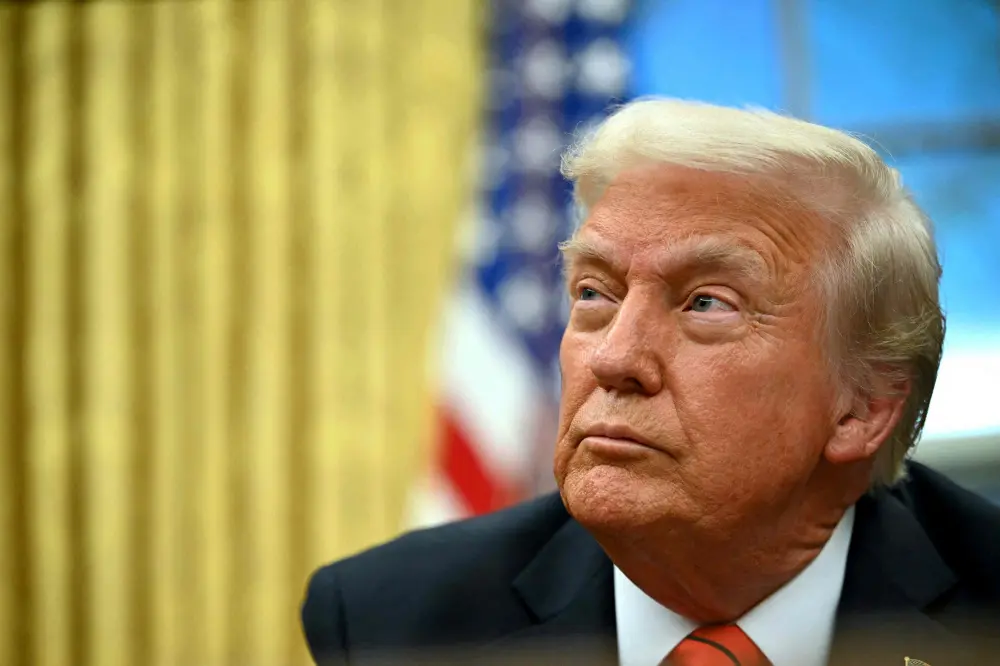
China, Canada, and Mexico have announced countermeasures in response to the United States' latest round of tariffs, which took effect on Tuesday. While China imposed additional tariffs on American agricultural products and restricted business dealings with US firms, Canada introduced its own tariffs on US goods. Mexico, meanwhile, has indicated that it will announce its response after assessing the situation.
What is China's response?
China has announced new tariffs of up to 15% on key US farm products, including chicken, pork, soybeans, and beef, starting March 10. Goods already in transit will be exempt until April 12, the Chinese Commerce Ministry said. The decision follows US President Donald Trump’s move to increase tariffs on Chinese imports to 20%, along with 25% tariffs on imports from Canada and Mexico.
China’s Foreign Ministry spokesperson Lin Jian criticised the US for escalating tensions, stating that the US had repaid "kindness with enmity." He also said that the Chinese people had never been afraid of intimidation or external pressure.
Despite the broad scope of the tariffs, China refrained from imposing them across all sectors. Sun Chenghao, an international relations professor at Tsinghua University, said that both sides had shown restraint and suggested that while the US ultimately seeks a trade deal, current tensions remain high.
China also took additional measures against US businesses. The customs department suspended American lumber imports, citing concerns over pests, and revoked the soybean export licences of three US firms due to issues related to fungi and seed-coating agents. The Chinese Commerce Ministry launched an investigation into US fibre optic imports, alleging that American exporters may have been attempting to bypass anti-dumping measures.
Beijing also expanded its restrictions on US companies, adding 10 firms to its unreliable entity list and 15 to its export control list. Companies such as Teledyne Brown Engineering, Huntington Ingalls Industries, and General Dynamics Land Systems were among those affected. China stated that these firms posed risks to its national security and economic interests.
In 2024, China imported $24.7 billion worth of US farm products, accounting for 14% of total American agricultural exports. However, China has been reducing its reliance on US goods by increasing imports from Brazil and Argentina.
Xu Botao, research director at the GoGlobal Institute, said that China would not be intimidated by the US measures and would respond accordingly.
How has Canada reacted?
Canadian Prime Minister Justin Trudeau announced that Ottawa would immediately impose $30 billion in tariffs on US goods. He also said that by March 25, Canada would introduce an additional $125 billion in tariffs.
The Premier of Ontario has repeated his earlier warning that Canada could cut off energy supplies to the US in response to the tariffs.
What is Mexico's position?
Mexico has not issued an immediate response. The country’s economy ministry stated that President Claudia Sheinbaum would address the matter during her regular press conference on Tuesday.
In the past, Mexico avoided US tariffs by reaching a last-minute agreement to increase troop deployments to its northern border. The country has since intensified anti-drug efforts and hinted at new trade measures against Chinese imports.
Ahead of Trump's announcement, Sheinbaum said that Mexico's response would depend on the US decision and that the government had a clear strategy in place. She added that there was unity within Mexico regarding the approach to trade tensions.