Explainer: What caused the massive migrant surge in Spain's Ceuta enclave?
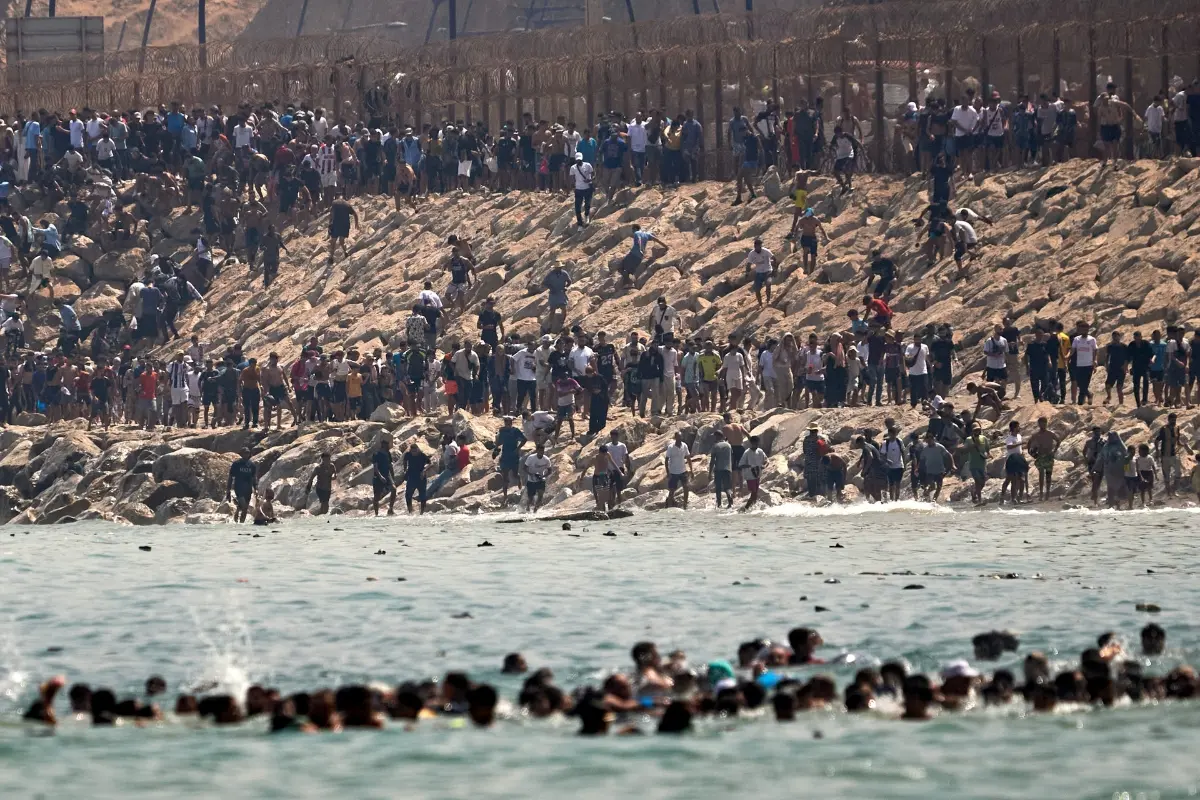
In late July 2026, the Spanish North African enclave of Ceuta became the epicentre of a massive migration and diplomatic crisis. In a matter of hours, tens of thousands of migrants crossed the border from neighbouring Morocco, overwhelming Spanish security forces, prompting emergency deployments, and sparking a fierce diplomatic row within the European Union.
What is Happening at the Border?
Beginning on 30 July 2026, an unprecedented surge of migrants, primarily Moroccans, began crossing into Ceuta. According to statements from the Spanish government, an estimated 49,000 migrants entered the territory within a single day.
Migrants utilised various methods to bypass border controls. While some forced open gates in the high border fencing, the vast majority entered by sea. Video footage circulated widely by news agencies showed thousands of individuals using inflatable inner tubes, makeshift flotation devices, or simply swimming around the Tarajal breakwater to reach Spanish soil.
The influx caused "operational collapse" at the border. Reception centres, particularly those designated for unaccompanied minors, rapidly exceeded capacity, leaving thousands sleeping on the streets. Tragically, the desperate sea crossings have proved fatal; the Spanish government delegation in Ceuta confirmed at least 19 bodies have been recovered from the water, with fears the death toll may rise.
How Has Spain Responded?
The sheer volume of arrivals overwhelmed the local Guardia Civil (Spain's border police force). In response to the collapse of border security, Juan Jesús Vivas, the President of Ceuta, described the situation as a "total humanitarian and social emergency." He urgently requested that Madrid declare a national emergency and deploy the military.
While the central Spanish government initially rejected the request to formally declare a national emergency, arguing that migration does not fall under that specific legal framework, it did authorise the immediate deployment of the Armed Forces to assist the Civil Guard in restoring order. Prime Minister Pedro Sánchez announced the mobilisation of all necessary resources and confirmed a visit to the enclave to address the crisis firsthand. Moroccan authorities have also stepped in, deploying water cannons and pushing back crowds on their side of the border in the town of Fnideq.
What Triggered the Sudden Influx?
While sudden surges have happened before, most notably in May 2021 when 8,000 migrants crossed over two days, this current crisis has been linked to recent legal developments in Spain.
Earlier in July 2026, the Spanish Supreme Court ruled that the controversial practice of "summary returns" (immediate, on-the-spot repatriations to Morocco) could no longer be automatically applied to migrants intercepted at sea while trying to reach Ceuta or Melilla. The court mandated that these individuals must be identified and granted access to standard asylum procedures. According to Spain’s Interior Ministry, migrant smuggling networks likely exploited this ruling, spreading misinformation to encourage mass sea crossings.
Why is Italy Threatening Schengen Suspension?
The crisis in Ceuta has quickly evolved into a broader European dispute, drawing sharp reactions from Italy. Italian Prime Minister Giorgia Meloni stated that the uncontrolled immigration poses a direct threat to European security.
Taking a hardline stance, Meloni announced that Italy is preparing to intervene with extraordinary measures, including the potential suspension of the Schengen Agreement (the EU's visa-free open border zone) with Spain. Italian Deputy Prime Minister Antonio Tajani supported the move, explicitly criticising the Spanish government's broader migration policies.
In response, Spanish Foreign Minister José Manuel Albares summoned the Italian ambassador, condemning the threats as "partisan demagoguery" and demanding European solidarity rather than political weaponisation of the crisis.