Joel Mokyr, Philippe Aghion and Peter Howitt win 2025 Nobel Prize in Economics for work on innovation-driven growth
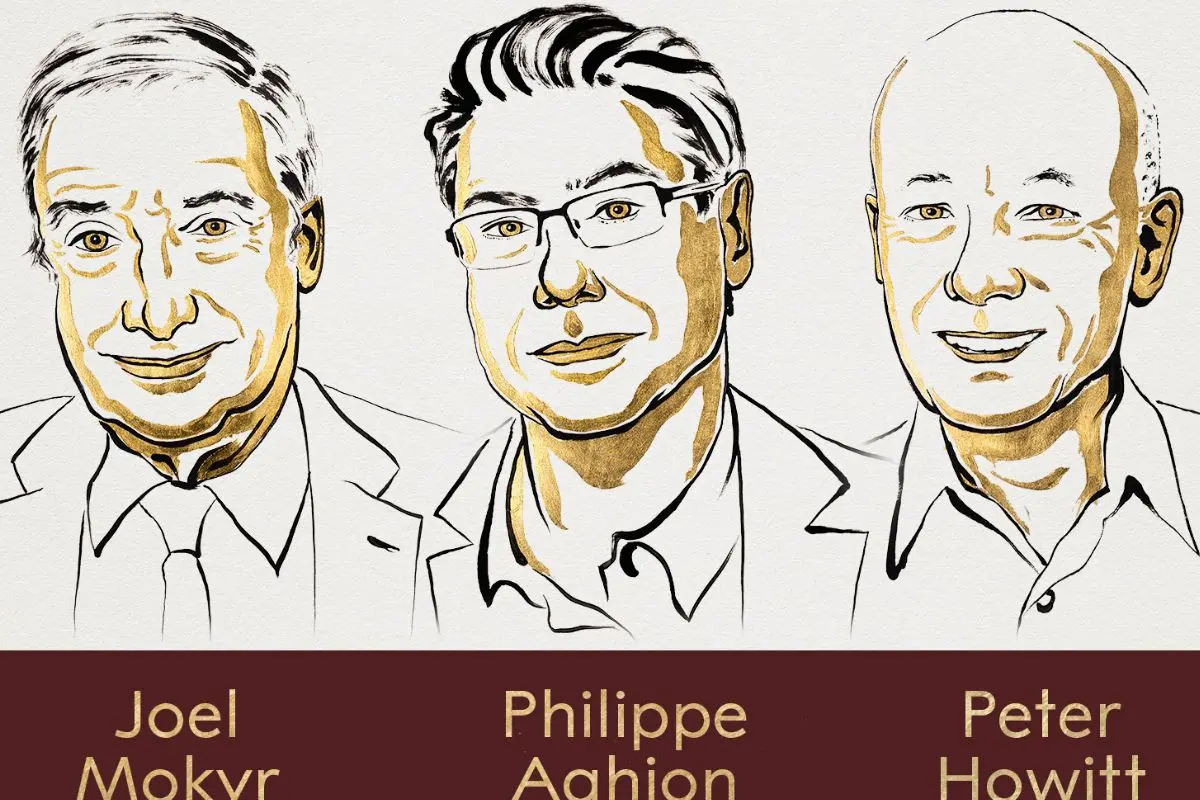
Stockholm: The Royal Swedish Academy of Sciences has announced the 2025 Sveriges Riksbank Prize in Economic Sciences in memory of Alfred Nobel for Joel Mokyr, Philippe Aghion and Peter Howitt for their groundbreaking research explaining the mechanisms behind sustained, innovation-led economic growth.
The award has been divided into two parts: one half goes to Joel Mokyr for his pioneering insights into the historical foundations of technological progress and the conditions that enable long-term economic development. The other half is shared by Philippe Aghion and Peter Howitt for their influential theory of "creative destruction”, which explains how innovation replaces old technologies and drives continued economic expansion.
Mokyr’s contribution: How knowledge fuels long-term growth
Joel Mokyr, a renowned economic historian, has shown that a continuous accumulation of useful knowledge lies at the heart of sustained economic growth. According to his research, this “useful knowledge” is made up of two essential components:
- Propositional knowledge – understanding the underlying principles of how and why something works, grounded in natural laws and scientific explanation.
- Prescriptive knowledge – practical guidance such as instructions, designs or formulas that detail how to make something work in practice.
Mokyr’s work highlights that while innovation can occur without deep scientific explanation, sustained progress — where new ideas consistently build upon previous ones — requires both practical know-how and theoretical understanding. Before the Industrial Revolution, many inventions lacked a scientific foundation, which limited further development.
Through extensive use of historical records, Mokyr also underscored the vital role of openness to ideas and a societal willingness to embrace change. Societies that welcomed experimentation and debate were more likely to foster the conditions for continuous technological and economic advancement.
Aghion and Howitt: Innovation through creative destruction
Philippe Aghion and Peter Howitt were honoured for their development of a formal model of creative destruction, building on Joseph Schumpeter’s foundational ideas. Their work shows how new innovations can simultaneously drive productivity and render existing technologies obsolete — a cycle that fuels sustained, dynamic growth in modern economies.
Their model captures how competition and innovation interact over time, explaining why long-term growth depends not just on new ideas but on the economic and institutional environments that support continuous reinvention.