Brazil votes for president; Lula and Flávio await verdict in contest with global political stakes
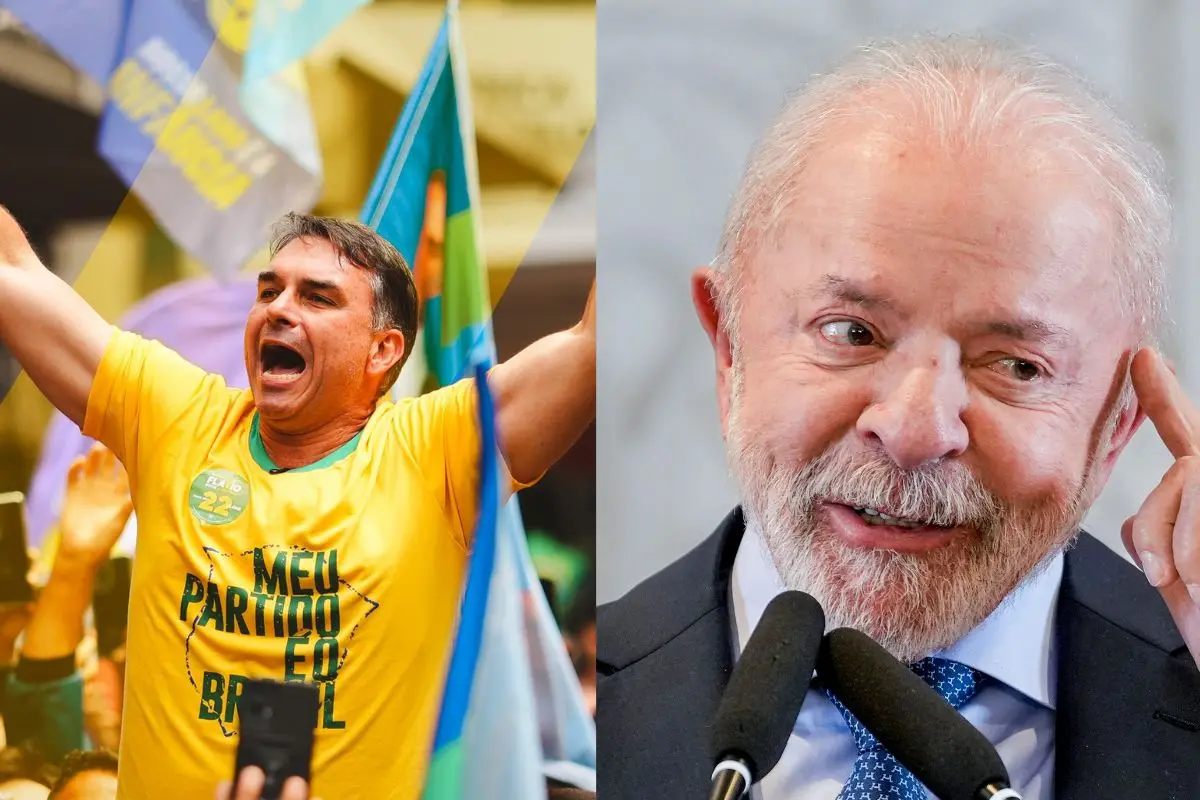
Across Brazil, millions of citizens stepped into polling booths on Sunday to decide one of the most consequential elections in Latin American history. The contest is a straight runoff between two fierce ideological rivals: the 80-year-old leftist incumbent President, Luiz Inácio Lula da Silva, and Senator Flávio Bolsonaro, a 45-year-old conservative lawmaker. For Lula, who celebrates his 81st birthday on Tuesday, this campaign represents his final electoral battle as he seeks a fourth non-consecutive term in office. Standing against him is the eldest son of former president Jair Bolsonaro, who is currently serving a 27-year prison sentence following an attempted coup after his 2022 defeat.
Final opinion polls showed the two candidates running neck-and-neck. The political consequences reach far beyond South America. A victory for Bolsonaro would steer Latin America’s largest economy and most populous democracy sharply to the right. That outcome would align Brazil closely with US President Donald Trump, an ally of the Bolsonaro family who has already seen conservative allies win power in Argentina, Chile, Colombia, and Peru, though Trump offered no formal endorsement in this race. A victory for Lula, by contrast, would preserve Brazil alongside Mexico as the hemisphere’s primary left-of-centre bulwarks.
Regional fault lines and a shock first-round lead
The race reached this boiling point after a dramatic first round of voting on October 04. The left was caught entirely off guard when Flávio Bolsonaro outperformed expectations, finishing ahead of Lula by more than 2.2 million votes. That performance reflected sharp geographical divides across the country's five major regions.
Bolsonaro swept three of the five zones. He captured the southern states bordering Uruguay and Argentina, dominated the agricultural heartlands of the Centre-West, and won the affluent, vote-heavy Southeast, which houses the economic engines of São Paulo, Rio de Janeiro, and Minas Gerais. Lula counterbalanced those gains by winning the North, which contains the Amazon basin, and by running up commanding margins in his traditional stronghold of the Northeast.
Following that first round, eliminated presidential contenders quickly took sides. Author Augusto Cury, a self-described moderate who finished third with 3.4 million votes, endorsed Bolsonaro to unite anti-establishment voters. Conservative former state governors Ronaldo Caiado and Romeu Zema, who together polled nearly 3 million votes, also backed Bolsonaro. Meanwhile, Renan Santos, who drew 2.4 million votes on a platform rejecting all conventional politicians, refused to endorse either contender.
Fast electronic voting meets millions of absent voters
Brazil conducts its elections entirely through electronic voting machines, an automated setup used since the 1990s. Each ballot unit tallies votes internally at the close of poll and prints a paper verification summary. The encrypted data is then transmitted through secure networks directly to the supreme electoral court in the federal capital, Brasilia, which tabulates and publishes the national outcome within hours.
Alongside the presidency, voters settled six state gubernatorial runoffs. Yet, getting voters to the booths remained a major hurdle. Voting is legally compulsory in Brazil for literate citizens aged between 18 and 70. However, enforcement carries few teeth: those who skip voting need only submit a brief justification or pay a token fine of less than one dollar. During the first round, more than 33 million of the country’s nearly 160 million registered electors stayed away. While some non-voters were ill, abroad, or away from home, others simply abstained. The legal penalties only bite if a voter skips three consecutive elections without an excuse, which freezes their national tax identity number, blocks state bank loans, bars public employment applications, and stalls passport renewals. Persistent rain poured across much of Brazil on Sunday, raising concerns that wet weather would depress turnout further.
Clashing visions of faith, welfare and global ties
The two campaigns offered entirely opposing prescriptions for governance. Flávio Bolsonaro campaigned on fiscal discipline, pledging to slash state spending and clamp down hard on street crime, while explicitly appealing to religious conservatives by promising to dedicate the nation to "the Lord Jesus Christ". He presented himself as a calmer figure than his father, seeking to reassure moderates unsettled by past turbulence.
Lula presented himself as a defender of democratic norms and expanded social safety nets against foreign influence. Under his third administration, Brazil reduced both inflation and unemployment, pulled millions out of extreme poverty and hunger, and brought deforestation across the Amazon rainforest down to its lowest level in forty years. Nevertheless, recent weeks saw Amazonian towns blanketed by thick smoke from wildfire blazes driven by the El Niño weather pattern, even as climate policy received little sustained attention on the campaign trail.
When both men cast their ballots on Sunday morning, the friction was clear. Flávio Bolsonaro voted in the rain in Rio de Janeiro alongside his wife, Fernanda, and declared:
"The time has come for real change. Brazil can't stand another four years like this".
Lula cast his vote in São Bernardo do Campo, the industrial cradle where he started out as a metalworkers' union organiser in the 1960s, joined by his wife, Rosângela, and Vice President Geraldo Alckmin. Criticising his opponent's international stance, Lula stated that the right "wants to govern with the American flag". Reflecting on an enormous rally in São Paulo on the eve of the vote, Lula grew emotional, telling reporters:
"I am thankful to the Brazilian people. What people did to me in recent days is something I cannot repay. I don’t think Paulista Avenue had so many people in any political event. It is a lot of generosity, a lot of care, a lot of love. I will be forever grateful".
Outside the polling stations, crowds traded hostile rival anthems. Bolsonaro’s supporters chanted, “Lula, thief, your place is in prison,” recalling his earlier 18-month imprisonment on corruption allegations that were subsequently annulled on technical legal grounds. In response, Lula loyalists clapped and sang their familiar refrain: “Olé olé olé ola, Lula!”.
Voices on the ground reveal deep everyday anxieties
Beneath the grand speeches lay visceral concerns over inflation, crime, and social dignity. Voters backing Bolsonaro pointed to high taxation and grocery bills. Fabianne Borges Santoro, a 45-year-old physiotherapist wearing the national colours of yellow and green, explained her vote for the opposition:
"The Workers’ Party has been in power for a long time and the voice of the people is saying that we need change to see improvements in security and the cost of living. Things are really expensive and taxes are too high".
Santoro added that although she had voted for Lula’s party in the past, she now linked it directly to corruption, citing the 2014 Operation Car Wash probe that ensnared numerous political figures. Another voter seeking change was Eduardo Viana, a 67-year-old retiree, who remarked:
"This is about renewal, enough of the same old thing. Lula says he governs for the poor... just look, people can't even go to the supermarket".
For others, loyalty to the Bolsonaro family was personal. Roulen Azeredo, a 76-year-old army reservist who has consistently backed right-wing candidates, openly hoped a win by the son would secure the release of the father. "The current government did nothing," Azeredo said. "His imprisonment is a disgrace".
Conversely, working-class communities rallied behind the incumbent, fearful of losing vital welfare support. Luzia da Souza, a Black bar owner from Rio de Janeiro's urban periphery, insisted Lula remained indispensable:
"Black people’s lives greatly improved during Lula’s terms. A president doesn’t govern on his own. But Lula is a man of the people and he knows what it’s like to be poor. I find it impossible not to vote for him".
She laid the blame for sluggish reforms on the conservative majority in Congress. In the country's Northeast, 56-year-old Walter dos Santos defended the administration's expanded social grants:
"Even if people call it handouts, for us, they were an enormous help. Because anyone who has ever gone hungry knows not to take these programs for granted".
In Brasilia, 43-year-old journalist Anderson Falcão wore a red shirt to the polls, describing Bolsonaro’s programme as fundamentally "exclusionary". Falcão argued: "It’s a project that harms the less fortunate, harms the worker, women, the forest, the Amazon". Street demonstrators supporting Lula organised widespread rallies under the banner "Never Again Bolsonaro", drawing attention to the former government's public health management during the Covid-19 pandemic and reductions in welfare spending.
Social media storms and alliances that tilted the race
Faced with a deficit after the opening round, Lula's strategists mounted an aggressive internet campaign. The left had long lagged behind the right's sophisticated online machinery, prompting Lula to revamp his digital operations and even purchase his first smartphone.
The shift generated massive traction. According to data analytics firm Bites, both candidates recorded roughly similar web engagement between the start of official campaigning on 16 August and the first round. However, once the runoff began, Lula's online channels generated approximately 111 million interactions, eclipsing Bolsonaro’s 31 million.
This social media surge sparked friction with tech platforms. Lula’s campaign publicly accused Meta, the parent company of Facebook, Instagram, and WhatsApp, of distorting the playing field through algorithmic bias. Meta rejected the charge of deliberate manipulation, though it conceded that technical errors had accidentally switched off several of Lula’s paid advertisements.
A bruising aftermath awaits whoever takes power
Regardless of which candidate the electronic tally puts ahead, Brazil faces an exceptionally volatile aftermath. Flávio Bolsonaro has already signalled intentions to pursue an amnesty for his jailed father and push for the impeachment of Supreme Court Justice Alexandre de Moraes, who presided over the legal proceedings against the elder Bolsonaro.
Political analyst Thomas Traumann warned that neither victor will enjoy a smooth road ahead:
"If the left wins, it faces four years with a hostile Congress and threats of impeachment. If the far right wins, it will be a government of retribution, directed at the Supreme Court".
The encrypted count will deliver its verdict overnight, answering whether Brazil remains anchored on the left or swings decisively into the conservative camp.