‘Blown off the face of the Earth...’ Trump warns Iran as Hormuz clashes test ceasefire
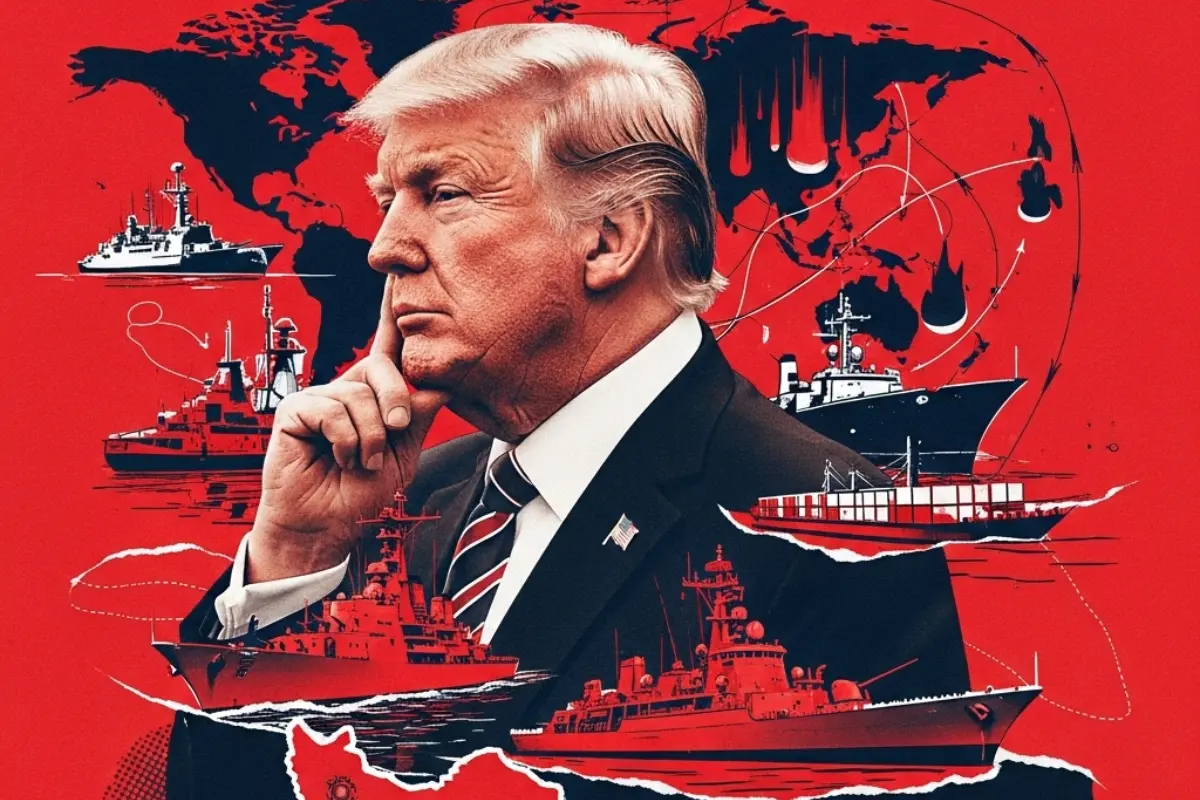
Washington: Iran and the United States have put a strained ceasefire under pressure, with both sides reportedly engaging in military activity in the strategically vital Strait of Hormuz over the past 24 hours. While US President Donald Trump declined to clearly state whether the truce remains intact, he warned in an interview with Fox News that Iran would be “blown off the face of the Earth” if it attacked US vessels.
‘Project Freedom’ announced amid rising tensions
The escalation followed Trump’s announcement on Monday that the US would begin escorting ships through the Strait of Hormuz under an initiative named “Project Freedom”.
“For the good of Iran, the Middle East, and the United States, we have told these Countries that we will guide their Ships safely out of these restricted Waterways, so that they can freely and ably get on with their business,” he wrote on Truth Social.
In response, Iran cautioned that “any foreign military force, especially the invading American army … will be attacked” if it attempts to approach or enter the waterway.
US military maintains defensive stance
Echoing the cautious tone, Bradley Cooper, head of US Central Command, refrained from confirming whether the ceasefire, which has lasted nearly a month, is still in place.
“I wouldn’t go into details of whether the ceasefire is over or not,” Cooper told reporters on Monday, as reported by CNN.
“I think the key thing is, for us, is we’re merely there as a defensive force and to give a very thick layer of defense to commercial shipping to allow them to proceed out of the (Persian Gulf).”
Conflicting claims over attacks at sea
According to Cooper, Iran launched multiple cruise missiles, drones and small boats targeting US Navy vessels and commercial ships under American protection. In response, the US military said it destroyed six small Iranian boats in the Strait of Hormuz on Monday.
Iranian state media disputed this account, denying that any boats were sunk. Trump later claimed that seven small Iranian boats had been shot down by US forces.
The US military also reported that two American-flagged merchant ships had safely passed through the Strait of Hormuz, with Navy guided-missile destroyers assisting in restoring maritime traffic in the Persian Gulf. Iran rejected this claim, stating that no US-flagged commercial vessels had crossed the strait.
Separately, the US dismissed Iranian assertions that its navy had fired warning shots near American destroyers operating in the area. “No U.S. Navy ships have been struck,” CENTCOM said in a post on X.
Middle East sees renewed hostilities
The Middle East, already heavily impacted by the US-Iran conflict, is witnessing renewed tensions as hostilities escalate. The United Arab Emirates said on Monday that it had been targeted by Iran for the first time since the ceasefire took effect in early April.
The Gulf nation condemned the strikes, stating that its air defence systems intercepted 19 Iranian missiles and drones.
Three Indian nationals were injured in a drone strike that triggered a “major fire” at the Fujairah Oil Industry Zone. The UAE also accused Iran of targeting an empty crude oil tanker owned by Abu Dhabi National Oil Company while it was transiting the Strait of Hormuz, according to Reuters. ADNOC’s maritime logistics unit said the vessel, Barakah, was empty at the time and no injuries were reported.
Iran later clarified that it had no prior plan to strike oil facilities in Fujairah, according to state television citing a military official.
Regional spillover and diplomatic efforts
Oman also reported that a residential building housing employees was targeted on Monday, although further details were not disclosed.
Amid the rising tensions, Iran has presented a 14-point peace proposal to the United States through Pakistan. While Washington has suggested a two-month ceasefire, Tehran is seeking a comprehensive resolution within 30 days.
Iranian Foreign Minister Seyed Abbas Araghchi responded to the developments, including Project Freedom and the recent strikes in the UAE, by highlighting the limitations of military solutions.
In a post on X, he said, “Events in Hormuz make clear that there's no military solution to a political crisis.”
With agency inputs