Bangladesh Army tank blast kills 2; Chinese-made equipment under renewed scrutiny
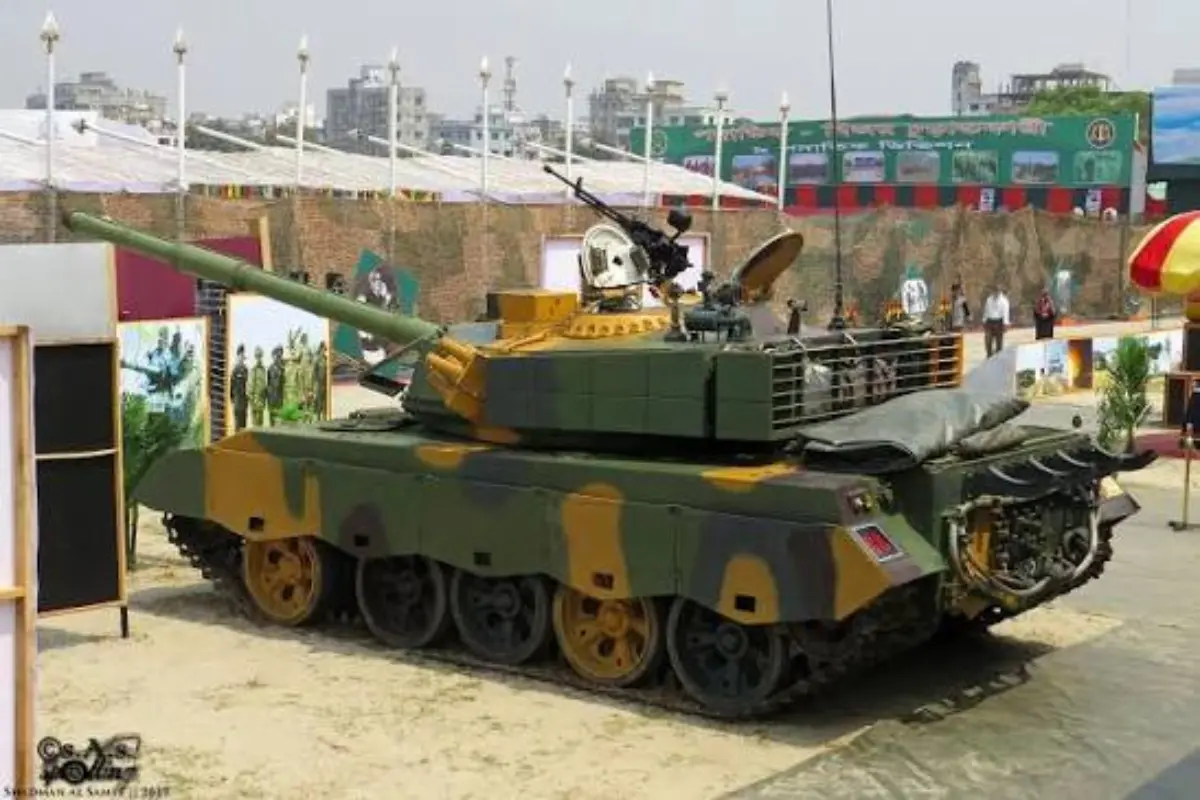
A live‑firing exercise at the Hathazari Field Firing Range in Chattogram turned deadly on Wednesday when a Bangladesh Army tank reportedly exploded, killing two soldiers and seriously injuring an officer.
The incident has reignited debate over the safety and reliability of ageing Chinese‑origin platforms in the country’s inventory, even as the army said an inquiry has been ordered to determine the exact cause.
According to a government statement, the accident occurred while a tank was conducting live‑fire practice at the range on Wednesday morning. Two soldiers died in the incident, while the injured officer was airlifted to the Combined Military Hospital (CMH) in Dhaka for advanced treatment.
The statement said “necessary steps had been initiated to determine the cause of the accident” but did not immediately disclose the identities of the deceased or technical details of the malfunction.
Local and national outlets, including The Daily Star and Dhaka Tribune, reported that the tank involved was a Type 59, a Chinese‑designed main battle tank that forms a significant part of Bangladesh’s armoured fleet.
The Type 59 is a licensed variant of the Soviet T‑54A, produced in China since the late 1950s and exported widely across Asia and Africa. Many of these tanks have been upgraded over the decades with new fire‑control systems, night‑vision equipment and ammunition, but they remain fundamentally old designs operating under high stress during live‑firing drills
'Ageing Chinese kit, rising risks'
While the Bangladesh army has not officially blamed the tank’s origin, defence analysts and online commentators have quickly linked the accident to Bangladesh’s heavy reliance on Chinese‑made armoured vehicles and artillery.
Bangladesh operates a mixed fleet of Type 59 and MBT‑2000 (Al‑Khalid/VT‑1A family) tanks, both of Chinese design or co‑development, alongside some Western and Eastern European systems. The Type 59s, in particular, are several decades old and have been subject to multiple upgrade programmes.
Critics argue that ageing hulls, upgraded but mismatched components, and variable quality of ammunition and propellants can increase the risk of catastrophic failures during high‑tempo live‑firing exercises.
Social media discussions in Bangladesh have raised questions about maintenance schedules, crew training, and whether older Type 59s should continue to be used for intensive firing drills when newer platforms are available.
Senior officers have historically defended the continued use of Type 59 tanks, arguing that upgraded variants remain cost‑effective for training and secondary roles, while newer MBT‑2000s and other platforms are reserved for frontline units. The army has also emphasised that accidents during live‑firing exercises, while tragic, are not uncommon in militaries worldwide and do not necessarily indicate a systemic equipment problem.
Questions over Chinese‑origin equipment
The Hathazari blast comes amid a wider, if fragmented, pattern of accidents and malfunctions involving Chinese‑made military hardware in other countries. While most militaries do not publicly attribute every mishap to equipment origin, some incidents in recent months have been widely discussed in regional media and on social media.
Four Indonesian National Armed Forces (TNI) soldiers were killed and eight wounded after a Chinese‑made cannon malfunctioned and “fired off shots randomly” during military exercises. Indonesia is a significant buyer of Chinese artillery and other systems. While official Indonesian statements on the exact model and cause have been limited, the incident has fuelled online debates about quality control and maintenance of Chinese‑origin guns in tropical conditions.
Pakistan's armed forces have faced intense scrutiny during Operation Sindoor launched by India, with critics alleging operational and technical shortcomings in some Chinese‑origin platforms under high‑end electronic warfare and strike conditions. Social media and defence forums frequently debate the reliability of Chinese systems in Pakistan’s inventory, though most day‑to‑day accidents.