Axiom-4 launch delayed again due to technical issue in ISS Zvezda module
New York: The launch of the much-awaited Ax-4 mission to the International Space Station (ISS), involving Indian astronaut Group Captain Shubhanshu Shukla, has been delayed once more due to technical observations linked to the Zvezda module of the ISS.
NASA announced the delay on X (formerly known as Twitter), citing safety concerns.
The post read, “Together with @Axiom_Space, we are postponing the launch of #Ax4 to the @Space_Station. A new launch date will be provided once available”.
India’s space agency ISRO confirmed the update and reiterated its commitment to safety and cooperation with global space partners.
“ISRO is working closely with @Axiom_Space, @NASA, @SpaceX as they responsibly address the ISS Zvezda module observation causing the Ax‑4 delay. Safety and mission integrity remain our top priorities. With regards, Dr. V.Narayanan, Secretary DOS/Chairman ISRO & Chairman Space Commission” ISRO wrote in an X post.
Operated by US-based Axiom Space, the Ax-4 mission was initially set to lift off from NASA’s Kennedy Space Center in Florida on June 11 at 8 am local time (5:30 pm IST). It has already faced multiple postponements, having first been planned for May 29 and later deferred to June 8, June 10, and June 11.
The mission is a landmark event for India, as Group Captain Shubhanshu Shukla is poised to become the first Indian astronaut to travel to the ISS and only the second Indian in space since Rakesh Sharma’s historic flight in 1984.
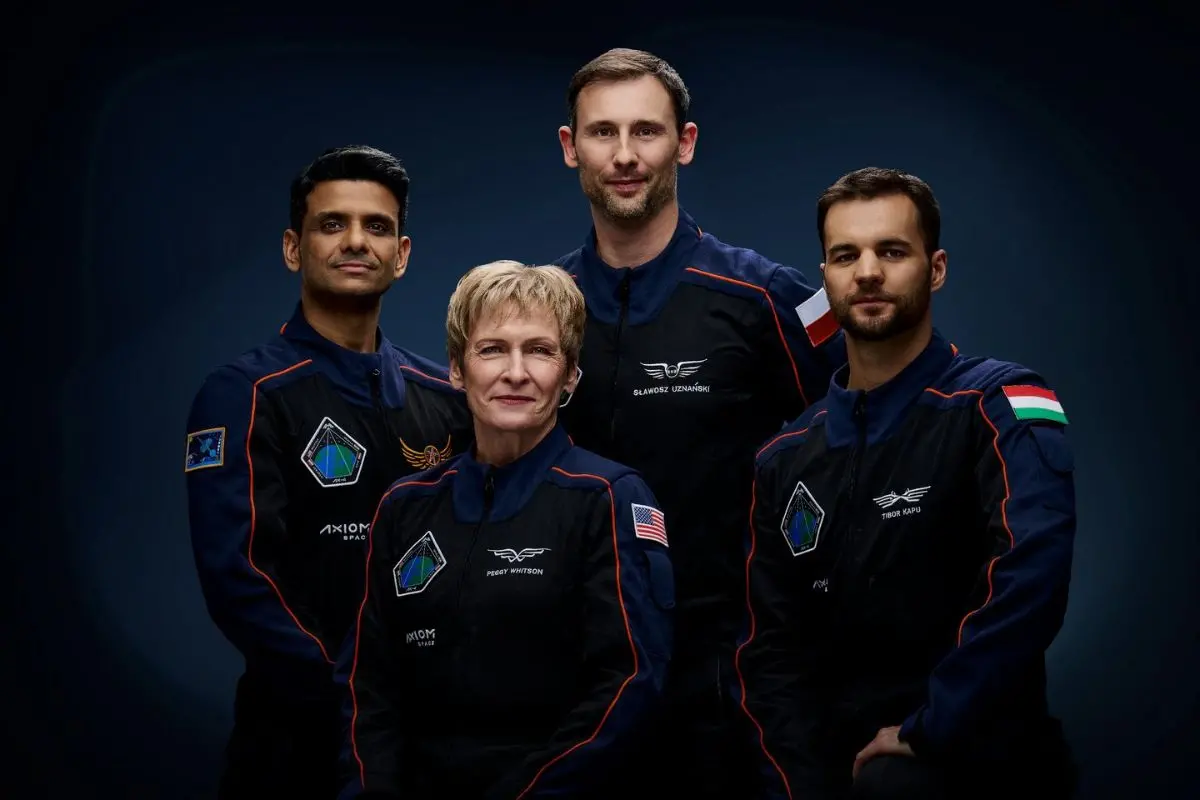
Shukla will serve as the pilot of the mission alongside Commander Peggy Whitson of the United States. The other crew members include Slawosz Uznanski-Wisniewski of Poland and Tibor Kapu of Hungary, both serving as mission specialists.
Once aboard the ISS, Shukla will conduct pioneering experiments related to food and space nutrition. These experiments, developed under a collaboration between ISRO and the Department of Biotechnology (DBT), with support from NASA, aim to enhance understanding of sustainable life-support systems, a crucial aspect of future long-duration space travel.
As international partners work to resolve the current technical concerns, a new launch date is expected to be announced soon.
IANS