Mysterious aroma: Researchers find Egyptian mummies smell surprisingly pleasant
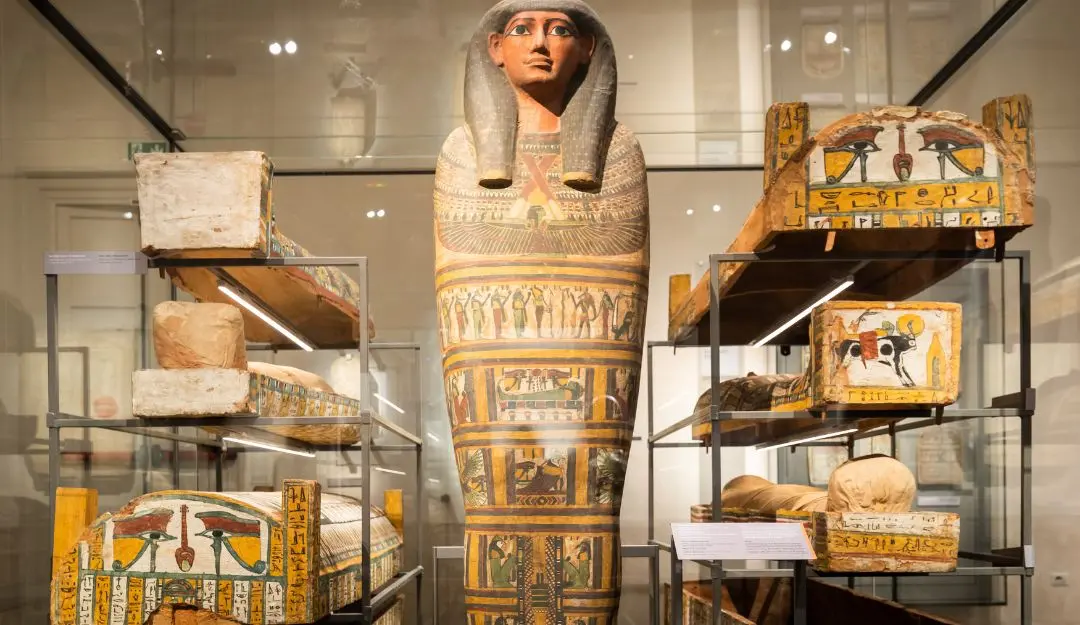
London: The idea of inhaling the scent of a 5,000-year-old corpse might seem unpleasant at first, but scientists investigating the aroma of Egyptian mummies made an unexpected discovery—their preserved remains actually emit a surprisingly pleasant fragrance.
“In films and books, terrible things happen to those who smell mummified bodies,” said Cecilia Bembibre, director of research at University College London's Institute for Sustainable Heritage. “We were surprised at the pleasantness of them."
Described as "woody", "spicy" and "sweet", the mummies' scent profile sounded more like a fine fragrance assessment than an archaeological study. Some even carried floral hints, possibly from pine and juniper resins used in the embalming process.
Published in the Journal of the American Chemical Society, the study combined chemical analysis with a panel of human sniffers to evaluate the scent of nine ancient mummies housed at the Egyptian Museum in Cairo.
Bembibre, one of the study’s authors, noted that the fascination with the smell of mummies has long intrigued historians, archaeologists and even fiction writers. This interest is well-founded—scent played a crucial role in the mummification process, where oils, waxes and balms were used not only for preservation but also to ensure the spirit’s journey to the afterlife.
Since direct sampling would be invasive, researchers from UCL and the University of Ljubljana in Slovenia used advanced techniques to distinguish between scents originating from the mummies, conservation materials or external contaminants like mold and bacteria.
“We were quite worried that we might find notes or hints of decaying bodies, which wasn’t the case,” said Matija Strlic, a chemistry professor at the University of Ljubljana. “We were specifically worried that there might be indications of microbial degradation, but that was not the case, which means that the environment in this museum is actually quite good in terms of preservation.”
Strlic compared their technique—analysing air molecules emitted from sarcophagi—to a "Holy Grail" in mummy preservation, as it allows researchers to assess a mummy’s condition without making physical contact.
Barbara Huber, a postdoctoral researcher at the Max Planck Institute of Geoanthropology in Germany, who was not involved in the study, noted that while the findings provide valuable insights into preserving mummified remains, the detected scents may have evolved over thousands of years due to oxidation, evaporation, and storage conditions.
Huber previously recreated the scent of embalming materials found in a noblewoman’s tomb, crafting "Scent of Eternity" for an exhibition in Denmark. Inspired by this approach, the current research team hopes to develop similar "smellscapes" to enhance museum experiences, allowing visitors to engage with history through scent.
“Museums have been called white cubes, where you are prompted to read, to see, to approach everything from a distance with your eyes,” Bembibre said. “Observing the mummified bodies through a glass case reduces the experience because we don’t get to smell them. We don’t get to know about the mummification process in an experiential way, which is one of the ways that we understand and engage with the world.”
AP