‘Red line crossed’: Amid global scrutiny, Hezbollah leader Nasrallah vows retaliation against Israel
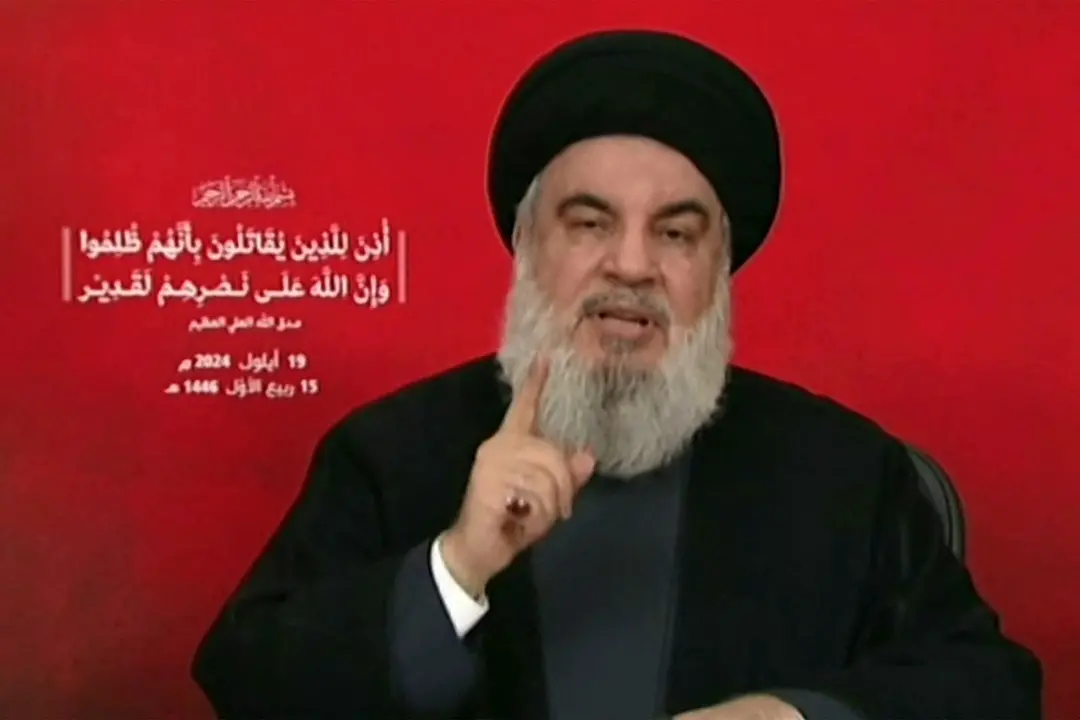
The leader of Lebanon's Hezbollah, Hassan Nasrallah, has pledged retaliation following a series of deadly attacks on the group's communication devices. The attacks occurred after Israel's defense minister declared a “new phase” in the ongoing conflict. Hezbollah and the Israeli military exchanged strikes over the border on Thursday, raising concerns that nearly a year of intermittent clashes could spiral into a full-scale war.
Nasrallah accused Israel of crossing a “red line” with recent bombings, which remotely detonated hundreds of Hezbollah pagers and walkie-talkies in Lebanon and Syria. The militant group has been striking Israel since Hamas’ attack on October 7, sparking the ongoing Israel-Hamas war.
Casualty figures in Gaza and Israel
Gaza’s Health Ministry reports that over 41,000 Palestinians have been killed since Hamas’ attack. The ministry’s figures do not distinguish between fighters and civilians but note that more than half of the deceased are women and children. In response, Israel claims to have killed over 17,000 militants, though it has not provided evidence.
UN resolution and international reactions
UNITED NATIONS – The Palestinians are set to follow up on a U.N. resolution demanding Israel end its “unlawful presence” in Gaza and the West Bank within a year. Palestinian Ambassador Riyad Mansour warned of immediate reactions to any non-compliance. Israel’s U.N. Ambassador Danny Danon, however, focused on the broader regional conflict involving Iran and its allies, including Hezbollah.
JERUSALEM – Israel’s National Cyber Directorate has accused Iran and Hezbollah of bombarding Israelis with threatening text messages, purportedly from the Israeli Home Front Command. The Israeli government reported that approximately 5 million fraudulent SMS texts were sent nationwide, exploiting an Israeli mobile service provider’s customer accounts. The messages contained links to harmful websites but were quickly neutralised.
LONDON – U.K. Foreign Secretary David Lammy has urged British nationals to leave Lebanon, citing the rapid deterioration of the situation. Lammy, who has been in contact with Lebanese Prime Minister Najib Mikati, emphasized the importance of restoring stability and expressed deep concern over rising tensions and civilian casualties.
GENEVA – WHO Director-General Tedros Adhanom Ghebreyesus has highlighted the severe disruption to Lebanon’s health system caused by the attacks. The WHO is supplying trauma and emergency surgery materials and is working to address immediate needs, including blood supplies and testing kits.
Regional and international developments
JERUSALEM – Israel’s defense minister, Yoav Gallant, warned that Hezbollah “will pay an increasing price” as Israel seeks to secure its northern border. Hezbollah has retaliated, striking Israeli military positions and vowing to continue its operations.
PARIS – French President Emmanuel Macron has expressed grave concern over the bombings in Lebanon and urged all parties to act responsibly to prevent further escalation. Macron has been in touch with Lebanese officials and will discuss the situation with the Israeli prime minister.
WASHINGTON – The U.S. State Department has advised American citizens in Lebanon to maintain a low profile and consider leaving the country. While evacuation plans are in place, they are not expected to be activated imminently.
MADRID – Spanish Prime Minister Pedro Sánchez has called for restraint amid escalating attacks in the Middle East. After meeting with Palestinian President Mahmoud Abbas, Sánchez emphasized the need for de-escalation and peaceful coexistence.
BEIRUT – Lebanon’s health minister reported that the recent attacks have resulted in 37 deaths and over 3,000 injuries. The explosions have primarily affected Hezbollah members, with significant casualties reported.
TEHRAN – The Iranian ambassador to Lebanon, Mojtaba Amani, injured in the attacks, has been transferred to Tehran. Iran’s support for Hezbollah has intensified regional tensions.
ANKARA – Turkish Foreign Minister Hakan Fidan has criticised Israel’s actions as an attempt to widen the conflict into Lebanon. He expressed concerns over the potential for a broader regional conflict.
SOFIA – Bulgarian authorities have denied claims that explosives were shipped through Bulgaria. They are conducting investigations into the alleged involvement of a Bulgarian-registered company in supplying communication devices used in the attacks.
TOKYO – Japanese company Icom has been unable to confirm whether its walkie-talkies were used in the attacks. Icom noted that production and sales of the device in question ceased about a decade ago and emphasized the possibility of counterfeit products. AP