3 Dhaka University students who led the campaign that made Sheikh Hasina flee Bangladesh
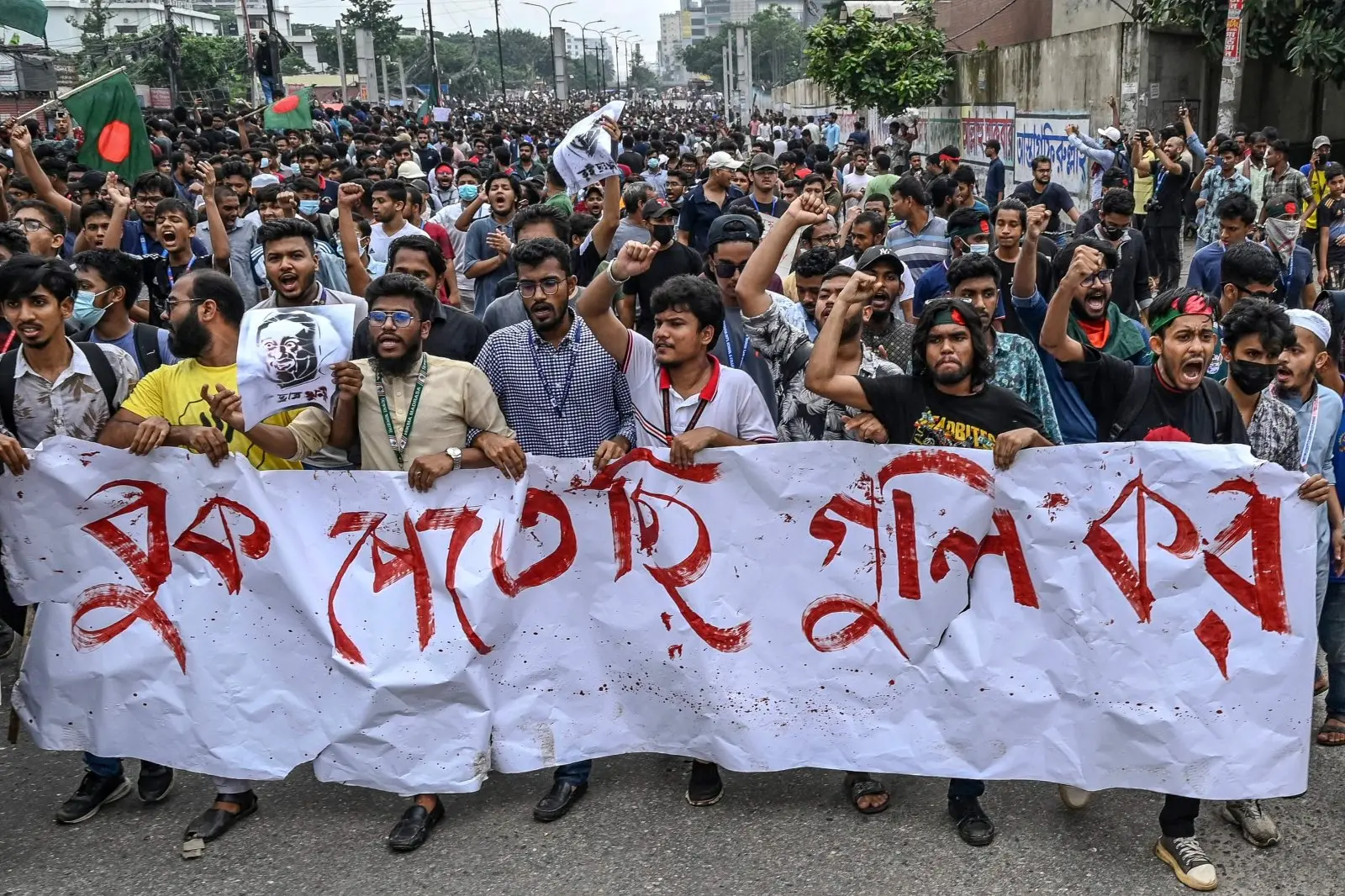
As Nobel laureate Muhammad Yunus is set to head Bangladesh's interim government, three student leaders have emerged as key figures in shaping the country's political landscape. Nahid Islam, Asif Mahmud, and Abu Bakar Majumdar have been at the forefront of the student movement, demanding justice, equality, and an end to discrimination.
Nahid Islam, a sociology student at Dhaka University, serves as the National Coordinator for 'Students Against Discrimination.' He has been a vocal critic of Sheikh Hasina's government and was allegedly detained on July 20, which the police denied.
Asif Mahmud, a language studies student, joined the nationwide student movement in June. He was apprehended by the Detective Branch on July 26 while undergoing treatment at a hospital, with police citing security reasons for his detention.
Abu Bakar Majumdar, a geography student, co-founded the 'Students Against Discrimination' movement following the High Court's decision on job reservations. He has been a prominent advocate for civil and human rights.
Their leadership and activism have been instrumental in rallying thousands of students and citizens to protest against the government, demanding justice for 200 students and others killed during protests last month. However, violence was reported at similar events elsewhere in the country.
The students' protests began last month with the demand for an end to a quota system for government jobs that they said was discriminatory. Under it, 30% of such jobs were reserved for the families of veterans who fought in Bangladesh’s war of independence against Pakistan in 1971.
The protests began peacefully, but turned violent as students at Dhaka University clashed with police and the activists of a student wing of the ruling Awami League party on July 15. Since then, more than 200 people have died and thousands of others have been injured.
The Supreme Court cut the veterans’ quota to 5% on July 21, but protests have continued to spread amid outrage over the violence. Authorities closed schools and universities across the country, blocked internet access and imposed a shoot-on-sight curfew. At least, 11,000 people have been arrested in recent weeks.
Internet service has been restored and banks and offices have reopened, but tensions remain high.
Though Prime Minister Sheikh Hasina offered to talk with student leaders, but a coordinator refused in a Facebook post. Soon after she resigned on August 5 and left the country. This paved the way for an interim government to take over.