Is a Wall Street crash coming? Expert warns US stocks could tumble 40%
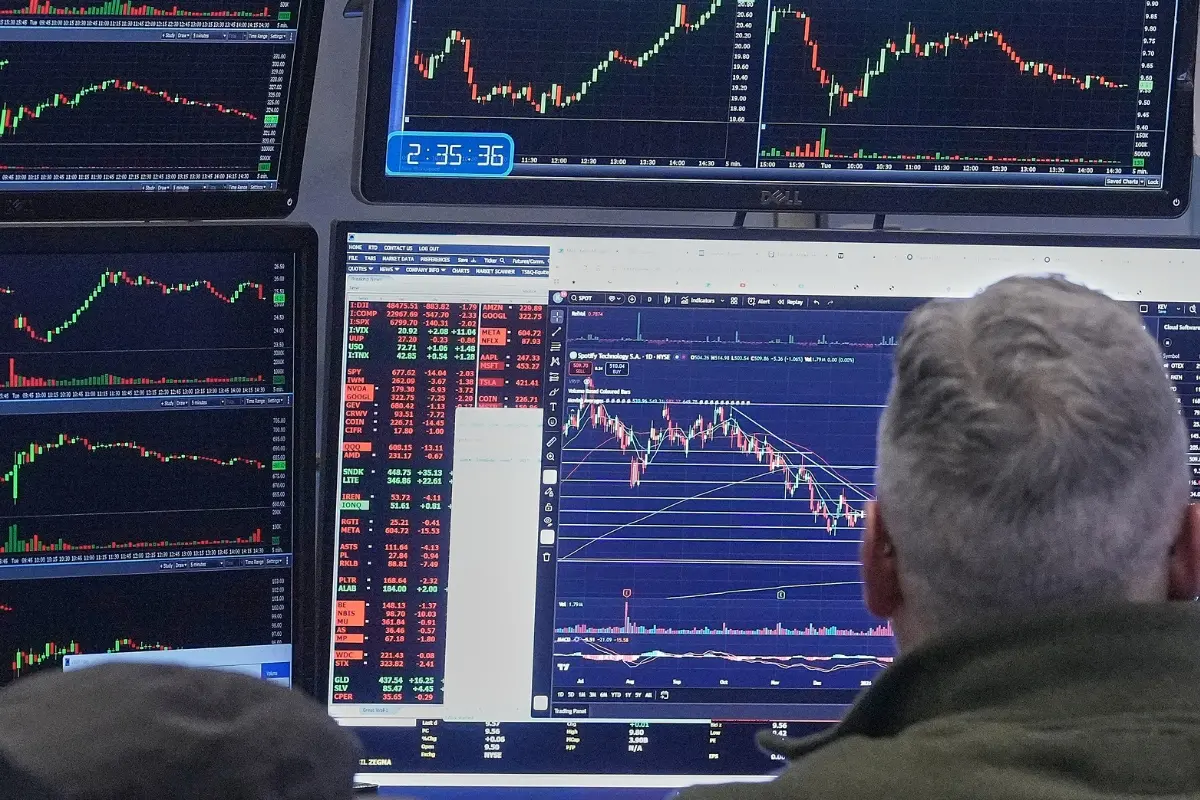
A major stock market crash may be looming, with a veteran market strategist warning that US stocks could lose up to 40% of their value amid growing concerns about high valuations and an overheated market.
The warning has renewed concerns about another major Wall Street meltdown, particularly as investors continue to pour money into technology and artificial intelligence (AI) companies.
The prediction comes as US stocks trade at historically high valuations, raising questions about whether the market rally can continue at its current pace.
Strategist Ulf Lindahl has warned of a potential 40% decline in the stock market. His concerns include expensive stock valuations, high corporate profit margins and weakening market momentum.
A fall of this scale would represent a major setback for investors and could wipe out trillions of dollars in market value.
One measure used to assess whether stocks are expensive, known as the Shiller CAPE ratio, currently stands at around 41.
Its historical average is approximately 18. The ratio was around 44 in December 1999, shortly before the dot-com bubble burst.
The CAPE ratio compares stock prices with average company earnings over the previous 10 years. A high reading suggests that investors are paying more for stocks than usual, increasing the risk of a market correction.
The article also looks at three major stock market crashes in recent history.
During the dot-com crash between 2000 and 2002, the S&P 500 lost 49% of its value. During the global financial crisis between 2007 and 2009, it fell 57%. The COVID-19 market crash in 2020 resulted in a 34% decline.
However, the article points out that markets eventually recovered from all three crashes.
The warning does not mean that Wall Street is on the verge of an immediate collapse. The CAPE ratio cannot predict when a crash will happen, and expensive stocks can remain at high levels for years.
The key message for investors is to avoid panic-selling during market downturns, maintain a diversified portfolio and focus on long-term investments.