Will passengers choose to fly for 22 hours as Qantas bets on Project Sunrise?
For decades, airlines have tried to make the world feel smaller by reducing the time people spend travelling between continents.
Faster aircraft, longer flight ranges and better connections have gradually changed the way people travel.
Now, the aviation industry is preparing for another major step: flights that can connect two distant cities without a stop, even when the journey takes more than 20 hours.
Australian airline Qantas is preparing to make this possible through its ambitious ‘Project Sunrise’ programme.
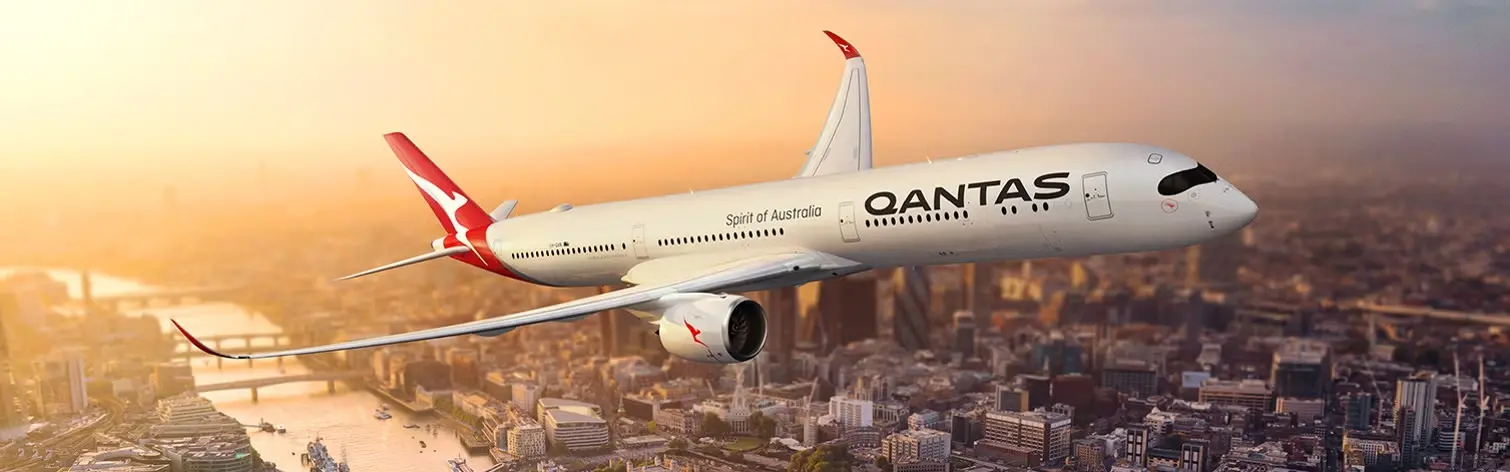
The plan is to operate non-stop flights from Sydney to London and New York using specially developed Airbus A350-1000ULR aircraft.
The first non-stop Sydney–London services are scheduled to begin in October 2027, with Qantas expecting to save passengers up to four hours compared with its existing one-stop journey.
The ambition is no longer just a concept. Airbus has recently demonstrated the aircraft's extraordinary endurance through a record-breaking flight. However, proving that an aircraft can stay in the air for more than a day is one thing.
Convincing passengers to spend that much time on board, while making the service profitable and responsible, is an entirely different challenge.
A record-breaking flight opens a new chapter
On July 27 and 28, 2026, an Airbus A350-1000ULR completed a flight from Melbourne in Australia to Toulouse in France, covering 12,503 nautical miles, or approximately 23,155 kilometres, in 24 hours and 24 minutes.
The flight was officially recognised by Guinness World Records as the longest flight by distance by a commercial aircraft. The aircraft crossed three continents and two oceans, travelling over the Pacific, North America and the Atlantic before reaching France. The crew even witnessed two sunrises and two sunsets during the journey.
The flight was part of Airbus' testing programme for the A350-1000ULR being developed for Qantas.
There were 13 people on board, including Airbus test pilots, Qantas pilots, flight-test engineers, design engineers and a representative of the International Aeronautical Federation.
It is important to understand that this was a test flight, not a regular passenger service.
Its purpose was to demonstrate the aircraft's ability to operate over exceptionally long distances and meet Project Sunrise requirements.
The aircraft has been specially designed for this purpose. An additional 20,000-litre fuel tank integrated into its rear section increases its range by around 1,000 nautical miles.
This modification will allow it to fly up to 22 hours without stopping. The record is an important technical achievement for Airbus. But the real test will begin when passengers start booking tickets and taking their seats.
From seven stops to one non-stop journey
The Sydney–London route has a special place in Qantas' history. When the airline first introduced its Kangaroo Route in 1947, the journey took four days and involved seven stops.
Over the decades, improvements in aircraft technology reduced the travel time and the number of stopovers.
Today, passengers travelling from Sydney to London generally have to change aircraft at an intermediate airport, often in Singapore or another international hub. Project Sunrise aims to remove that break altogether.
Under the latest plan, Qantas will introduce non-stop Sydney–London flights from October 2027, using the new A350-1000ULR. The airline will continue to offer its existing one-stop service for passengers who prefer to break their journey.
Qantas has ordered 12 A350-1000ULR aircraft for the programme. Each aircraft will have 238 seats across four cabins: six First Class suites, 52 Business Class suites, 40 Premium Economy seats and 140 Economy seats.
The airline is clearly targeting travellers who value time and are willing to pay more for a direct journey.
A passenger who can avoid an airport transfer and reach the destination up to four hours earlier may consider the higher fare worthwhile.
For business travellers, executives and passengers with tight schedules, that time saving could be an important advantage.
However, the same proposition may not appeal to everyone. Some passengers may prefer a stopover, particularly when it means a more affordable ticket or an opportunity to rest before continuing a long journey.
Can airlines make 22-hour flights profitable?
This is perhaps the biggest question surrounding Project Sunrise. Developing an aircraft capable of flying for 22 hours is a major engineering achievement, but operating such a service also requires a strong business case.
A flight of this duration involves considerable fuel requirements, aircraft investment, crew planning, maintenance and operating costs. The airline must also ensure that enough passengers are willing to pay the fares needed to support the service.
Qantas appears to be betting on premium travel. Around 41 per cent of the seats on its Project Sunrise aircraft will be in First, Business and Premium Economy cabins.
This is a significantly higher premium-seat share than on many conventional long-haul aircraft.
The thinking is straightforward. Rather than carrying a large number of passengers at lower fares, the airline hopes to earn more by offering a more direct, premium experience.
It also expects to benefit from changes to its wider flight network and additional freight opportunities.
Qantas has projected an annual earnings increase of around AUD 400 million once the programme reaches full scale.
This is a company forecast, not a guaranteed return, and its business case includes benefits from new routes, the use of other aircraft across its network and freight growth.
The experience of its existing Perth–London non-stop service has also given the airline confidence in the demand for direct Australia–Europe travel. However, Sydney–London is a different proposition, with a much longer journey and a new aircraft configuration.
The success of Project Sunrise will depend on whether demand remains strong beyond the initial excitement. High ticket prices, fuel costs, currency movements and competition from one-stop routes could all influence the results.
For Qantas, the challenge will be to ensure that the aircraft is not simply a technological showpiece but a commercially useful part of its international network.
The passenger experience: Can anyone sit through 22 hours?
Even for frequent flyers, spending almost an entire day inside an aircraft can be daunting. A 22-hour journey raises practical questions about sleep, food, hydration, movement, personal space and physical comfort.
The challenge is particularly important for Economy Class passengers, who may find it difficult to remain seated for such a long period.
A direct flight removes the inconvenience of changing aircraft, but it also removes the opportunity to leave the plane and stretch during a stopover.
Qantas is attempting to address these concerns through a specially designed cabin. The aircraft will have a dedicated Wellbeing Zone where passengers can move around, stretch and access refreshments.
The cabin has also been designed with attention to lighting, nutrition, hydration and sleep patterns.
The airline has worked with researchers from the University of Sydney's Charles Perkins Centre to study how lighting, food and physical movement can help passengers manage fatigue and jet lag during ultra-long-haul journeys.
These measures could make a difference, particularly when passengers have to adjust to a large time-zone change. However, cabin design alone cannot remove the physical demands of remaining on an aircraft for nearly a full day.
The experience may also vary considerably between passengers. Travellers in First and Business Class will have more space and facilities to rest, while Economy passengers will have to manage the same duration with more limited personal space.
Ultimately, passengers will judge the service not only by how quickly it gets them to their destination but also by how they feel when they arrive.
A new era or an expensive experiment?
Project Sunrise could change the way airlines think about long-distance travel.
For passengers travelling between major cities with strong demand, a direct service can offer convenience and save valuable time. It could also reduce dependence on traditional connecting hubs for certain long-haul routes.
However, it is unlikely to replace the existing hub-and-spoke model completely. International hubs allow airlines to bring passengers from several cities together and offer a wider range of connections.
One-stop journeys may also remain more attractive to travellers who prioritise affordability over time.
The limited fleet of 12 specially configured aircraft also suggests that Project Sunrise is intended for selected high-demand routes rather than every long-distance journey.
Other airlines will be watching closely to see whether the model works before making similar investments.
There is also a difference between breaking a world record and building a sustainable airline service.
The Airbus test flight has shown that the technology can support extremely long journeys.
The commercial results will depend on passenger demand, operating costs, aircraft availability and the ability to manage the environmental impact.
Project Sunrise may not transform every aspect of air travel, but it could establish a new category of premium ultra-long-haul services.
For some passengers, spending 22 hours in the air may be a small price to pay for reaching the other side of the world without a stopover. For others, the time saved may not justify the fare or the physical demands of the journey.
When the first non-stop Sydney–London service takes off in October 2027, the aviation industry will get a clearer answer. The future of ultra-long-haul flying will not be decided by records alone.
It will be decided by the passengers who choose to fly, the airlines that can make the economics work and an industry that must find a way to grow more responsibly.