Why probe against Nvidia CEO Jensen Huang could put pressure on global stock market sentiment
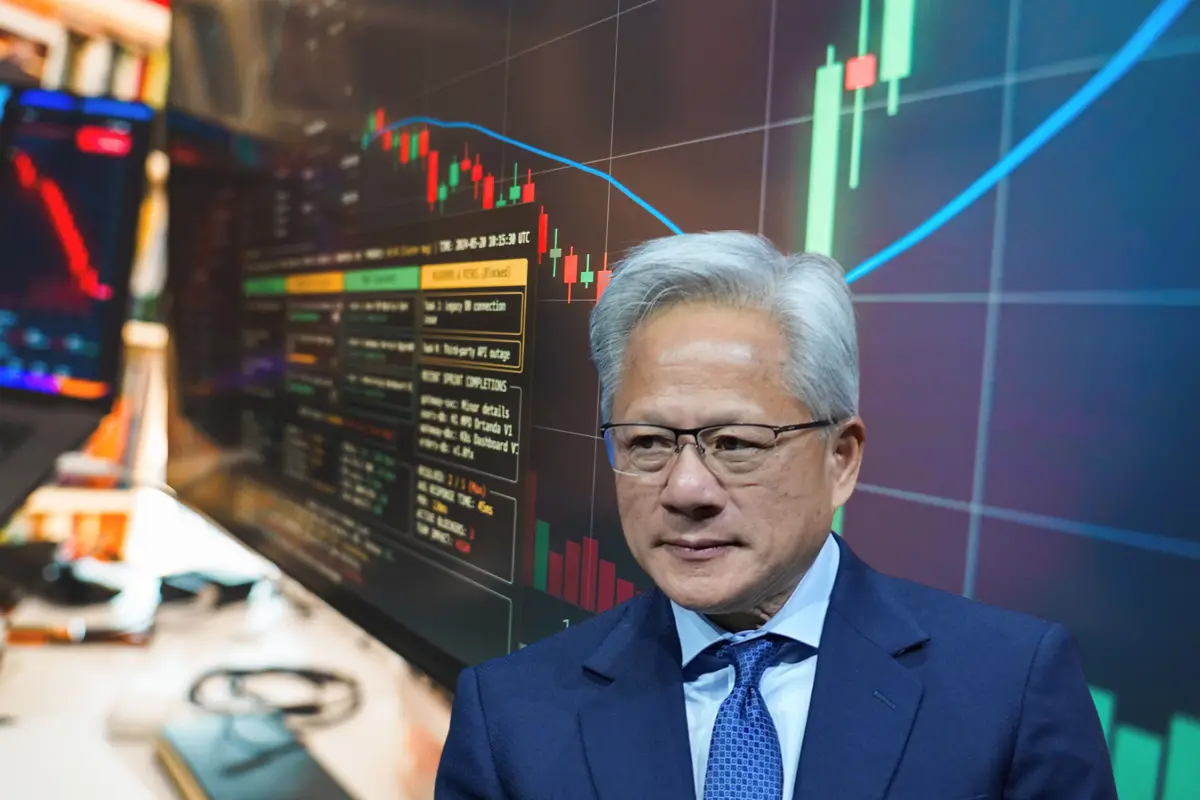
Asian tech shares and US futures advanced on Monday, 9 November, recovering from last week’s steep sell-offs. However, fresh market anxiety emerged after semiconductor leader Nvidia announced an internal probe into whether CEO Jensen Huang was targeted in a foreign intelligence operation. The disclosure pushed Nvidia’s off-hours share price down 3.4 per cent to $180.30 in perpetual futures and after-hours trading on Monday, falling from Friday's Nasdaq close of $186.64.
Nvidia chief faces espionage probe as markets steady
Nvidia confirmed on Sunday it is investigating reports that its 63-year-old Taiwanese-born CEO was targeted by foreign intelligence. This follows Huang's admission of an extramarital relationship with Alice Huang (also known as Huang Le and no relation to Jensen). According to The New York Times, US intelligence determined Alice Huang, an executive at Singapore-based data centre firm Megaspeed, was gathering information for Beijing.
The probe carries major significance. Nvidia is the world's leading AI chipmaker, powering data centres and computing systems for AI models, and reached a $5 trillion market capitalisation last year. Beyond guiding Nvidia, Huang serves as an informal adviser to US President Donald Trump. US intelligence noted the relationship could have exposed insights into Trump's AI thinking.
Industry experts warned of wider ramifications. Stephen Innes of SPI Asset Management noted, “The scrutiny surrounding Jensen Huang reaches far beyond a personal scandal, touching the increasingly sensitive intersection of US technology leadership, China and national security.”
Analyst Dan Ives of Yorkville Ives stated the probe will prompt congressional inquiries and "create an overhang on the stock for a myriad of reasons," adding, "This will add risk to the stock as he is so important to the Nvidia story and strategy globally. This will also increase major scrutiny regarding selling chips to China, which remains a key battleground issue in DC."
Asian technology stocks lead market recovery
Despite Nvidia’s off-hours slide, Asian equities rallied strongly on Monday morning, following Friday's Wall Street gains. Taiwan’s Taiex led regional advances with a 5.6 per cent surge, driven by chipmaker TSMC climbing 5.6 per cent.
Tokyo’s Nikkei 225 jumped 3.4 per cent to 59,411.34. Chip equipment maker Tokyo Electron gained 6.5 per cent, and Advantest rose 5.1 per cent. SoftBank Group bucked the trend, slipping 2.9 per cent as it manoeuvred to save a $5.4 billion robotics deal with Swiss firm ABB after Chinese regulatory rejection.
South Korea’s Kospi gained 1.7 per cent to 5,144.00, with Samsung Electronics up 2.7 per cent and SK Hynix up 3.9 per cent. Hong Kong's Hang Seng added 0.5 per cent to 24,601.48, while the Shanghai Composite rose 0.7 per cent to 3,675.06. Australia's S&P/ASX 200 dipped 0.1 per cent to 9,011.50. The recovery follows a 6 per cent tumble in Tokyo and Seoul last Thursday.
Political shifts and data centre anxieties
Recent volatility follows US midterm election results, where Democrats won both houses of Congress. Voters expressed frustration over rising electricity bills linked to AI data centres, alongside Trump’s tariffs and the Iran war.
Investors fear Congress may curb data centre construction, threatening tech jobs and raising doubts over when massive AI investments will yield profits. On Friday, the S&P 500 rose 0.3 per cent (trimming weekly losses to 2.7 per cent), the Nasdaq climbed 1.1 per cent, and the Dow dropped 0.5 per cent.
Sally Auld at National Australia Bank observed, "Investors will be watching carefully this week to get a sense as to whether these gains are just short-covering, bargain hunting or the beginning of something more sustainable in nature." She added that fears over AI regulation, capital expenditure, and cash flow drove recent risk reduction, though valuations now look less expensive.
Economic indicators and interest rate outlook
Markets are also weighing US economic data. Friday's report showed US employers added far more jobs in October than expected.
However, strong hiring increases inflation risks. Markets now price an 80 per cent chance the Federal Reserve will raise interest rates in December. Higher rates increase borrowing costs, slowing economic growth.
In commodities and currencies, Brent crude slipped to $97.74 per barrel, and US crude dropped to $90.59. The US dollar eased to 158.21 yen and stood at $1.1155 against the euro.