Jio's ₹30,000-crore IPO is a referendum on who pays for India's digital infrastructure
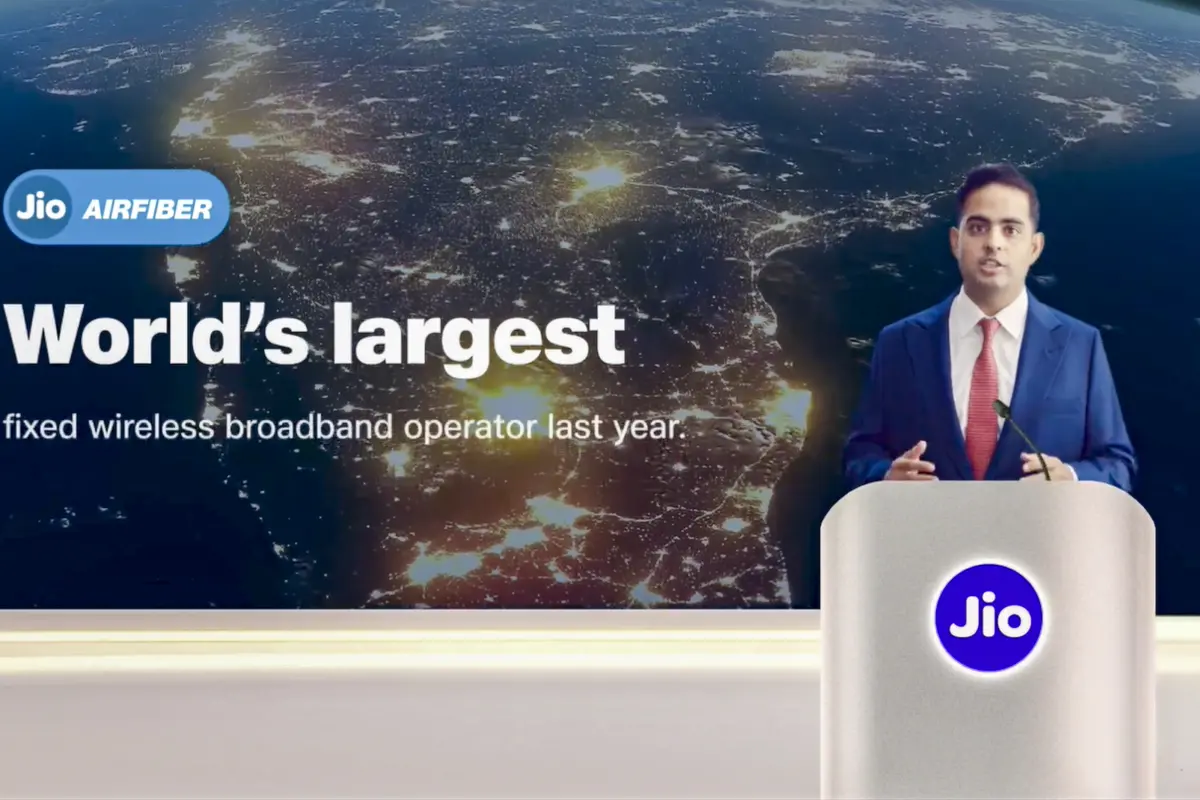
Jio Platforms' record initial public offering is being marketed as an investment in India’s digital future. But beneath the ₹1,065–₹1,119 price band lies a harder question: can private capital continue to finance a nationwide network that functions less like a consumer telecom service and more like critical national infrastructure -- towers, fibre, spectrum, 5G, rural coverage, enterprise connectivity and, increasingly, AI-ready computing capacity?
The IPO, which opens for public subscription on October 21 and closes on October 23, is a fresh issue of up to 27 crore shares and could raise about ₹30,213 crore at the upper end, making it India’s largest public issue.
Jio Platforms has said it will use up to ₹27,500 crore of the proceeds to prepay borrowings at its operating subsidiary, Reliance Jio Infocomm, with the balance earmarked for general corporate purposes, including growth and capital expenditure.
A network built like public infrastructure
Jio’s scale is no longer best measured in subscribers alone. Its prospectus describes the company as a “digital gateway” built on pan-India connectivity, with 524.4 million customers as of March 31, 2026, and a wireless broadband network covering more than 99% of India’s population.
Also Read: Jio Platforms IPO opens October 21: Price band, lot size, employee discount and key dates
The physical base behind that claim is vast: access to 3.61 lakh network towers, more than one million route kilometres of fibre and 26,800.8 MHz of spectrum.
Jio’s 5G rollout has also been unusually rapid and capital-intensive: Ericsson said the operator deployed more than one million 5G cells within 12 months of its October 2022 launch, at one point installing a cell every 10 seconds.
That infrastructure now underpins far more than mobile calls and video streaming. Jio’s prospectus positions it as a provider of fixed broadband, cloud compute, cloud storage, private 5G, IoT, managed Wi-Fi, enterprise connectivity and AI-based services.
In other words, the company is asking investors to fund the backbone on which households, small businesses, factories, hospitals, schools and government services increasingly depend.
The rural coverage bet
Jio’s most consequential infrastructure choice has been its standalone 5G architecture and use of low-band 700 MHz spectrum to push coverage beyond dense urban markets.
Opensignal’s June 2025 India report found Jio led national availability at 99.5% and 5G availability at 71.8%, more than double Airtel’s 29.9%, reflecting a strategy that prioritised reach through lower-band spectrum and rural deployment.
Also Read: ‘Ambani premium’ kicks in: Jio IPO grey market signals 16% listing upside ahead of mega launch
That reach is commercially valuable, but it is expensive. Rural users typically generate lower average revenue per user, while towers, backhaul, power and maintenance costs do not fall proportionately. Jio’s exit-quarter ARPU was ₹214 in FY26, up from ₹206.2 in FY25 and ₹181.7 in FY24 -- growth, but still modest relative to the capital intensity of the network.
The IPO therefore tests whether markets will reward coverage-led expansion. If investors demand faster ARPU growth, Jio may face pressure to raise tariffs or prioritise high-yield urban and enterprise segments. If it continues chasing universal coverage, it must find capital for a network whose social value may exceed its immediate commercial return.
Debt relief, not a blank cheque
The IPO’s clearest financial purpose is balance-sheet repair. Jio Platforms plans to prepay up to ₹27,500 crore of borrowings at Reliance Jio Infocomm, covering three external commercial borrowing facilities totalling over ₹29,971 crore and due for repayment between March and June 2028.
Those loans were originally raised for 5G infrastructure deployment and spectrum acquisition. Prepaying them would reduce interest costs and improve leverage, preserving capacity for future investment in 5G expansion, fixed broadband, AI, cloud and enterprise services.
But this is not a story of a debt-free company suddenly gaining a war chest. Spectrum remains a structural liability: Jio’s prospectus lists licence and spectrum renewal risk among its top internal risk factors, warning that inability to maintain or renew licences and spectrum could materially affect operations.
Analysts cited by The Economic Times estimate that, after adding net debt, spectrum liabilities and lease liabilities and adjusting for IPO proceeds, Jio’s implied enterprise value could be about ₹10.9–₹11.4 lakh crore.
Private monopoly, public dependency
India’s digital economy is expected to reach $1.4 trillion, or ₹125.8 trillion, by FY31, according to an Analysys Mason report cited in Jio’s prospectus. Jio is positioning itself as a foundational layer of that economy — but concentration creates a policy dilemma.
A single private operator now controls an outsized share of the country’s connectivity capacity, customer relationships and digital distribution. Its network performance matters not merely to shareholders but to digital payments, online education, telemedicine, e-governance, logistics and small-business commerce.
Opensignal’s data shows Jio leading on availability, consistency and reliability, even as Airtel retains an edge in several 5G experience measures.
The regulatory question is whether India’s digital infrastructure can remain competitive and resilient when its most important private backbone is controlled by one group. The IPO will not answer that question, but it will reveal how much premium public investors are willing to pay for scale, reach and network dominance.
The missing public-capital model
Globally, broadband, 5G and rural connectivity have often required some mix of state subsidy, universal-service funding, regulated returns or long-tenure public financing. India has relied heavily on private operators to build that infrastructure, while using spectrum auctions as a major revenue source for the exchequer.
Jio’s IPO sharpens the tension. The government benefits from high spectrum auctions; consumers benefit from low tariffs and wide coverage; and shareholders expect returns. But those objectives can conflict when capex is heavy, ARPU is low and spectrum obligations are long-dated.
The listing will show whether Indian capital markets are prepared to finance this model at scale. If the IPO is strongly subscribed, it will signal confidence that Jio can monetise infrastructure through tariffs, enterprise services, fixed broadband, cloud and AI. If demand is muted, it may signal that investors see the infrastructure burden — not just the subscriber base — as the dominant risk.
What to watch after listing
* Capex guidance: Whether Jio commits to further rural fibre, 5G densification and data-centre investment, or slows expansion to protect cash flow.
* ARPU versus churn: Whether tariff increases can lift revenue without pushing price-sensitive users to rivals.
* Spectrum payments: The schedule and scale of future licence fees and auction commitments.
* Enterprise monetisation: Whether private 5G, cloud, IoT and AI services generate material revenue beyond the consumer mobile business.
* Policy signals: Whether the government adjusts spectrum pricing, universal-service obligations or rural-connectivity incentives as private operators seek returns.
Jio’s IPO is not simply a market event. It is a test of whether India’s digital public sphere can be financed by private shareholders while remaining affordable, competitive and universally accessible.