'Inextricably intertwined around his personal aura': Jensen Huang's Nvidia set to face a succession dilemma
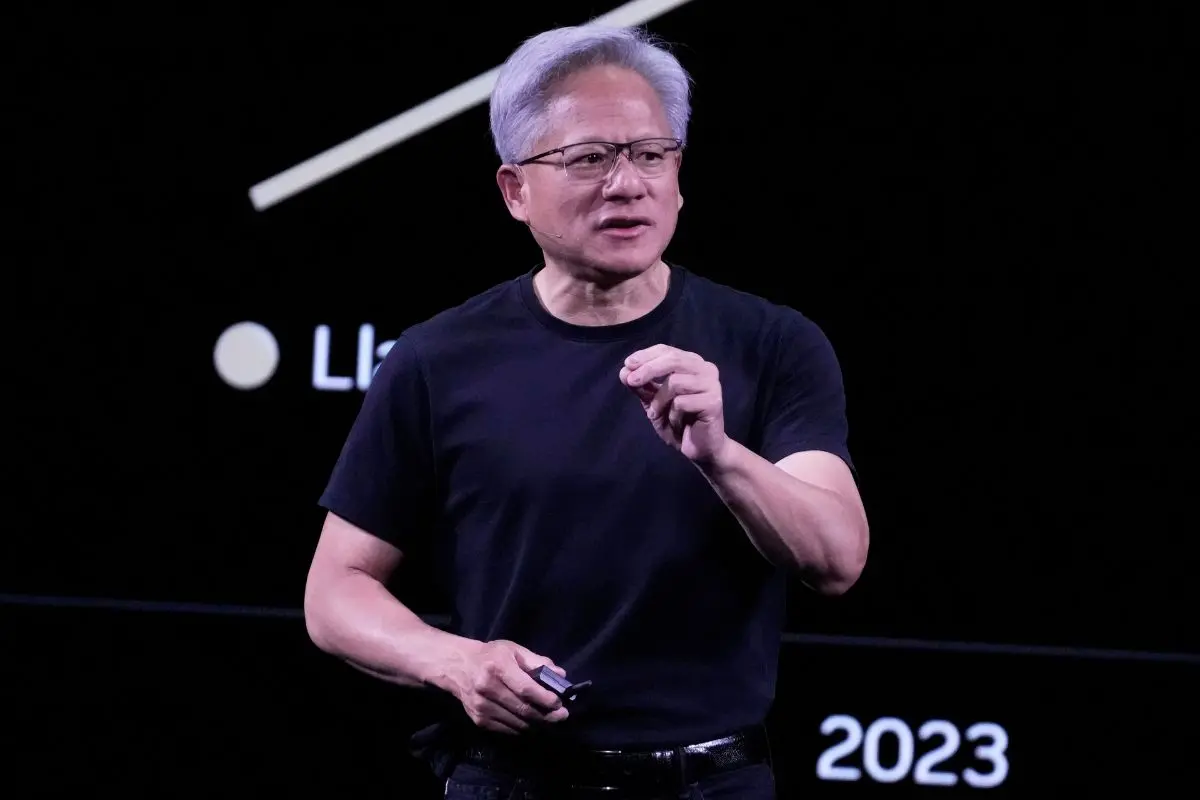
San Francisco: An investigation into whether Nvidia Chief Executive Jensen Huang was the target of a foreign intelligence effort has raised serious questions over the corporate governance, leadership succession, and market stability of the world's most valuable chipmaker.
Huang, who co-founded Nvidia more than three decades ago and built it into a $4 trillion artificial intelligence powerhouse, faces growing pressure following revelations of an FBI probe into his relationship with an alleged Chinese government agent. US President Donald Trump confirmed on Monday that law enforcement is investigating the matter, though he added that he believes Huang "had absolutely no idea that the person in question was a spy."
The disclosure has triggered severe market volatility, with Nvidia shares falling over 4% on Monday and continuing to drop on Tuesday. The developments have also prompted regulatory scrutiny from US lawmakers, a shareholder lawsuit alleging investor deception, and an internal review by Nvidia's board of directors.
Leadership centralisation and succession risks
The crisis highlights Nvidia's heavy dependence on Huang, who maintains a highly centralized corporate structure with more than 60 direct reports. Analysts warn that the absence of a clear, publicly established succession plan leaves the company vulnerable if Huang is forced to step aside.
“The Nvidia board is between a rock and a hard spot. They have almost no good options. Jensen is Nvidia,” said David Yoffie, a professor at Harvard Business School. “And if he has done something wrong and he needs to be removed and they have no successors, that’s a terrible outcome.”
Industry observers have long identified Huang's identity with Nvidia's corporate image, drawing comparisons to historical tech founders. Jeffrey Sonnenfeld, a professor of leadership at the Yale School of Management, compared Huang's position to Steve Jobs' legacy at Apple, noting that Nvidia is “symbolically and substantively, inextricably intertwined around his personal aura.”
However, market analysts suggest the company's underlying technology and market position could survive a leadership transition. Dan Morgan, vice president and senior portfolio manager at Synovus Trust, noted that while founders like Oracle's Larry Ellison and Microsoft's Bill Gates were central to their firms, such enterprises “can still be successful long after the original founders have taken on a lesser role.”
Morgan added that even if Huang were required to step down or move to an advisory role, he remains “still confident that the company will continue to maintain its lead in the GPU AI chip market,” though he remarked that the situation “sounds more like a made-for-TV melodrama than a real story.”
Also read: 'Was unfaithful...my choices': Nvidia chief apologises to family, staff; vows cooperation with probe
Board review, lawsuits, and political scrutiny
Should a transition occur, internal candidates under media speculation include Nvidia co-founder and senior technology executive Chris Malachowsky, alongside Chief Financial Officer Colette Kress.
Bob O’Donnell, president and chief analyst at TECHnalysis Research, emphasized the depth of talent within Nvidia's 40,000-strong global workforce. “I think it’s important that the company starts to let some of these other folks come out as spokespeople so people feel trust, they feel good about Nvidia and their future, even without Jensen,” O’Donnell said, while noting he does not currently expect Huang to resign. He added that across the sector, “Everybody wanted to have that Midas touch of his when it comes to technology.”
In an official statement announcing its internal inquiry, Nvidia's board expressed confidence in Huang, stating it has no reason to believe national security or proprietary corporate secrets were compromised.
Despite board backing, political and legal challenges are escalating. Senior congressional Democrats, including Sen. Mark Warner and Rep. Hakeem Jeffries, have signaled intentions to examine the national security implications. Simultaneously, a class-action shareholder lawsuit filed in California federal court accuses Nvidia and Huang of misleading investors regarding his relationship with Alice Huang—identified by The New York Times as a Chinese business executive—and the associated corporate risks.
Assessing Huang's tenure at the helm, Sonnenfeld estimated the odds of Huang remaining CEO at roughly 50-50, warning that those odds are “slipping by the moment.”
“He has lost the confidence and trust of his key constituents, his board, his employees,” Sonnenfeld said. “And every employee knows that if anybody else had done this, they would have been fired long ago.” (AP)